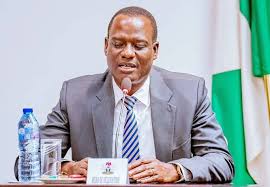
The Minister of Finance and Coordinating Minister of the Economy, Taiwo Oyedele, has said Nigeria can no longer rely heavily on borrowing to finance development, stressing the need for a sustainable fiscal system that can support key sectors of the economy.
Oyedele made the remarks on Tuesday while speaking at the 28th Annual Tax Conference of the Chartered Institute of Taxation of Nigeria in Abuja.
His comments came barely 24 hours after reports emerged that the Federal Government had intensified discussions with the World Bank over a fresh $1.25bn loan aimed at supporting economic reforms, job creation, and competitiveness.
“Nigeria cannot continue to finance development primarily through borrowing. We must build a fiscal system capable of sustainably supporting critical infrastructure, quality education, affordable healthcare, security, and social protection,” Oyedele said.
He explained that fiscal sustainability goes beyond revenue generation and must also support economic growth, reduce inequality, protect vulnerable groups, and improve productivity.
According to the minister, the Federal Government’s ongoing tax reforms are designed to create a more investment-friendly economy while strengthening long-term fiscal stability.
Oyedele noted that Nigeria’s tax system had suffered from structural weaknesses for years, including multiple taxation, fragmented administration, weak compliance, and overdependence on a narrow revenue base.
“Businesses faced overlapping debts, unpredictable enforcements, and rising compliance costs. Citizens often perceived the tax system as unfair because the burden was unevenly distributed,” he said.
He added that government revenues had remained inadequate to meet the country’s growing development needs, making reforms unavoidable.
“Our approach is guided by a simple principle: a good tax system should raise revenue efficiently, support economic growth, protect the vulnerable, and strengthen trust between governments and citizens,” Oyedele stated.
The minister said the reforms aim to simplify taxation, improve fairness, encourage investment, and reduce distortions within the economy.
He disclosed that minimum wage earners had been exempted from personal income tax under the reforms, while tax burdens on low- and middle-income earners had also been reduced.
On corporate taxation, Oyedele said the government was proposing lower companies’ income tax rates to improve Nigeria’s attractiveness to investors.
He further explained that the government was modernising the Value Added Tax framework by expanding input VAT credits and clarifying exemptions for essential goods and services.
“This reduces cost buildup within the economy and improves efficiency across the value chain. This also helps to moderate inflation,” he said.
Oyedele also lamented the burden of multiple taxes and levies on businesses, disclosing that the Federal Government was collaborating with state governments to harmonise taxes and reduce compliance costs.
According to him, 15 states have already enacted tax harmonisation laws, while efforts are ongoing to encourage more states to adopt similar measures.
The minister stressed that technology would play a major role in the future of tax administration in Nigeria.
“We are therefore prioritising data integration, automation, digital filing systems, and a technology-driven compliance framework,” he said.
Despite the reforms, Oyedele acknowledged persistent challenges, including weak institutional capacity, integration of the informal sector, and issues surrounding public trust.
Also speaking at the conference, Vice-President Kashim Shettima defended the Federal Government’s tax reforms, describing them as pro-people and pro-business policies aimed at reducing poverty and repositioning the economy for sustainable growth.
Represented by the Special Adviser to the President on Economic Affairs in the Office of the Vice-President, Tope Fasua, Shettima said the administration of President Bola Tinubu envisioned an economy where ordinary Nigerians could prosper regardless of social background.
He added that the administration was working to make Nigerian-made products globally competitive while transforming the country’s tax administration into a model for Africa.
Shettima acknowledged that public scepticism and misinformation remained major obstacles to the reforms.
“Many Nigerians simply cannot believe it because it has never happened before,” he said, insisting that Tinubu was committed to creating an environment where Nigerians could thrive.
He also stressed the need for aggressive public sensitisation, describing tax reform as “an act of patriotism” capable of laying the foundation for national prosperity.
Earlier, the 17th President and Chairman of the Council of the Chartered Institute of Taxation of Nigeria, Innocent Ohagwa, described the new tax regime as the most comprehensive overhaul of Nigeria’s fiscal structure in more than three decades.
Ohagwa said the reforms aligned with the administration’s ambition of growing Nigeria into a $1tn economy by the end of the decade.
He noted that Nigeria had historically struggled with poor revenue generation and excessive dependence on borrowing but argued that the reforms were beginning to reverse the trend.
According to him, Nigeria’s revenue-to-debt servicing ratio, which stood at 120 per cent in December 2022, declined to 68 per cent by the end of 2025.
Ohagwa said broadening the tax base and simplifying the tax code would help Nigeria transition “from a nation that borrows to survive to one that invests to thrive.”
He added that the reforms would also curb illicit financial flows, reduce informality in the economy, and strengthen accountability through improved technological surveillance by the National Revenue Service.
The Minister of Power, Joseph Tegbe, also commended the reforms, saying Nigeria needed “radical reformers” across all sectors to drive meaningful development.
Former Edo State Governor and senator, Adams Oshiomhole, backed the reforms, arguing that taxation remains central to governance and national development.
Oshiomhole stated that governments do not create wealth directly but depend on taxes to fund infrastructure, healthcare, education, and social welfare programmes.
He also argued that wealthy Nigerians should contribute more to development efforts, noting that individuals earning above N20m monthly and owners of private jets should face higher tax obligations, as practised in advanced economies.
The former governor urged Nigerians to make taxation a key issue in political discussions.
In her welcome address, the Chairperson of the conference and National Chairperson of the Society of Women in Taxation, Caroline Ndubisi, described the conference as an important platform for shaping the future of Nigeria’s tax system.
Ndubisi said taxation remained central to Nigeria’s economic transformation and called for tax systems that are fair, transparent, and trusted by citizens.
She also urged tax professionals to see themselves not only as interpreters of tax laws but as “advocates of economic stability.”
The conference, themed “Tax Reforms and Global Relevance: Positioning Nigeria’s Tax System for Sustainable Future,” focused on the need for transparency, inclusiveness, and stronger public trust in fiscal governance.