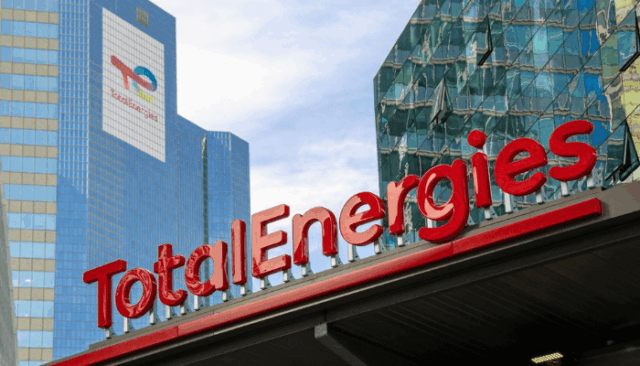
Nigeria must urgently translate its ongoing oil and gas reforms into bankable projects capable of attracting long-term investment, increasing production and creating sustainable economic value, the Country Chair and Managing Director of TotalEnergies EP Nigeria Limited, Matthieu Bouyer, has said.
Bouyer made the call at the 5th PENGASSAN Energy and Labour Summit (PEALS) 2026 in Abuja, themed “Strengthening Regulatory Frameworks as a Catalyst for Stability and Growth in Nigeria’s Oil and Gas Industry.”
The TotalEnergies executive said Nigeria’s biggest challenge was no longer a lack of natural resources or investment opportunities, but the ability to convert those opportunities and policy reforms into projects that investors could finance and execute.
“Nigeria does not lack potential. The real challenge is conversion,” he said.
Bouyer warned that delays in project execution had consequences beyond individual oil companies, affecting government revenue, employment, local content, host communities, workers and the confidence of potential investors.
He said Nigeria was competing with other oil-producing jurisdictions for increasingly selective global capital, with investors considering fiscal terms, regulatory stability, project timelines, security, emissions intensity, cost structures and the likelihood of projects being completed before committing funds.
According to him, recent reforms, including the Petroleum Industry Act, fiscal incentives for non-associated gas and deepwater developments, efforts to shorten contracting timelines and measures aimed at improving cost competitiveness, represent important steps towards restoring investor confidence.
However, he said the effectiveness of the reforms would ultimately be determined by the projects they succeed in unlocking.
“Reform becomes real when it unlocks projects,” Bouyer said.
He cited the Final Investment Decision taken by TotalEnergies and NNPC Limited in 2024 on the Ubeta gas development as an example of what could be achieved when policy, partnerships and project maturity align.
Bouyer also called for increased exploration activity, describing exploration as “the renewal engine” of Nigeria’s petroleum industry.
He warned that without sustained exploration, the country’s resource base would eventually decline, with consequences for future production, investment, employment and Nigeria’s position in the global energy market.
The TotalEnergies executive reaffirmed the company’s commitment to Nigeria, where it has operated since 1956.
He said the company’s strategy is focused on operated assets where it can deploy its technical expertise to improve safety, operational efficiency, emissions reduction and project execution.
Bouyer also identified gas as a major opportunity for Nigeria, but stressed that the resource could only become a significant driver of economic growth if the country develops the infrastructure and commercial structures required to support long-term investment.
He said gas projects require bankable contracts, credible offtake arrangements, payment discipline, timely regulatory approvals and commercial frameworks capable of supporting long-cycle investments.
“Gas resources should be converted into power, LNG, industrial growth and exports,” he said.
According to him, Nigeria’s gas resources could expand domestic energy access while creating opportunities for exports and lower-emission production.
Bouyer also linked emissions reduction to economic value, arguing that reducing gas flaring, recovering gas and tackling methane emissions could preserve valuable gas molecules for domestic consumption, exports and integration into the wider gas value chain.
He disclosed that TotalEnergies became the first exploration and production operator in Nigeria to eliminate routine flaring across all its operated assets at the end of 2023.
The company is also working with NNPC Limited on AUSEA, a drone-based technology designed for high-precision monitoring of methane and carbon dioxide emissions.
Bouyer added that more than 2,500 sensors had been installed across TotalEnergies’ operated assets to facilitate real-time methane leak detection and faster intervention.
The TotalEnergies chief further called for greater stability across Nigeria’s oil and gas industry, saying sustainable investment would require coordinated efforts from government, regulators, operators, labour and host communities.
He said government must provide clear policies and effective regulation, while regulators should ensure predictable implementation.
Operators, he added, must maintain disciplined investment and safe operations, while labour and host communities should contribute to industrial harmony and trust.
Bouyer described industrial harmony as more than a labour issue, arguing that it was a business enabler because it directly affects safety, production, investment and human capital development.
“If Nigeria wants long-term jobs, it must create the conditions for long-term projects, a competitive industry and a stable environment in which investors, workers and communities can see a future,” he said.
In his welcome address, PENGASSAN President, Festus Osifo, said the summit’s theme reflected growing concerns among investors over regulatory uncertainty and the need for clear and predictable rules before capital could be committed to long-term projects.
Osifo warned that overlapping mandates among government agencies and regulatory uncertainty remained significant threats to investment in Nigeria’s oil and gas industry.
He said PENGASSAN organised the summit to strengthen dialogue among government, regulators, operators, investors, labour and host communities and address structural barriers holding back growth in the sector.