Nigeria’s Federal Government has declared that it has no plan to approach the International Monetary Fund (IMF) for financial support from the proposed $20bn to $50bn assistance package being considered for struggling economies, including several countries in Sub-Saharan Africa.
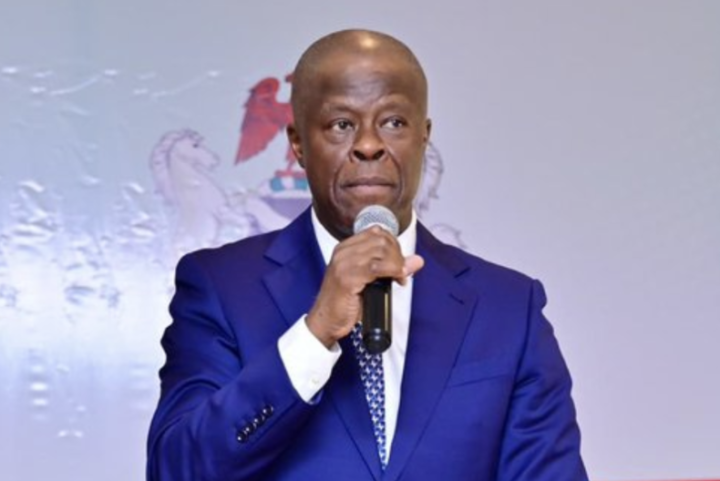
The Minister of Finance and Coordinating Minister for the Economy, Wale Edun, disclosed this on Thursday during a press briefing at the ongoing Spring Meetings of the World Bank and the IMF in Washington, D.C., United States.
According to Edun, Nigeria is not considering any additional borrowing from the IMF at the moment despite the institution’s plan to support economies facing financial pressures.
“Nigeria has no plan at the moment to approach the IMF for any other such burden,” the minister stated.
His comments came a day after the IMF Managing Director, Kristalina Georgieva, advised countries experiencing economic strain to seek financial assistance promptly when necessary.
Georgieva warned that delays in accessing financial support could worsen economic challenges.
“My advice is that when you need help financially, don’t hesitate to move fast, because the sooner we act, the more we protect the economy,” she said.
The IMF chief also revealed that the institution is preparing between $20bn and $50bn in financial assistance to support countries facing existing and emerging economic pressures.
“We anticipate financial demand for IMF support to range between $20bn and $50bn, which represents augmentation of some existing problems and prospective demands from new problems from at least a dozen countries, a number of them in Sub-Saharan Africa,” she explained.
While ruling out immediate borrowing, Edun emphasised that African countries require greater support due to global economic pressures, particularly those triggered by the ongoing tensions in the Middle East.
He noted that although African nations are not responsible for the conflict, they face disproportionate economic consequences.
According to him, the crisis poses risks to macroeconomic stability, economic growth and job creation across many African economies.
“This is in terms of the threat to macroeconomic stability, growth trajectories, and their ability to create jobs and reduce poverty in their countries,” Edun said.
He added that vulnerable oil-importing nations in Africa deserve additional support during the current global economic uncertainty.
Earlier, Georgieva observed that many countries most affected by the Middle East crisis are located in Sub-Saharan Africa. She said the IMF is working to identify nations that may urgently require assistance.
“We are very determined to use this week to identify which of the countries must get our support,” she stated.
The IMF chief also stressed the importance of sound fiscal management, urging governments to build financial buffers during periods of economic stability to prepare for future shocks.
She revealed that during a meeting with African finance ministers and central bank governors earlier in the week, officials primarily sought policy guidance rather than immediate financial assistance.
However, Georgieva maintained that financial support could still become necessary if economic conditions worsen.
She also warned that the ongoing Middle East conflict is already affecting the global economy through supply chain disruptions, rising prices and damage to infrastructure.
According to her, global economic growth is projected to slow from 3.4 per cent last year to about 2.1 per cent in 2026.
“If the conflict persists and oil prices stay high for an extended period, we must brace for tough times ahead,” she cautioned.
Georgieva added that in a worst-case scenario, global economic growth could decline further to two per cent, with energy-importing countries likely to suffer the most severe impact.