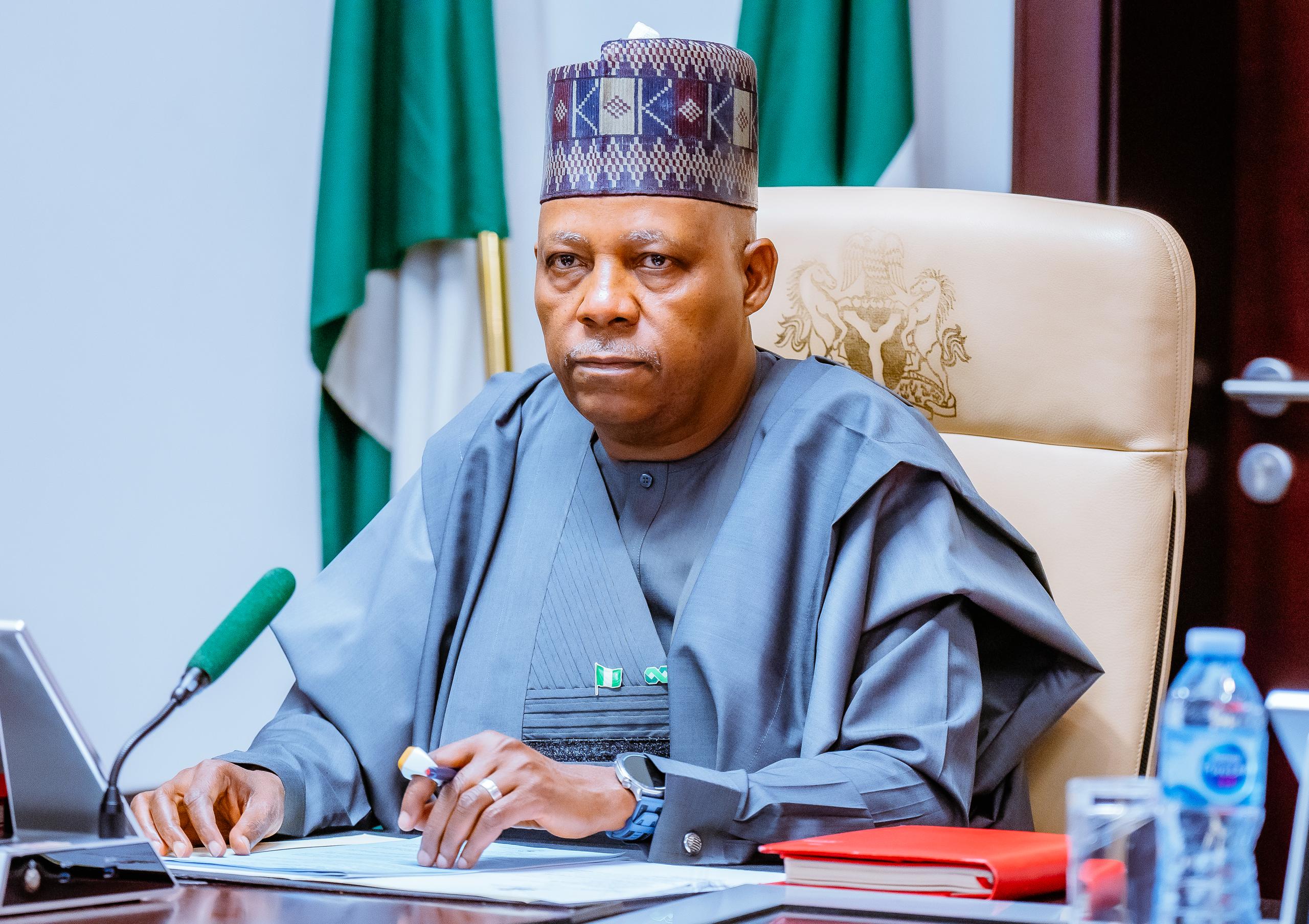
Nigeria and Thailand are moving to strengthen and expand their bilateral relationship, with plans to deepen cooperation in agriculture, technology, commerce, renewable energy and other strategic sectors.
The proposed review is aimed at repositioning relations between both countries beyond traditional trade in crude oil and rice while leveraging Thailand’s expertise in intermediate technology and agricultural development.
The development was discussed on Wednesday during a meeting between Vice President Kashim Shettima and a Thai delegation led by Thailand’s Deputy Prime Minister and Minister of Foreign Affairs, Yousef Hassan Khalawi, at the Presidential Villa in Abuja.
Speaking on behalf of President Bola Tinubu, Shettima said Nigeria and Thailand should elevate their relationship beyond commercial transactions and pursue broader strategic cooperation.
“I believe that our relationship should go beyond transactions in crude oil, rice production and so on. So, there is a need for us to review our bilateral relationship at a strategic level,” the Vice President said.
Shettima highlighted Nigeria’s large market, youthful population and abundant natural resources as major attractions for Thai investors.
He identified agriculture, information and communications technology, renewable energy and solid minerals as sectors with significant opportunities for collaboration.
The Vice President also urged Thailand to deepen trade and investment engagement with Nigeria, describing the country as a strategic gateway to Africa.
In his remarks, Khalawi described Nigeria as a key partner for Thailand’s engagement with Africa and praised the economic reforms being implemented under the Tinubu administration.
He said Thailand is developing a new continental engagement framework known as the Thailand-Africa Initiative, which is expected to strengthen economic cooperation and people-to-people exchanges with African countries.
“For us in Thailand, we believe that Nigeria is a strategic partner bilaterally and an important window to strengthening ties with Africa, particularly West Africa,” Khalawi said.
He noted that agriculture would be a major pillar of the initiative, alongside healthcare and tourism, where Thailand has developed considerable expertise.
Khalawi added that Nigeria’s growing digital economy and influence within the Global South make it an important partner for future collaboration.
The latest engagement follows Thailand’s recent donation of 12 metric tonnes of rice valued at approximately $22,000 to support food-insecure communities in Nigeria. The donation was handed over to the World Food Programme for distribution to vulnerable populations, particularly in the North-East.
Thailand is one of the world’s leading rice producers and exporters, with annual production estimated at about 34.3 million metric tonnes.
The planned review of Nigeria-Thailand relations aligns with the Federal Government’s broader efforts to attract foreign investment, improve agricultural productivity and accelerate technology-driven economic growth.
For Nigeria, increased access to Thailand’s expertise in agricultural technology, food processing, healthcare systems and renewable energy could support efforts to diversify the economy, improve food security and drive sustainable development.
The engagement also signals Thailand’s growing interest in expanding its presence in Africa through deeper economic and development partnerships.