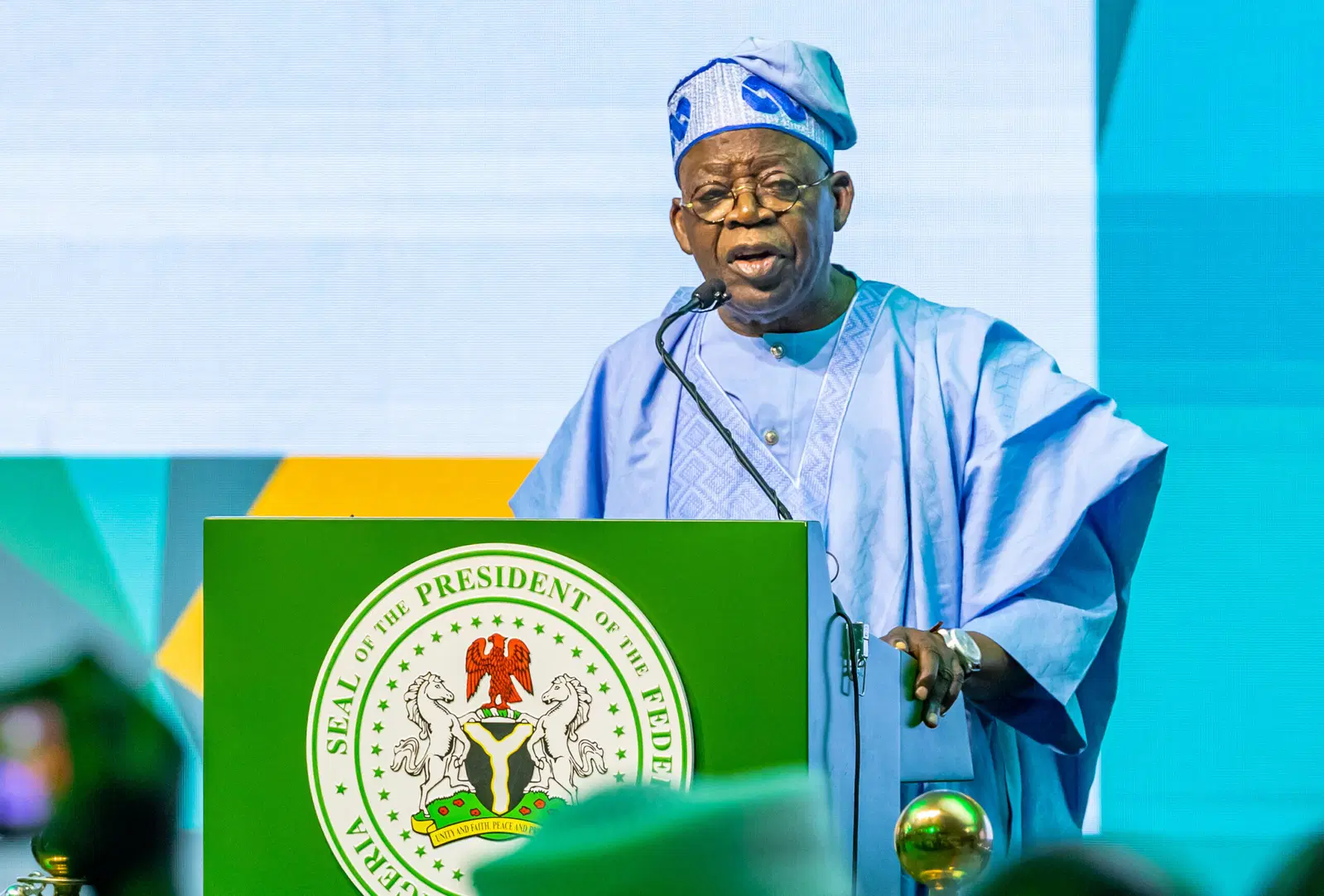
The Federal Government has presented a $78.5 billion investment pipeline comprising 65 projects to international investors, with energy, transport and maritime infrastructure accounting for nearly four-fifths of the total capital requirement.
The investment pitch was delivered by Central Bank of Nigeria Governor Olayemi Cardoso and Finance Minister and Coordinating Minister of the Economy Taiwo Oyedele at the Nigerian Investors Forum held on the sidelines of the 2026 International Monetary Fund and World Bank annual meetings in Bangkok, Thailand.
The government is seeking capital for projects across several sectors, including oil and gas, electricity, transport, agriculture and manufacturing.
It is also offering investment incentives, assurances relating to capital repatriation and assistance for investors establishing businesses in Nigeria.
Energy and transport lead the pipeline
According to the supplied figures, 25 oil, gas and power projects require $36.4 billion in investment, while eight transport and maritime projects require $25 billion.
Together, the two categories account for $61.4 billion, or approximately 78 per cent of the total $78.5 billion project pipeline.
The concentration reflects the scale of capital required to expand energy supply, improve transport links and strengthen infrastructure supporting trade and industrial production.
The government is presenting projects with capital requirements ranging from $1 million to $15 billion, an approach intended to accommodate investors with different funding capacities.
Deal Room seeks to connect projects with capital
Through the Deal Room, the government is seeking to connect project sponsors with potential investors and provide a platform for discussions around financing opportunities.
The initiative is intended to help investors assess projects, understand their requirements and explore possible participation.
However, presenting a project pipeline does not mean that the required investment has been secured. Each project must still attract suitable financing, meet investors’ risk and return requirements and satisfy relevant regulatory and implementation conditions.
The government’s task is to demonstrate that projects are commercially viable and supported by credible structures for financing, construction and operation.
Investment incentives and confidence
The government is offering incentives intended to improve Nigeria’s attractiveness as an investment destination.
Capital repatriation assurances are particularly relevant to foreign investors concerned about their ability to convert and transfer returns from investments. Other important considerations include policy consistency, contract enforcement, foreign-exchange liquidity, security and the predictability of regulation.
Investors will also assess the commercial outlook for individual projects, including expected demand, operating costs and the capacity to generate returns over time.
Converting investment interest into projects
Nigeria’s infrastructure needs create opportunities for long-term investors, but the scale of the proposed pipeline also highlights the financing challenge facing the country.
The success of the initiative will depend on how many projects progress from presentations and negotiations to financial close and actual construction.
For the economy, successful delivery could improve electricity supply, reduce logistics costs and support industrial activity. Failure to mobilise capital or implement projects could leave the infrastructure gap largely unchanged.
The $78.5 billion pitch therefore represents an investment mobilisation effort, with actual funding commitments and project execution serving as the key measures of progress.