Lagos seeks to attract productive investments, expand manufacturing and position local businesses to benefit from AfCFTA opportunities.
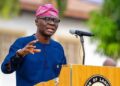
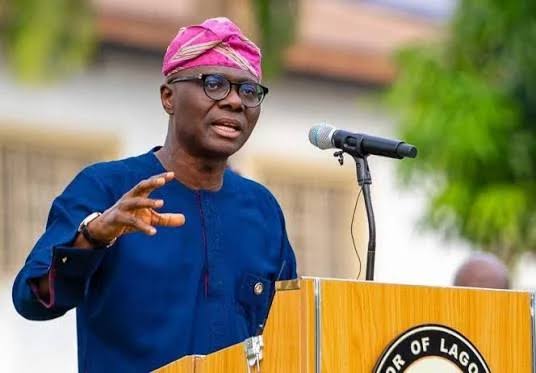
Lagos State Governor, Mr Babajide Sanwo-Olu, has outlined an ambitious economic growth strategy centred on manufacturing, industrial development, export expansion and private-sector investment, as the state seeks to strengthen its position as a leading commercial and industrial hub in Africa.
The governor said the Lagos State Government was intensifying efforts to transform the state from a major centre of trade and services into a stronger destination for production, innovation, investment and exports.
Sanwo-Olu disclosed this on Friday at the opening ceremony of the 40th Lagos International Trade Fair (LITF), organised by the Lagos Chamber of Commerce and Industry (LCCI) at Tafawa Balewa Square, Lagos.
The 2026 edition, themed “Connecting Businesses, Creating Value,” marks four decades of the trade fair, which has evolved into one of Nigeria’s major platforms for business networking, investment promotion, product exhibitions and commercial partnerships.
With more than 1,000 exhibitors expected from over 20 countries, the anniversary edition is placing greater emphasis on business-to-business (B2B) and business-to-government (B2G) engagements, reflecting a shift towards generating tangible commercial transactions and investment opportunities beyond the traditional exhibition of products.
The governor said the expanded focus was necessary to ensure that trade fairs deliver measurable economic benefits by helping companies secure buyers, attract investment, strengthen supply chains and establish lasting business relationships.
He noted that the African Continental Free Trade Area (AfCFTA), which provides access to a continental market of approximately 1.4 billion people, presents significant opportunities for Nigerian manufacturers and businesses capable of meeting international standards, expanding production and competing on price and quality.
According to him, Lagos is positioning itself as a gateway for businesses seeking to access markets across West Africa and the wider African continent.
“Our ambition for Lagos is clear. We want more businesses to manufacture, process and add value here; to establish regional operations here; and to use Lagos as a gateway to markets across West Africa and the continent,” the governor said.
Infrastructure, industrial policy to drive investment
Sanwo-Olu identified infrastructure development, improved electricity supply, digital connectivity and regulatory reforms as critical components of the state’s strategy to strengthen its business environment.
He said the government’s investments in transportation infrastructure, particularly the Blue and Red Rail Lines, alongside continuing road and transport network development, were designed to improve connectivity across commercial and industrial corridors.
According to him, efficient movement of people and goods would reduce operating costs, improve productivity and strengthen the competitiveness of businesses operating in the state.
The governor also highlighted the Lagos State Electricity Law, which provides a framework for developing a more reliable and competitive electricity market, while investments in digital infrastructure are expected to support the connectivity requirements of modern businesses.
He added that the government was working with private-sector stakeholders to identify regulatory bottlenecks and make government processes more responsive, transparent and predictable.
These initiatives, he said, were reflected in Lagos State’s performance in the 2025 Presidential Enabling Business Environment Council (PEBEC) Subnational Ease of Doing Business Report, where the state ranked first nationally with a score of 85.6 per cent.
However, Sanwo-Olu acknowledged that businesses continued to face significant operating pressures, particularly in energy, financing, logistics and other production-related costs.
He said the government remained committed to addressing these constraints to create an environment that supports enterprise expansion, investment and employment generation.
The governor further identified the Lagos State Industrial Policy (LSIP) 2025–2030 as a major framework for accelerating industrial development and strengthening the state’s productive capacity.
The policy provides a roadmap for building a more competitive, inclusive and sustainable industrial economy through infrastructure development, industrial financing, priority sectors and clusters, support for small businesses and cooperatives, workforce development and sustainability initiatives.
Sanwo-Olu explained that manufacturing remained central to economic development because of its capacity to transform raw materials into finished products, stimulate local supply chains, create skilled employment and generate goods for domestic and international markets.
He said aligning infrastructure, financing, industrial clusters and workforce development would help manufacturers expand production and position Lagos as a stronger base for regional trade.
Lagos targets increased SME participation in export markets
As part of efforts to expand the international competitiveness of local businesses, the governor highlighted the Lagos State Export Readiness Programme (LASERP), implemented in collaboration with the African Export-Import Bank (Afreximbank) and ImpactHer.
He disclosed that the programme had supported 253 small and medium-sized enterprises (SMEs) to prepare their products and operations for international markets.
The initiative provides businesses with support in areas including product standards, packaging, financing and other requirements necessary to access export markets.
Sanwo-Olu also disclosed that 20 Trade Champions had helped promote Made-in-Lagos products at the Intra-African Trade Fair, creating additional visibility and opportunities for local enterprises to connect with buyers across the continent.
He said the government was particularly interested in ensuring that micro, small and medium-sized enterprises (MSMEs) could convert their creativity and productive capacity into sustainable businesses through improved access to finance, technology, commercial networks and larger markets.
The governor urged exhibitors to maximise the B2B and B2G platforms provided by the trade fair to establish relationships capable of translating into actual transactions, investment and business expansion.
He also encouraged international exhibitors and investors to consider long-term investments in Nigeria beyond the immediate opportunity to sell products in the Lagos market.
Such partnerships, he said, could support local manufacturing, technology transfer, supplier development and investment in agro-processing, logistics, technology and other productive sectors.
LCCI seeks improved business environment, stronger local production
In his opening remarks, President and Chairman of Council of the Lagos Chamber of Commerce and Industry, Engr. Leye Kupoluyi, said the 40th edition represented four decades of connecting businesses, opening markets and creating economic opportunities.
He described the trade fair as an important platform for bringing producers closer to consumers, introducing emerging businesses to new customers and facilitating commercial relationships across industries and national borders.
Kupoluyi said the chamber remained committed to ensuring that participation in the annual event translated into stronger enterprises, commercial partnerships and lasting economic value.
He, however, called for sustained government action to address the structural challenges confronting Nigerian businesses, particularly unreliable electricity, inefficient ports, inadequate transport connections, limited access to finance and regulatory bottlenecks.
According to him, businesses require reliable infrastructure, accessible financing, efficient logistics, security and predictable government policies to expand production, attract investment and create employment.
He stressed the need for consistency in policy implementation and meaningful consultation between government and the private sector, noting that investors make better decisions when regulations are clear and institutions apply them fairly.
The LCCI president also disclosed that preliminary findings from the chamber’s pre-fair survey showed that the construction of exhibition stands had injected millions of naira into the local economy and generated employment for hundreds of local artisans.
He said the economic impact of the fair began even before its official opening, with expenditure on booth construction and related activities supporting local businesses and service providers.
Africa Hall, international participation strengthen trade opportunities
The chamber also highlighted the Africa Hall as a major feature of the 2026 edition, providing a dedicated platform for businesses across the continent to establish partnerships, develop trade networks and explore opportunities under the AfCFTA.
Supported by Afreximbank and the Economic Community of West African States (ECOWAS), the initiative is designed to encourage intra-African trade and strengthen commercial cooperation among African enterprises.
Kupoluyi further disclosed that the Japan External Trade Organization (JETRO) had confirmed more than 100 Japanese exhibitors for this year’s edition, reinforcing the international dimension of the event and creating opportunities for Nigerian businesses to establish commercial relationships with foreign companies.
He urged local entrepreneurs to take advantage of the international participation by exploring distributorship agreements, partnerships and trade arrangements that could strengthen their value chains and diversify their product offerings.
The LCCI president also said the chamber had maintained free entry for visitors throughout the 10-day event since 2022, while strengthening security arrangements to ensure a safe and welcoming environment for exhibitors and visitors.
Lagos trade week reflects growing commercial ambition
Earlier, the Lagos State Commissioner for Commerce, Cooperatives, Trade and Investment, while welcoming participants, described the convergence of trade, investment and creative industry platforms during the week as a reflection of Lagos’s growing economic influence.
The commissioner noted that the Creative Africa Nexus (CANEX), which opened on Thursday, was connecting creativity with business and investment, while the ART X Fair was scheduled to open later on Friday. The Lagos Pavilion also provided an opportunity to showcase the talent, products and entrepreneurial capacity of the state’s residents.
She said the 40th Lagos International Trade Fair represented an important milestone in the development of the state’s commercial sector, commending the LCCI for sustaining the platform over four decades.
The commissioner stressed that trade fairs must move beyond product exhibitions to facilitate investment, production, exports and lasting commercial relationships.
She said the state’s priority was to create opportunities for enterprises to grow, manufacturers to compete and more Made-in-Lagos products to access regional and international markets.
As the fair marks its 40th anniversary, the Lagos State Government and the LCCI are seeking to strengthen its role as a platform for productive investment, business expansion and increased participation in regional and global trade.
The success of the event, stakeholders maintained, would ultimately be measured not only by exhibitor numbers and visitor attendance but also by the volume of business transactions, investments, employment opportunities and enduring commercial partnerships generated.