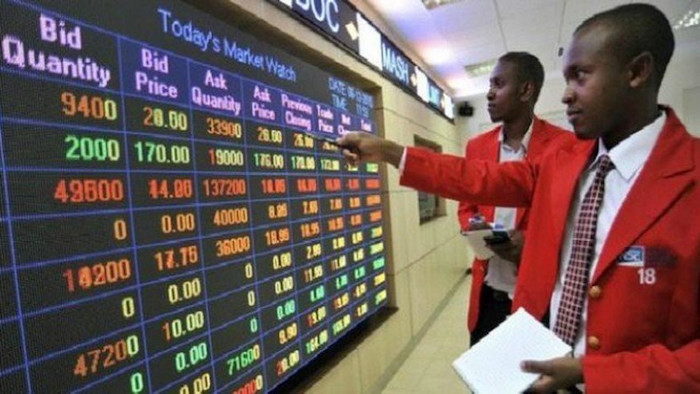
Trading on the Nigerian Exchange Limited (NGX) closed on a bearish note as renewed selling pressure in major banking and industrial stocks dragged the benchmark All-Share Index down by 0.1 per cent to 252,313.16 points.
The decline was largely driven by losses in First HoldCo, Zenith Bank, Stanbic IBTC and Nigerian Aviation Handling Company (NAHCO), which fell by 1.8 per cent, 0.9 per cent, 1.5 per cent and 10 per cent, respectively.
Consequently, the market’s month-to-date return settled at negative 0.8 per cent, while the year-to-date return moderated to 62.1 per cent.
Despite the decline in the benchmark index, trading activity strengthened during the session, with total volume exchanged advancing by 20.3 per cent to 545.30 million shares.
The transactions were valued at N30.39 billion and executed across 31,543 deals, indicating sustained investor participation despite the market’s negative closing position.
NEIMETH emerged as the most actively traded stock by volume, with 79.86 million shares exchanged, while First HoldCo led trading by value, recording transactions worth N6.31 billion.
Sectoral performance was mixed, with the banking index declining by 0.7 per cent as selling pressure persisted in major financial stocks.
In contrast, the insurance index advanced by 1.3 per cent, while consumer goods and oil and gas gained 0.2 per cent and 0.1 per cent, respectively. The industrial goods index closed unchanged.
Market breadth remained positive at a ratio of 1.5 times, reflecting 32 advancing stocks against 21 declining counters.
CHAMPION and HONYFLOUR recorded the strongest gains, appreciating by 10 per cent and 9.9 per cent, respectively.
On the declining side, NAHCO and REDSTAREX led the losers’ chart, shedding 10 per cent and 9.9 per cent, respectively.
The session’s performance highlights the divergence between broader investor participation and the weakness recorded in some heavyweight stocks, particularly within the banking sector.
Although the positive market breadth suggests that gains were recorded across several counters, the losses in selected high-capitalisation stocks were sufficient to push the benchmark index into negative territory.