Nigeria’s aviation infrastructure renewal programme is now valued at more than ₦1 trillion, as the Federal Government moves to expand airport capacity, rehabilitate existing facilities and improve transport connections around two of the country’s busiest aviation gateways.
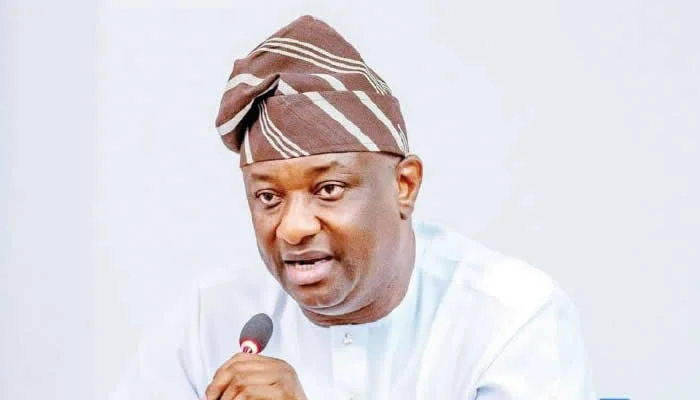
Minister of Aviation and Aerospace Development, Festus Keyamo, disclosed the investment figure during the 67th anniversary celebration of Aero Contractors, Nigeria’s oldest airline.
Keyamo said President Bola Tinubu had approved the mobilisation of the China Civil Engineering Construction Company (CCECC) to begin work on a second runway at the Nnamdi Azikiwe International Airport in Abuja.
The project is one of several interventions the government is positioning as part of a wider aviation-sector infrastructure renewal programme.
Abuja Second Runway Moves Forward
A second runway at Abuja’s international airport is intended to provide additional operational capacity and resilience.
Major airports become particularly vulnerable when they depend heavily on a single runway because maintenance or an operational incident can disrupt flight schedules.
Additional runway capacity can provide greater flexibility as passenger and aircraft movements increase.
The government’s approval to mobilise CCECC therefore represents a significant step towards physical construction.
Lagos Airport Rail Link Planned
Lagos is also expected to receive a major transport intervention.
According to Keyamo, the government plans to construct a light-rail connection from the Lagos State Red Line at Ikeja Bus Stop to the international wing of Murtala Muhammed Airport.
The planned route would pass through the General Aviation Terminal, MMA2 and the Air Force Base before terminating at an underground station at the new Terminal Two of Murtala Muhammed International Airport.
If completed, the project could improve connections between Lagos’ expanding urban rail system and its aviation infrastructure.
Airport Access Is Part of Aviation Competitiveness
The quality of an airport is determined by more than its terminals and runways.
Passengers and workers also need efficient transport to and from airport facilities.
Lagos traffic congestion can make road journeys to the airport unpredictable, particularly during peak periods.
A functioning rail connection could provide an alternative and integrate the airport more closely with the state’s mass-transit network.
For business travellers and airlines, improved access can also reduce some of the uncertainty associated with ground transportation.
Renewed Hope Fund Backs Programme
Keyamo said the aviation intervention, estimated at more than ₦1 trillion, is being financed through the Renewed Hope Infrastructure Fund.
The scale of the commitment reflects the capital-intensive nature of aviation infrastructure.
Runways, terminals, navigation facilities and airport transport links require substantial upfront expenditure and long-term maintenance.
The value of those investments will consequently depend not simply on construction but on effective execution and management after completion.
Implementation Becomes Key Test
Nigeria’s aviation industry has considerable growth potential because of the country’s population, commercial activity and geographic position within West Africa.
But inadequate infrastructure can limit that potential.
Airport congestion, weak ground connections and ageing facilities can increase costs and weaken passenger experience.
The government’s ₦1 trillion-plus programme is an attempt to address some of those constraints simultaneously.
Attention will now turn to construction timelines and whether projects are completed within their approved costs.
If successfully executed, the Abuja runway and Lagos rail connection could become two of the most consequential aviation infrastructure projects undertaken in Nigeria in recent years.