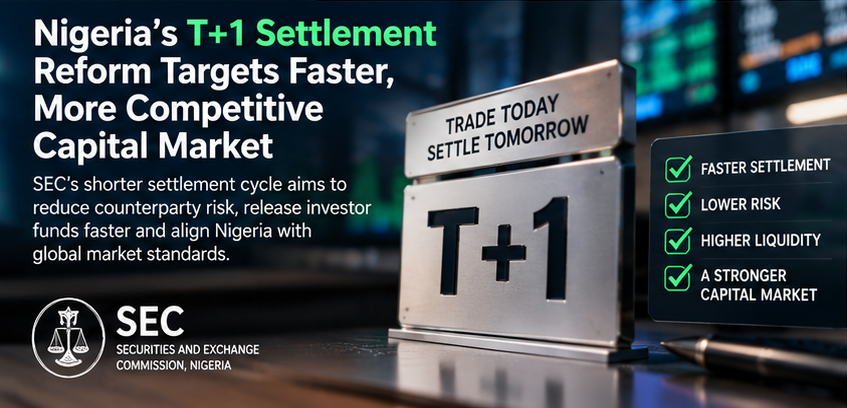
Nigeria’s transition to a T+1 settlement cycle is reshaping the operational structure of the capital market as regulators seek faster transaction completion, improved liquidity and stronger alignment with international trading standards.
The Securities and Exchange Commission has clarified that settlement for equities and commodities processed through the Central Securities Clearing System, CSCS, must be completed by 5:00 p.m. on the trading day plus one business day.
Transactions are deemed fully paid at settlement to maintain the Delivery-versus-Payment framework.
The reform significantly shortens the period between executing a transaction and completing the exchange of securities and cash.
What T+1 Means for Investors
Under T+1, an investor who completes an eligible securities transaction should have settlement completed on the next business day.
The shorter cycle can reduce the amount of time capital remains tied up between trade execution and final settlement.
For market operators, however, faster settlement requires stronger technology, liquidity management and operational processes.
The SEC said brokers whose trading accounts are inadequately funded to meet settlement obligations will be handled under the CSCS default-management procedure and the relevant exchange’s settlement guidelines.
Foreign portfolio investors are not required to prefund their accounts.
However, capital-market operators acting for foreign investors must establish appropriate systems to ensure funds are available within the prescribed settlement timeline.
Nigeria Aligns With Global Market Changes
The reform is particularly relevant as Nigeria seeks to restore its position among international investors.
Shorter settlement cycles can reduce counterparty exposure because investors spend less time waiting for trades to be completed.
The SEC says the transition should improve settlement efficiency, reduce counterparty risk, enhance liquidity and strengthen the competitiveness of Nigeria’s capital market.
Those improvements could become increasingly important as Nigeria returns to FTSE Russell’s Frontier Market universe later this month.
A market seeking larger foreign portfolio inflows needs not only attractive listed companies but also reliable clearing, settlement and custody infrastructure.
The move to T+1 therefore represents part of a broader modernisation of Nigeria’s capital-market architecture.
The test will be whether brokers, custodians, clearing houses and investors can consistently meet the shorter deadline without increasing settlement failures.