

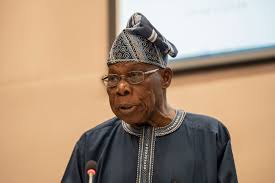
As the Nigerian National Petroleum Company Limited intensifies efforts to secure technical partners for the Port Harcourt, Warri, and Kaduna refineries, former President Olusegun Obasanjo has reiterated his long-standing position that the facilities are unlikely to work effectively.
Speaking during an interview on Sony Irabor Live aired Saturday night, Obasanjo said Nigeria’s refinery challenges highlight the failure of government-run enterprises and the need for stronger private sector participation.
He pointed to the success of Nigeria Liquefied Natural Gas as a model of a functional public-private partnership, noting that private sector dominance has helped shield it from the inefficiencies that plague state-managed projects.
“The refineries will never work,” Obasanjo said, recalling his time in office when he sought to reform the sector. He added that attempts to attract global operators, including Shell, were unsuccessful despite multiple incentives.
According to him, Shell declined involvement due to limited profitability in downstream operations, the relatively small size of Nigeria’s refineries, poor maintenance culture, and concerns about corruption.
Obasanjo further revealed that businessman Aliko Dangote had once agreed to acquire a 51 percent stake in two refineries for $750 million during his administration. However, the deal was later reversed under the late President Umaru Musa Yar’Adua, reportedly due to pressure from the state oil company.
He lamented that the reversal derailed what could have been a turning point for Nigeria’s refining capacity.
The former president also expressed concern over the estimated $16 billion spent on refinery rehabilitation over the years, noting that the amount is close to what Dangote invested in building Africa’s largest refinery.
Recent comments by current NNPC Group Chief Executive Officer Bayo Ojulari appear to align with Obasanjo’s concerns. Ojulari acknowledged that despite rehabilitation efforts, the Port Harcourt and Warri refineries have operated below international standards and remain commercially uncompetitive.
The NNPC has set a June 2026 deadline to finalise technical partnerships aimed at improving refinery operations. However, skepticism persists, especially as privately owned facilities like the Dangote refinery continue to outperform state-run plants.
Efforts to obtain an official response from NNPC regarding Obasanjo’s latest remarks were unsuccessful as of press time.











