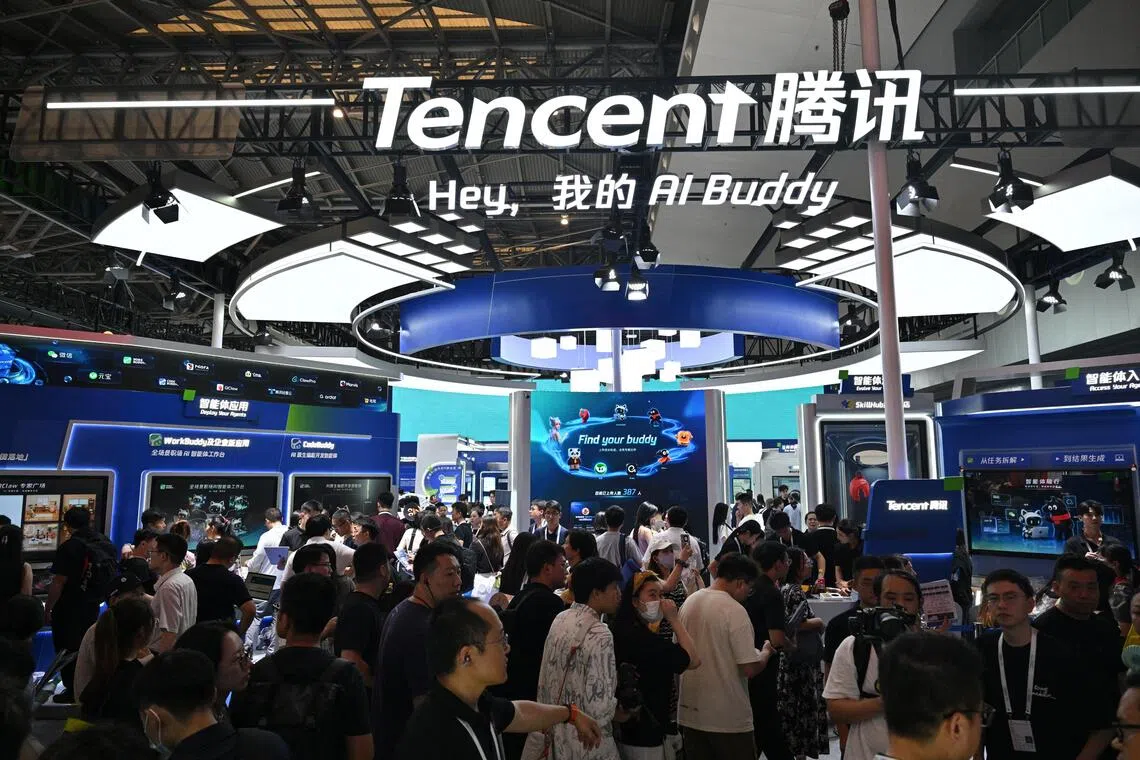
Chinese technology giant Tencent has reportedly secured access to around 100,000 advanced artificial intelligence chips from Oracle, highlighting the enormous computing requirements emerging from China’s expanding AI industry.
The five-year arrangement is valued at approximately $7 billion and involves Oracle data centres in Southeast Asia, according to a Financial Times report cited by Reuters.
Tencent is expected to make an upfront payment of about 30 per cent under what would represent its largest overseas computing lease agreement. Oracle and Tencent had not publicly commented on the reported arrangement at the time of the Reuters report.
AI Models Drive Computing Demand
Tencent operates one of China’s largest technology ecosystems, spanning social media, gaming, cloud computing, payments and artificial intelligence.
Like other major technology companies, it is investing heavily in large language models and generative AI services.
Those models require substantial computing capacity both during training and when serving millions of users.
Tencent recently previewed a new professional AI image-generation model capable of supporting both text-to-image and image-to-image tasks.
Securing access to 100,000 advanced chips would provide substantial computing resources for that broader AI expansion.
Export Controls Complicate Access
The structure of the reported deal is particularly significant.
Instead of Tencent directly acquiring the processors, the Chinese company would access computing infrastructure operated by US-based Oracle outside mainland China.
The arrangement comes as Washington continues to restrict China’s direct access to some advanced semiconductor technologies.
Those restrictions have simultaneously accelerated China’s development of domestic alternatives, including processors from Huawei.
However, the enormous computing requirements of modern AI mean Chinese companies continue seeking multiple sources of capacity.
The reported Tencent-Oracle arrangement demonstrates how that demand is reshaping cloud infrastructure and semiconductor supply chains across Asia.