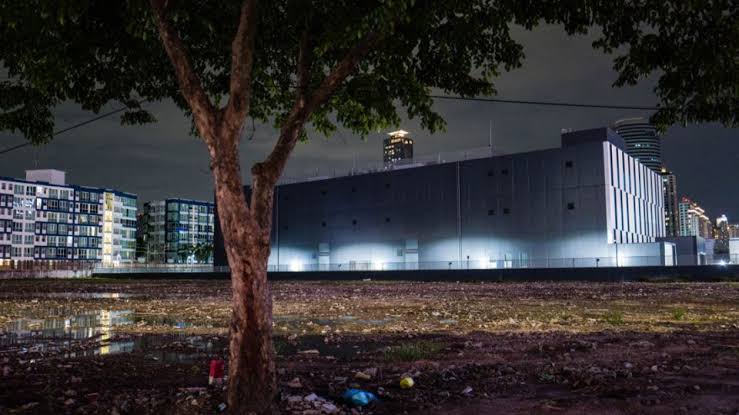
Thailand’s push to become a major destination for artificial-intelligence and data-centre investment is creating a parallel challenge for its electricity system as technology companies demand increasingly large amounts of reliable power.
The country has attracted major interest from international technology and infrastructure investors seeking additional computing capacity in Southeast Asia.
But data centres are extremely energy-intensive.
The expansion is therefore forcing policymakers to consider how Thailand can accommodate technology investment without undermining its clean-energy targets.
The issue reflects a challenge increasingly confronting countries around the world.
Governments want the jobs, investment and digital infrastructure associated with AI.
But attracting those projects can create enormous new electricity requirements.
AI Turns Electricity Into Strategic Asset
Artificial intelligence has fundamentally changed data-centre economics.
Traditional cloud facilities already required significant electricity.
Generative AI systems demand substantially more computing power because thousands of specialised processors can operate continuously while models are trained and deployed.
That increases electricity consumption and creates additional cooling requirements.
As a result, technology companies are increasingly choosing data-centre locations partly on the availability of reliable power.
Countries capable of providing large quantities of affordable electricity could gain an advantage in attracting AI investment.
Southeast Asia Becomes Data-Centre Battleground
Thailand is competing within a rapidly expanding Southeast Asian data-centre market.
Singapore has long been one of the region’s most important digital infrastructure hubs, but land and power constraints have encouraged investors to examine neighbouring countries.
Malaysia has attracted substantial investment, particularly around Johor.
Indonesia and Thailand are also attempting to capture larger shares of the market.
That competition could bring billions of dollars into power generation, fibre networks, construction and digital services.
But it also creates environmental questions.
Clean Power Becomes Commercial Requirement
Renewable electricity is increasingly becoming more than an environmental commitment for data-centre developers.
Many large technology companies have corporate targets requiring them to reduce emissions associated with their operations.
That means countries able to provide reliable renewable electricity may have an advantage when competing for future projects.
Thailand therefore faces two connected challenges: generating enough electricity for rapid data-centre expansion and ensuring that a larger share of that power comes from lower-carbon sources.
Failure to address the second problem could make future projects more difficult to reconcile with both national climate goals and the environmental commitments of international technology companies.
Data Centres Reshape Investment Competition
The global AI race is consequently changing how countries compete for technology investment.
Tax incentives and skilled workers remain important.
But electricity availability, transmission infrastructure, land, cooling water and renewable-energy access are becoming equally critical.
For Thailand, successfully navigating those constraints could establish the country as one of Southeast Asia’s most important digital infrastructure hubs.
Failure could leave billions of dollars in potential investment looking elsewhere.
The AI economy may ultimately be built in the cloud, but Thailand’s experience demonstrates that winning that investment increasingly depends on something much more basic: having enough electricity on the ground.