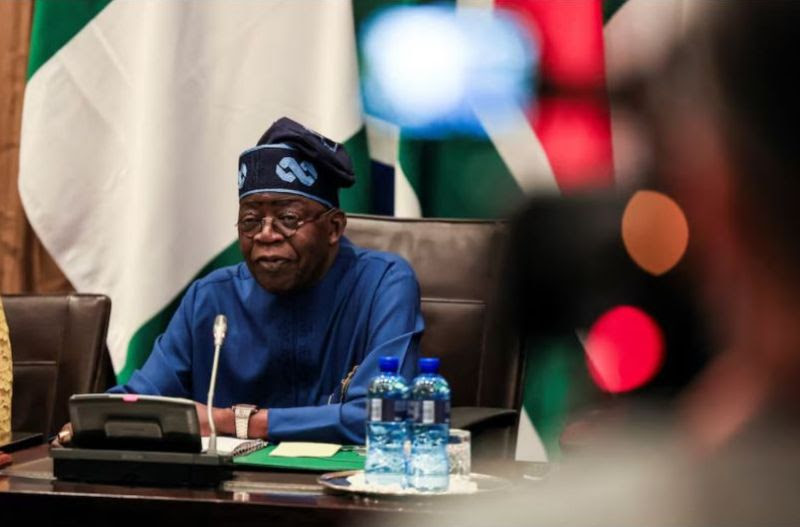
President Bola Tinubu has declared that Nigeria has moved beyond what he described as the “emergency treatment” phase of his administration’s economic reforms, signalling a shift towards policies intended to translate macroeconomic stabilisation into lower living costs, employment and improved household welfare.
Speaking in his Independence Day address marking Nigeria’s 66th anniversary, Tinubu said the economic foundation had been repaired after three years of major policy changes and that the central challenge facing his government was now delivering what he called “shared and widespread prosperity.”
The declaration comes as the country moves closer to the January 2027 presidential election, with economic conditions and household purchasing power expected to remain major issues in the political debate.
From Reform to Prosperity
Tinubu took office in May 2023 and immediately embarked on reforms intended to address longstanding fiscal and foreign-exchange distortions.
His administration removed the petrol subsidy, liberalised the foreign-exchange market and implemented other fiscal and monetary changes.
While those measures were designed to address structural problems, they also contributed to sharp increases in the cost of transportation, food, energy and other essentials.
In his Independence Day address, Tinubu acknowledged that the next phase must produce benefits that Nigerians can experience directly.
The President said prosperity should mean farmers being able to produce safely and at lower cost, factories receiving reliable electricity, businesses accessing credit, young people finding productive employment and families being able to afford food, transport and education.
Cost of Living Remains Major Test
For many Nigerians, however, the question is how quickly improving economic indicators will translate into household relief.
The Nigeria Labour Congress has challenged the administration’s prosperity narrative, arguing that high food, transport and petrol costs continue to erode workers’ purchasing power.
This gap between improving macroeconomic indicators and household experience represents one of the administration’s biggest policy challenges.
Businesses have also had to adjust to higher energy, financing, logistics and input costs.
That means economic growth alone may not be sufficient to convince households that the reform programme has succeeded.
Government Prioritises Production Costs
Tinubu said reducing the cost of living would now be a priority and linked that objective to lowering the cost of producing and transporting goods consumed by Nigerians.
The approach suggests the administration intends to focus increasingly on supply-side constraints rather than relying solely on direct interventions.
Lower transportation and energy costs could affect prices across the economy because businesses typically pass part of their operating expenses to consumers.
Improved electricity supply and access to affordable credit could similarly reduce costs for manufacturers and small businesses.
Election Adds Political Pressure
The timing gives the economic message additional political significance.
As the 2027 election approaches, Tinubu’s economic record is increasingly becoming part of the contest between the governing party and its challengers.
Opposition figures have focused heavily on living costs and the impact of subsidy removal, while the administration argues that difficult reforms were necessary to prevent deeper economic problems and establish a foundation for sustainable growth.
The government must now demonstrate that stabilisation can produce measurable improvements in everyday economic conditions.
Tinubu’s declaration therefore represents both an assessment of the first three years of his administration and a commitment for the next phase.
The emergency treatment, according to the President, may be over.
For millions of Nigerians, the more consequential question is whether the promised period of shared prosperity will now become visible in food prices, transportation costs, jobs, wages and household purchasing power.