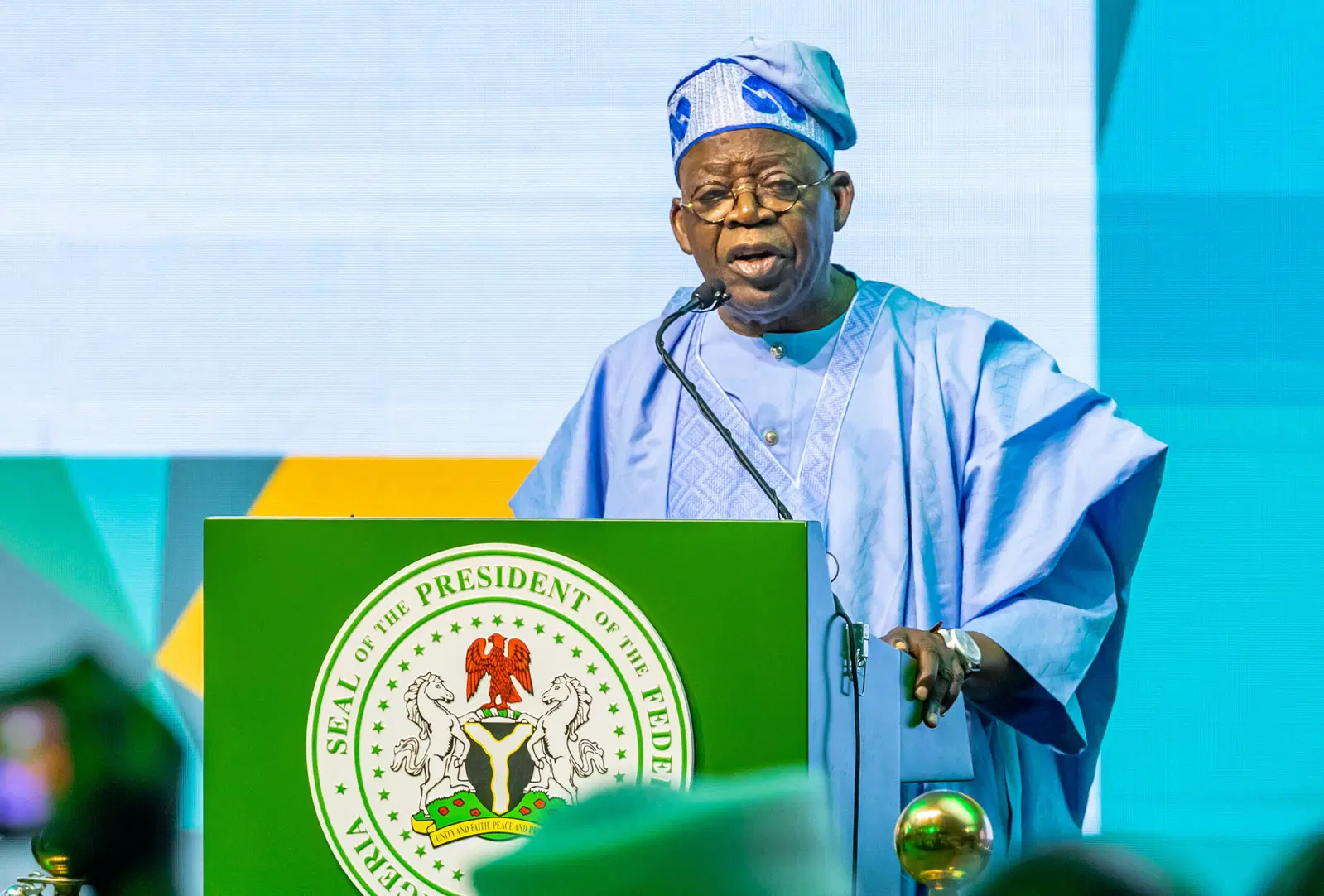
President Bola Ahmed Tinubu has welcomed the World Bank’s October 2026 Nigeria Development Update, saying its findings indicate that the government’s economic reforms are strengthening public finances and supporting economic growth.
The report, titled Beyond the Federal Purse: How Higher Revenues Reshaped State Priorities, said Nigeria’s economy grew by 4.2 per cent in the first half of 2026, compared with 3.9 per cent in the corresponding period of 2025.
The World Bank projects average growth of at least 4.4 per cent between 2026 and 2028. It also reported that poverty had stabilised for the first time since 2019, while warning that a sustained improvement in living standards depends on growth outpacing population increases.
Revenues and state spending rise
According to the report, reforms introduced since 2023 helped increase federation revenues by 69 per cent in real terms between 2023 and 2025, with state governments among the largest beneficiaries.
States increased capital spending by 151 per cent in real terms over the same period. Much of the additional expenditure went towards roads, transport, agriculture, energy and housing.
The World Bank also found that internally generated revenue increased in real terms in 31 of 35 states, while 21 states reduced their debt-to-GDP ratios between 2021 and 2025.
Inflation remains a major challenge
Inflation fell from 27.6 per cent in January 2025 to 15.2 per cent in December 2025, according to the report. Higher global fuel prices linked to conflict in the Middle East subsequently slowed the decline.
The Bank expects inflation to ease towards 12 per cent by 2028.
Tinubu said the findings supported the government’s decision to remove petrol subsidies, unify the foreign-exchange market and strengthen fiscal discipline. He also acknowledged that more work was needed to reduce food prices and create decent jobs.
The next test for the reforms will be whether stronger public finances and economic growth produce more affordable essentials, employment opportunities and improved household welfare.