…NIHOTOUR DG says sector can drive job creation, investment and economic diversification
ABUJA, October 22, 2026 — President Bola Ahmed Tinubu has reaffirmed his administration’s support for reforms in Nigeria’s tourism and hospitality industry, pledging continued backing for efforts to improve professional standards, develop skills and strengthen the sector’s contribution to economic growth.
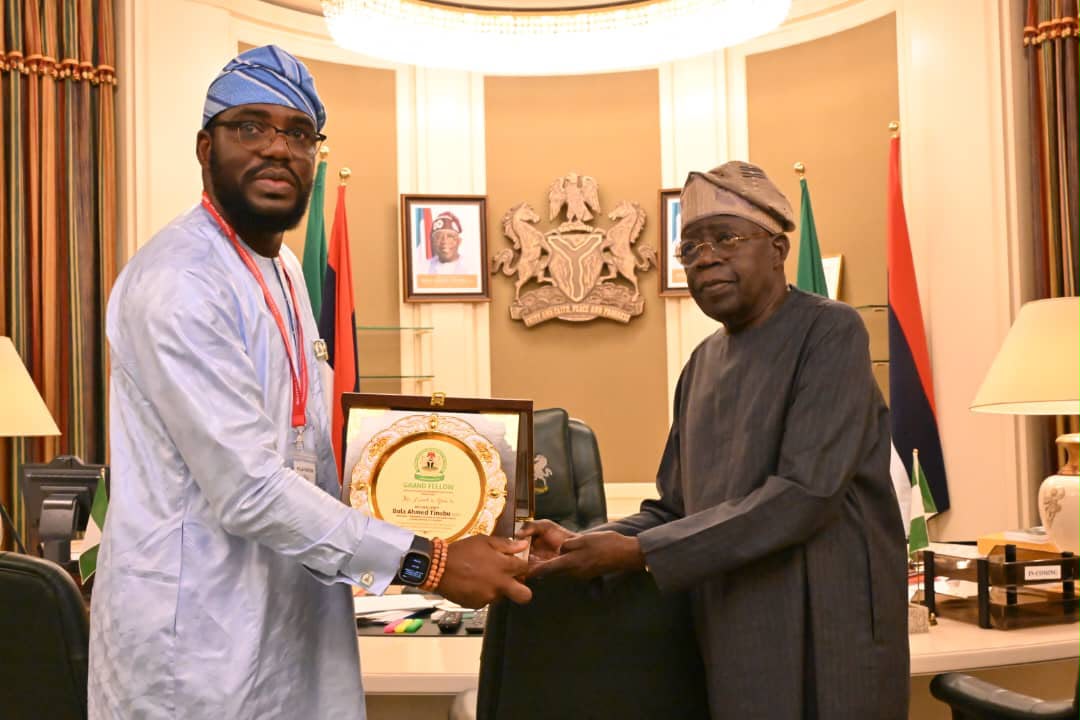
The President gave the assurance during a meeting with the Director-General and Chief Executive Officer of the National Institute for Hospitality and Tourism (NIHOTOUR), Aare Abisoye Fagade, who briefed him on ongoing initiatives aimed at improving service quality, accountability and competitiveness across the tourism, hospitality and travel sectors.
As part of the engagement, Fagade presented Tinubu with the Grand Fellow of National Hospitality and Tourism (GFNHT), described by NIHOTOUR as the highest singular honour in Nigeria’s tourism sector.
The meeting focused on reforms being pursued by the institute, particularly the implementation of the NIHOTOUR Act 2022, professional development and efforts to establish stronger standards for practitioners and businesses operating within the industry.
The reforms are intended to improve workforce competence, promote accountability and create a more structured operating environment for tourism and hospitality businesses, potentially strengthening investor confidence and the sector’s capacity to compete internationally.
Speaking on the significance of the engagement, Fagade said Nigeria must begin to view tourism beyond leisure and recreation, recognising its potential to create jobs, attract investment, support entrepreneurship and contribute to national prosperity.
He said the development of a professional and well-regulated tourism industry would be critical to converting Nigeria’s tourism assets into sustainable economic opportunities.
“Our responsibility is to build the professional and institutional foundations that will enable Nigeria’s tourism potential to translate into jobs, investment and sustainable economic growth. The President’s continued support is important to advancing these reforms and positioning the sector for greater national impact,” Fagade said.
Nigeria’s tourism and hospitality industry spans accommodation, food services, travel, events, cultural attractions and other visitor-related businesses. Strengthening the sector could expand opportunities for small businesses, young people and professionals while supporting investment across related industries.
However, translating the country’s tourism potential into sustained economic benefits will require consistent policy implementation, skilled personnel, improved service delivery and stronger collaboration between government institutions and private-sector operators.
NIHOTOUR’s reform agenda places professional competence and institutional standards at the centre of efforts to improve the industry. Effective implementation of the NIHOTOUR Act 2022 is expected to support the institute’s role in advancing training, certification and professional standards within its statutory mandate.
The engagement also aligns with the objectives of Tinubu’s Renewed Hope Agenda, which prioritises economic diversification, employment generation and the development of productive sectors outside oil.
For the tourism industry, sustained government support could help create a more predictable environment for businesses, encourage investment in hospitality infrastructure and improve the quality of services available to domestic and international visitors.
NIHOTOUR said it would continue working with government agencies and private-sector stakeholders to build a more professional, competitive and internationally recognised tourism industry capable of delivering long-term economic and social benefits to Nigerians.
The institute maintained that stronger professional standards and institutional coordination would be essential to ensuring that the country’s tourism resources translate into tangible opportunities for businesses, workers and communities.