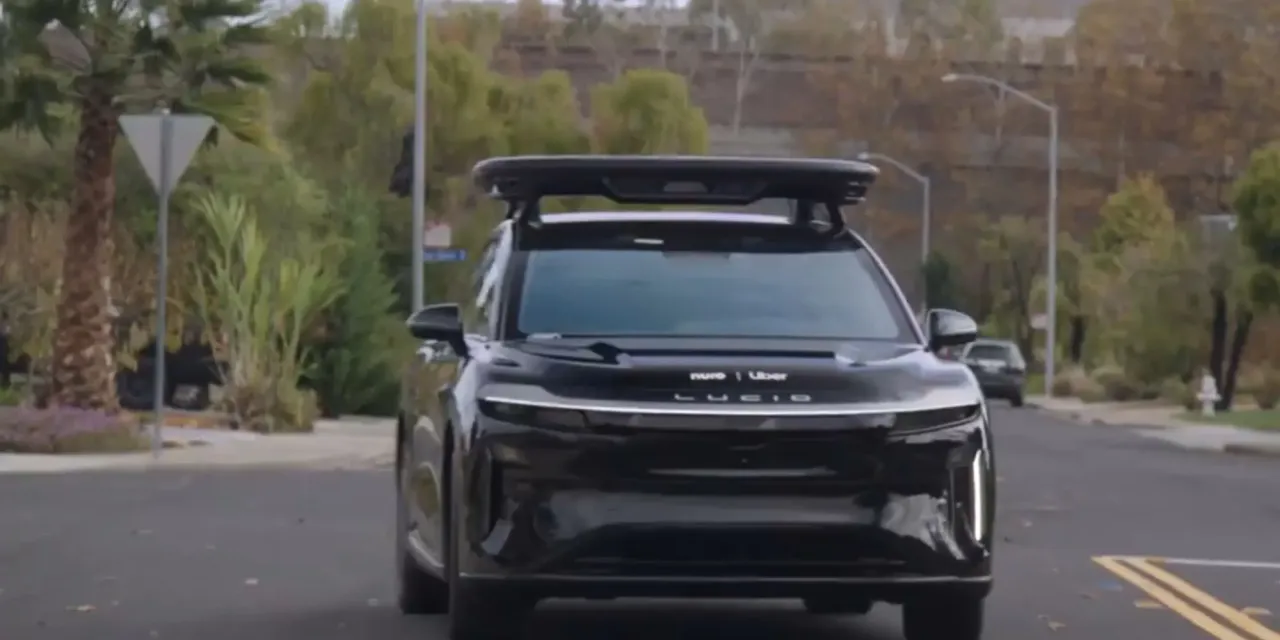
Uber Technologies has advanced its autonomous mobility ambitions after beginning fully driverless testing of robotaxis developed in partnership with autonomous-driving technology company Nuro and electric vehicle manufacturer Lucid Group.
The companies announced that testing had commenced on public roads across the San Francisco Bay Area, California, with the latest phase involving vehicles operating without a human safety driver inside.
The development represents an important step towards the planned commercial introduction of Uber’s premium robotaxi service, which the companies expect to launch in the first quarter of 2027.
The programme uses Lucid Gravity electric sport utility vehicles equipped with autonomous-driving technology developed by Nuro. The vehicles are designed to combine Lucid’s electric vehicle platform with Nuro’s self-driving systems and Uber’s ride-hailing network.
According to the companies, the transition to driverless public-road testing follows months of supervised autonomous testing, during which safety operators remained inside the vehicles.
Nuro said it had been conducting extensive testing of the Lucid Gravity robotaxi since December 2025, including operations in the San Francisco Bay Area and Houston.
The latest phase will allow the companies to assess the vehicles’ performance in real-world traffic conditions without a safety driver, while preparing for the next stage of the programme.
Employee rides in the driverless vehicles are expected to begin as the project progresses towards its planned public launch.
The partnership reflects Uber’s strategy of returning to autonomous mobility through collaborations rather than relying solely on developing its own self-driving vehicle technology.
The company has committed substantial financial resources to the partnership, including an initial investment of $300 million in Lucid, which has since increased to $500 million.
For Lucid, the arrangement offers an opportunity to position its electric vehicles within the emerging autonomous transportation market, while Nuro provides the technology required to operate the vehicles without human drivers.
The robotaxi project also places Uber in a growing competitive market involving technology companies, automotive manufacturers and mobility operators seeking to commercialise autonomous transportation.
However, the planned public launch will depend on the outcome of ongoing testing, operational readiness and the ability of the companies to meet applicable safety and regulatory requirements.
The latest development brings the partnership closer to its target of introducing driverless ride-hailing services, potentially expanding the range of transportation options available to passengers in the United States.