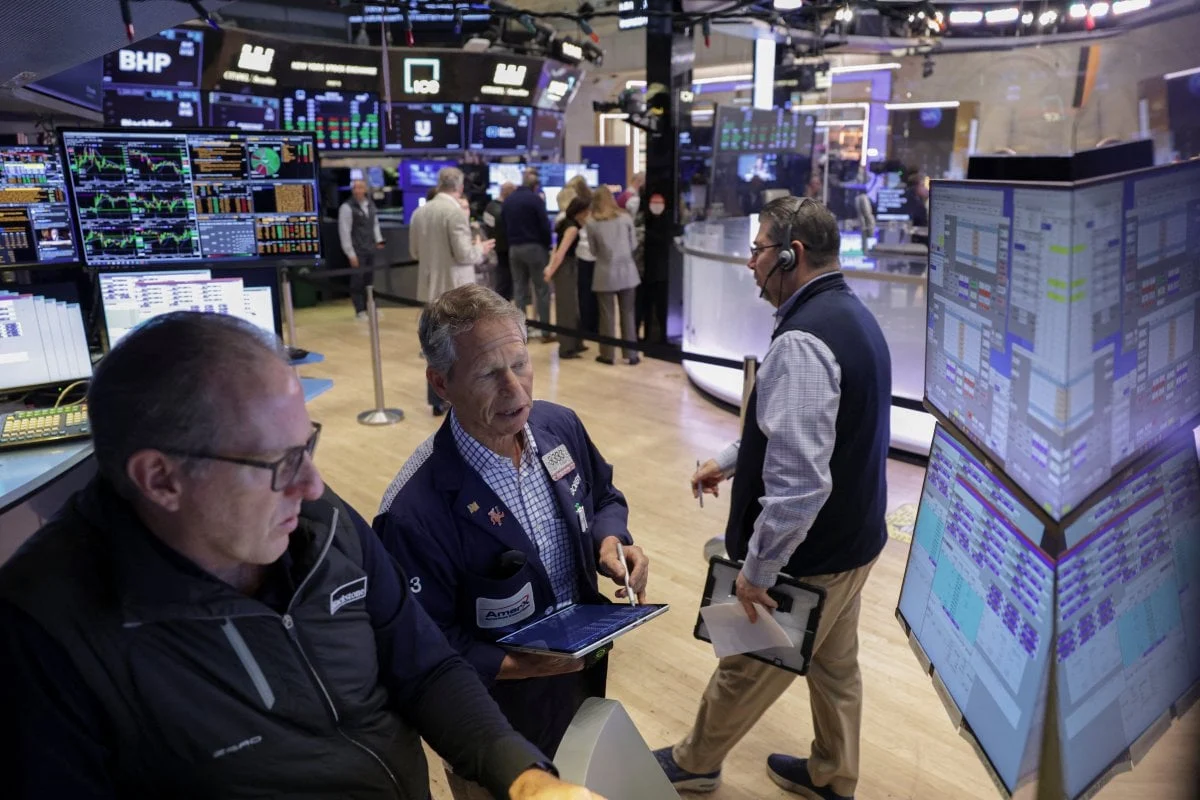
United States stock-index futures advanced on Friday as fresh reports about OpenAI’s revenue outlook helped restore confidence in technology stocks, while declining oil prices provided additional support to global financial markets.
The recovery followed a difficult trading session on Wall Street, where concerns about artificial intelligence investment costs and the financial performance of major technology companies had weighed on equities.
According to market figures reported by Bloomberg, futures contracts linked to the S&P 500 Index gained 0.3 per cent, while Nasdaq 100 futures advanced 0.5 per cent.
Asian equities also recorded gains, rising approximately 0.3 per cent, while European stock futures pointed to a positive opening.
The improvement came after reports that OpenAI expected to reach or exceed $70 billion in annualised revenue by the end of 2026, supported largely by growth in its enterprise business.
The revenue outlook helped ease concerns that the artificial intelligence industry’s rapid expansion might not be generating sufficient commercial returns to justify its enormous investment requirements.
OpenAI Revenue Outlook Restores Confidence
Investors have increasingly focused on the relationship between spending on artificial intelligence infrastructure and the revenue generated by AI products and services.
Major technology companies have committed substantial resources to data centres, advanced computing systems, specialised semiconductors and the development of increasingly capable AI models.
These investments have created opportunities for chipmakers, cloud computing providers and infrastructure developers.
However, they have also raised questions about profitability and the time required to recover capital expenditure.
Bloomberg reported that OpenAI was expected to reach or exceed $70 billion in annualised revenue by year-end, citing people familiar with the matter.
Annualised revenue is a measure that expresses a current revenue run rate over a full year. It is not necessarily the same as revenue already earned during the year.
The reported projection therefore represents an expectation about future business performance rather than confirmed annual revenue.
Technology Stocks Recover After Sell-Off
The improved sentiment followed losses in US technology shares during the previous session.
A gauge of semiconductor companies had declined 3.4 per cent after a Financial Times report raised concerns about OpenAI’s revenue trajectory.
The report suggested that the company’s annualised revenue was approximately $20 billion below previously signalled levels.
The conflicting interpretations of OpenAI’s financial outlook contributed to uncertainty among investors.
Artificial intelligence companies have become important drivers of market sentiment because their spending influences demand for semiconductors, cloud infrastructure and other technology services.
As a result, developments involving leading AI developers can affect the share prices of companies across the wider technology supply chain.
The latest recovery suggests that investors were reassessing the implications of the reported figures, although uncertainty about the sector’s long-term profitability remains.
AI Infrastructure Spending Faces Greater Scrutiny
The rapid expansion of artificial intelligence has encouraged companies to invest heavily in computing infrastructure.
Advanced AI systems require significant processing capacity, electricity, cooling facilities and specialised hardware.
Building and operating these systems involves substantial capital expenditure.
For investors, the central question is whether revenue growth can keep pace with these costs.
Elevated borrowing costs can increase the financial burden associated with large infrastructure investments, particularly for companies relying on external financing.
This has placed greater emphasis on commercial adoption, enterprise subscriptions and the ability of AI developers to generate recurring revenue.
The growth of enterprise AI services is therefore becoming an important indicator of whether the technology can support sustainable business models.
Oil Prices Decline as Middle East Concerns Ease
Global market sentiment also received support from a decline in crude oil prices.
Brent crude fell approximately 1.2 per cent to $102.95 per barrel after US President Donald Trump indicated that Washington did not plan to attack Iran before the November midterm elections.
The comments reduced some immediate concerns about further escalation in the Middle East and potential disruptions to global energy supplies.
Oil prices have remained sensitive to developments affecting the Strait of Hormuz, an important route for international petroleum shipments.
Any disruption to maritime traffic through the waterway can create uncertainty about supply availability and transportation costs.
The decline in crude prices offered some relief to investors concerned about the inflationary effects of expensive energy.
However, oil remained above $100 per barrel, reflecting continuing geopolitical risks.
Bond and Currency Markets React
US Treasury securities maintained gains from the previous trading session, while a Bloomberg measure of the dollar edged lower.
Movements in bond and currency markets reflected changing expectations about economic conditions, energy prices and interest rates.
Lower oil prices can reduce some inflationary pressures, potentially influencing expectations about monetary policy.
However, the relationship between energy prices and interest rates depends on wider economic developments.
Investors will continue to assess inflation data, central bank statements and corporate earnings for signals about the direction of financial markets.
Earnings Season to Test AI Investment Confidence
The approaching corporate earnings season is expected to provide an important test of investor confidence in technology companies.
Market participants will be looking for evidence that revenue and profit growth can justify continued spending on AI infrastructure.
Particular attention is likely to focus on cloud computing demand, semiconductor sales, enterprise AI adoption and capital expenditure forecasts.
Strong commercial performance could support confidence in the sector, while weaker results may renew concerns about investment returns.
Global Markets Remain Sensitive to AI and Energy
The latest trading session highlights the influence of artificial intelligence and geopolitical developments on international financial markets.
Technology earnings expectations, energy prices and monetary policy continue to shape investor decisions.
Although US stock futures and Asian equities recorded gains, the recovery does not eliminate concerns about AI profitability or Middle East supply risks.
The next phase of market movements will depend on corporate results, developments in energy markets and the broader economic outlook.