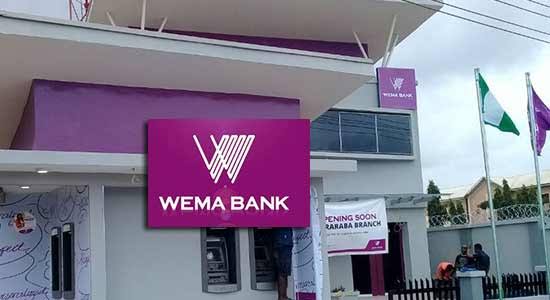
Wema Bank has secured its position in Nigeria’s top tier of financial institutions after surpassing the Central Bank of Nigeria’s new recapitalisation requirement, enabling it to retain its National Banking Licence.
The bank announced on Monday that it recorded a Total Qualifying Capital of N264.7bn, exceeding the N200bn minimum threshold set by the regulator for national banks.
Wema Bank also completed the capital exercise in April 2026, six months ahead of the deadline set by the Central Bank of Nigeria.
The capital raise was achieved through a two-phase fundraising strategy designed to strengthen the bank’s balance sheet and position it for long-term growth.
First, the bank successfully launched a N150bn Rights Issue between April and May 2025, which received strong participation from existing shareholders. This was followed by a N50bn special placement later in 2025, further boosting the bank’s capital base.
Commenting on the achievement, the Managing Director and Chief Executive Officer of Wema Bank, Moruf Oseni, described the development as a major milestone in the bank’s growth journey.
“The successful completion of our recapitalisation exercise is a defining moment for Wema Bank,” Oseni said.
“It is a strong validation of our strategy, our performance, and the enduring confidence our shareholders and stakeholders have in our vision.”
The recapitalisation effort followed a sweeping policy introduced by the Central Bank of Nigeria in March 2024 under Governor Olayemi Cardoso. The initiative aimed to strengthen the banking sector against economic volatility and position banks to support the Federal Government’s ambition of building a $1tn economy.
Under the policy, the minimum capital requirement for national banks was raised significantly from N25bn to N200bn.
For Wema Bank, the achievement is particularly significant given its history. After operating for years as a regional institution, the bank regained its national banking licence in 2015.
According to Oseni, exceeding the new capital threshold reinforces the bank’s readiness to compete with larger institutions in the industry.
“We have not only met the CBN’s requirements; we have exceeded them, reinforcing our position as a national bank with the scale, strength, and stability to compete and lead,” he said.
With the recapitalisation completed, the bank plans to shift focus to expanding its operations across key sectors of the economy.
The strengthened capital base is expected to increase lending capacity to Small and Medium Enterprises, improve digital banking infrastructure, and expand corporate banking services.
Wema Bank also intends to leverage its digital platform, ALAT, to accelerate financial inclusion and bridge the gap between traditional banking services and fintech-driven innovation.
“This milestone strengthens our ability to compete at scale, deepen our market presence, and deliver more value to our customers across Nigeria through improved access to credit, enhanced digital banking experiences, and innovative financial solutions,” Oseni said.
Looking ahead, the bank said it plans to play a stronger role in supporting Nigeria’s economic growth through increased financing and technology-driven banking solutions.
“This is not just about retaining our licence; it is about building a bigger, stronger, and more impactful Wema Bank,” the CEO added.
Established in 1945, Wema Bank remains Nigeria’s longest-standing indigenous commercial bank. Over the decades, it has evolved from a traditional retail lender into a technology-driven institution, notably launching the country’s first fully digital bank, ALAT, in 2017.
Following the successful recapitalisation, the bank will continue operating with its National Licence while serving millions of customers across Nigeria.