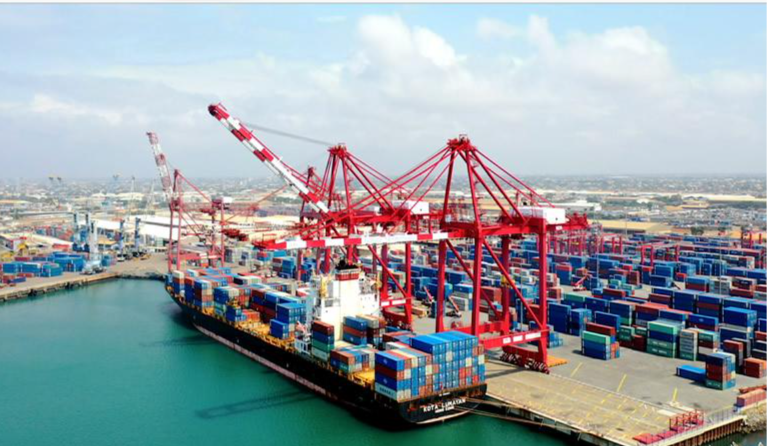
Port authorities across West and Central Africa are being encouraged to strengthen regional cooperation as part of efforts to reduce cargo clearance delays, lower logistics costs and improve trade competitiveness.
The call was made by Abubakar Dantsoho, President of the Port Management Association of West and Central Africa and Managing Director of the Nigerian Ports Authority.
According to a report published by TheCable on November 17, 2026, Dantsoho said ports in the region must prioritise strategic collaboration rather than destructive competition to address common challenges affecting maritime operations.
He made the remarks during the opening of the 46th annual council meeting of the Port Management Association of West and Central Africa and a joint Gulf of Guinea Commission-PMAWCA forum in Sipopo, Malabo, Equatorial Guinea.
The meeting brought attention to the importance of cooperation among regional ports, particularly as African countries continue to pursue stronger trade relationships and improved transportation networks.
Ports play an important role in international trade because they provide the infrastructure through which imported and exported goods move between countries.
For many African economies, maritime transportation remains essential for the movement of petroleum products, agricultural commodities, manufactured goods, industrial equipment and other commercial products.
However, delays in cargo clearance, high handling charges, inadequate infrastructure and inefficient logistics systems continue to affect the competitiveness of businesses across the continent.
These challenges can increase the cost of importing goods and make locally produced products more expensive when transported to international markets.
Dantsoho argued that closer cooperation among ports could help address some of these difficulties by improving operational efficiency and strengthening logistics resilience.
Rather than viewing neighbouring ports only as competitors, port authorities could work together to develop complementary services, improve information sharing and strengthen regional transportation corridors.
Such cooperation could also benefit landlocked countries that depend on neighbouring coastal states to access international markets.
Many landlocked African countries rely on seaports in other countries to receive imports and export their products.
When ports experience congestion or cargo clearance delays, the effects can extend beyond the country where the port is located.
Importers may face higher transportation expenses, exporters may struggle to meet delivery deadlines and businesses may experience disruptions in their supply chains.
Stronger coordination among port authorities could therefore improve the movement of goods across national borders.
Nigeria’s maritime industry is particularly important to this discussion because the country operates major commercial ports that serve domestic businesses and regional trade activities.
The Nigerian Ports Authority manages the country’s major seaport infrastructure and has continued to emphasise the importance of improving efficiency and attracting more cargo traffic.
For Nigerian businesses, improved regional port cooperation could support more efficient trade with neighbouring countries and strengthen access to regional markets.
Agricultural exporters, manufacturers, shipping companies and logistics operators could benefit from more predictable cargo handling and improved transportation arrangements.
The initiative also comes at a time when African countries are working towards expanding trade under the African Continental Free Trade Area.
The agreement seeks to increase trade among African countries by reducing barriers and encouraging the movement of goods and services across the continent.
However, achieving these objectives requires more than trade agreements. Efficient ports, roads, railways, customs systems and border procedures are also necessary.
Although regional cooperation offers opportunities, its success will depend on practical implementation.
Port authorities will need to improve coordination, address infrastructure gaps and develop policies that encourage efficient movement of goods.
The latest call highlights the importance of treating maritime infrastructure as a regional economic asset rather than an isolated national service.
If properly implemented, stronger cooperation among West and Central African ports could reduce business costs, improve trade efficiency and strengthen the region’s position in international commerce.