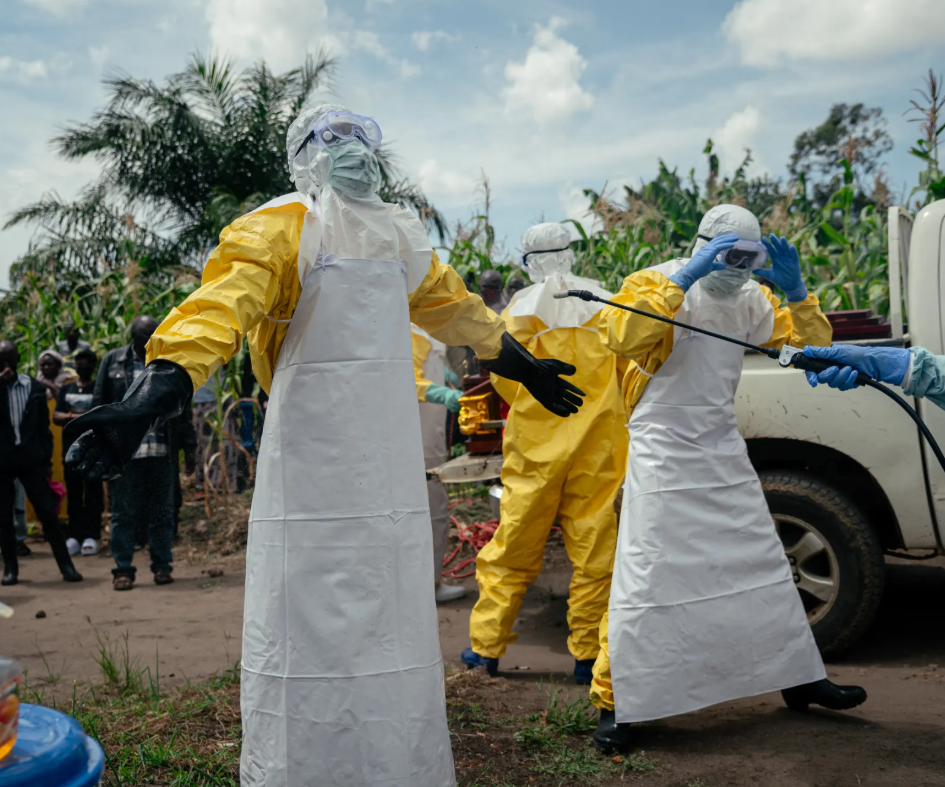
The World Health Organization has said it is still possible to bring the deadly Ebola outbreak in the Democratic Republic of Congo under control within three months.
However, health officials have warned that this will only happen if enough resources are mobilised quickly to strengthen the response. The outbreak is already the deadliest in the country’s history and one of the deadliest Ebola crises ever recorded. It has continued to spread despite efforts to trace infections and isolate patients.
As of August 18, 2026, the outbreak had killed at least 2,325 people and had spread to a sixth province. The situation has become particularly worrying because many new infections cannot be linked to known cases.
According to the WHO, between 70% and 80% of new cases have no known connection to previously identified patients. This suggests that there may be several chains of transmission that health officials have not yet detected.
That makes the outbreak much harder to control.
Health workers need to identify infected people, trace those they have been in contact with and prevent further transmission. When cases appear outside known networks, it becomes more difficult to know where the virus is spreading and who may have been exposed.
Funding gap threatens the response
The WHO has said that adequate resources are essential if the outbreak is to be controlled within the proposed three-month period.
The response requires about $115 million, but only around 60% of that amount had been raised by August 18. The funding shortage means health authorities face pressure to do more with limited resources while the virus continues to spread.
Additional funding is needed for treatment centres, medical staff, protective equipment, laboratories, surveillance and contact tracing. Communities also need accurate information about the disease and support to reduce the risk of further infections.
WHO official Thierno Balde said the outbreak could still be brought under control, but the response must be properly supported. The warning shows that time is becoming increasingly important.
The health agency has been increasing its response. More beds have been added to support treatment efforts, and additional epidemiologists have been deployed to help investigate cases and monitor the spread of the virus.
Despite these measures, the outbreak remains extremely serious.
Rare Ebola strain creates another challenge
The outbreak is being caused by the Bundibugyo strain of Ebola.
This has created additional difficulties because there is currently no approved vaccine or specific treatment for this strain. Scientists and health organisations are working on possible vaccine candidates, but the absence of an approved vaccine makes controlling the outbreak more challenging.
The Democratic Republic of Congo has dealt with Ebola outbreaks many times before. In fact, this is the country’s 17th recorded outbreak. Previous experience has helped health authorities understand how to respond, but the current crisis is proving unusually difficult because of its speed and scale.
The outbreak is taking place in a challenging environment marked by insecurity, humanitarian problems, population movement and difficult terrain. These conditions can slow down medical teams trying to reach affected communities.
Conflict and mobility complicate efforts
Another major problem is the movement of people across affected areas.
Artisanal miners, traders and other workers frequently travel between communities. This makes contact tracing more difficult because people who may have been exposed to the virus can move before health officials identify them.
The Associated Press reported that highly mobile artisanal mining communities have become a particular challenge for the response. Poor infrastructure, insecurity and the activities of armed groups have also made it difficult for health teams to reach some areas.
Misinformation and fear can create further obstacles.
Some people may delay seeking treatment because they are afraid of Ebola treatment centres or do not fully understand the disease. Delayed treatment also increases the possibility that infected people may spread the virus to relatives and others in their communities.
This is why health officials say community engagement is essential. Medical teams need local communities to trust the response and cooperate with surveillance and prevention efforts.
The next three months will be critical
The WHO’s assessment provides some hope, but it is not a guarantee that the outbreak will be contained.
Health officials say urgent action is needed to improve surveillance and identify cases earlier. Contact tracing must be strengthened, while treatment centres need enough staff and equipment to care for patients safely.
The organisation’s Emergency Committee is also reviewing the situation and considering the future status of the outbreak as a public health emergency of international concern.
The next few weeks could determine whether the response begins to reduce transmission or whether the outbreak spreads even further.
A major test for Africa’s public health systems
The crisis is not only a challenge for the Democratic Republic of Congo. Because people and goods move across borders, neighbouring countries also need to remain prepared.
The WHO has been supporting regional preparedness, including surveillance and cross-border cooperation. The aim is to prevent the virus from becoming an even wider international health emergency.
For now, the message from the WHO is clear: the outbreak can still be controlled, but success will depend on speed, funding and cooperation.
More resources must reach affected communities, more cases must be detected early, and people at risk must be identified before the virus spreads further.
With thousands of families already affected and more than 2,300 lives lost, the battle against Ebola has become one of the most urgent health emergencies facing Africa in 2026.
The WHO believes there is still time to change the direction of the outbreak. Whether that opportunity is successfully used may become clear over the next three months.