

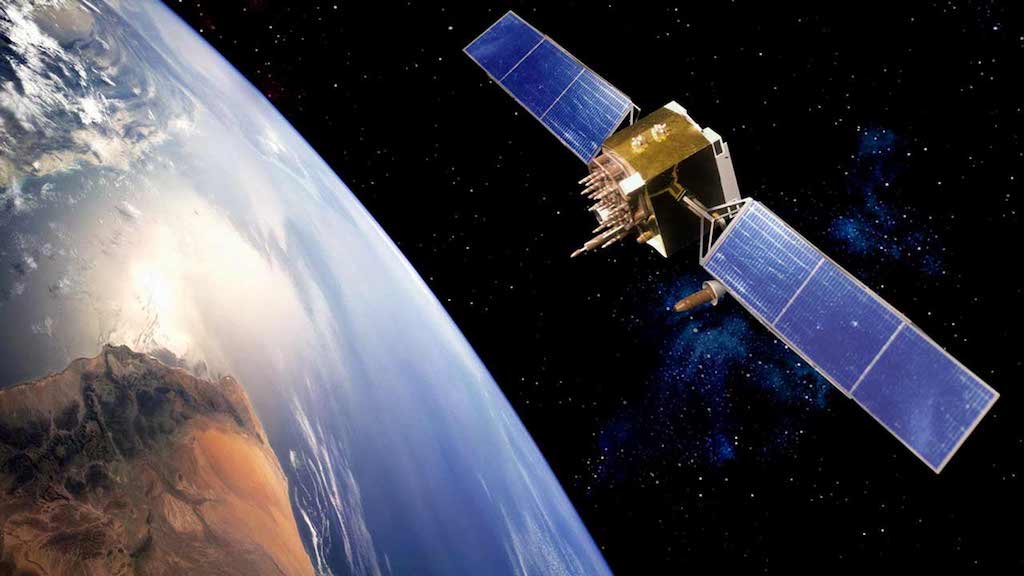
The Federal Government has fixed 2028 and 2029 for the launch of two new communication satellites, NIGCOMSAT-2A and NIGCOMSAT-2B, as part of efforts to strengthen national security and expand digital connectivity across Nigeria and neighbouring countries.
The Managing Director of Nigerian Communications Satellite Limited (NIGCOMSAT), Jane Nkechi Egerton-Idehen, disclosed this on Monday during the second Nigerian Satellite Week held in Abuja.
Egerton-Idehen explained that the projects had moved beyond the procurement phase and were now at the financing and implementation stage.
“For 2A and 2B, we have started the process. We have closed the tender and are now back into the financing and implementation stage. 2A is built to come up in 2028, and 2B for 2029,” she said.
According to her, the satellites will support intelligence gathering, surveillance, and connectivity across Nigeria’s borders and neighbouring countries, particularly for security operations.
“When they are up and running, they are expected to provide security within the borders and neighbouring countries. They will support security agencies because real-time data collection and intelligence are critical,” she added.
Also speaking at the event, the Minister of Communications and Digital Economy, Bosun Tijani, said the satellite programme forms part of the Federal Government’s broader strategy to deepen Nigeria’s digital infrastructure.
He explained that the initiative complements ongoing investments in fibre-optic expansion and telecommunications infrastructure, while also extending connectivity to neighbouring countries.
“The President’s approval of NIGCOMSAT-2A and 2B demonstrates a clear commitment to building the future. These satellites will enhance security, connect remote communities, and extend our fibre-optic network into neighbouring countries,” Tijani said.
The minister noted that some neighbouring countries pay significantly higher prices for internet capacity compared to major Nigerian cities such as Lagos.
“Extending our fibre network will not only improve connectivity but also enhance border security and regional collaboration,” he said.
Tijani added that satellite technology plays a vital role in modern development, from enabling internet access in rural communities to supporting agriculture, education, and business operations.
Meanwhile, the Chief of Army Staff, Olufemi Oluyede, said space technology has become increasingly important for Nigeria’s security and national development.
Represented by the Commander of the Nigerian Army Cyber Warfare Command, Maj. Gen. Kennedy Osemwegie, he stated that the military is gradually integrating space-based capabilities into its operations.
According to him, satellite technology supports intelligence gathering, surveillance, communications, and disaster response, all of which are critical for modern security operations.
He also emphasised that collaboration among the military, government agencies, research institutions, the private sector, and international partners has strengthened Nigeria’s capacity in satellite-based intelligence and communications.
The Federal Government has proposed N420.97 million for the NigComSat-2 Project in the 2026 fiscal year, according to details contained in the 2026 Appropriation Bill.
The allocation represents a reduction from the N601.39 million provided for the project in the 2025 budget, indicating a decline of about N180.42 million, or nearly 30 per cent year-on-year.
Despite the reduction, the project remains listed as ongoing, highlighting the government’s commitment to replacing the ageing NigComSat-1R satellite and expanding Nigeria’s capacity in broadband, broadcasting, and secure communications.
When completed, the new satellites are expected to support satellite broadband, direct-to-home broadcasting, rural connectivity, tele-education, and telemedicine, while strengthening Nigeria’s digital and security infrastructure.











