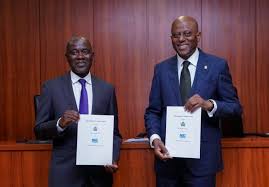
The Central Bank of Nigeria (CBN) and the Nigerian Communications Commission (NCC) on Monday signed a Memorandum of Understanding aimed at tackling SIM-related fraud and strengthening consumer protection across Nigeria’s digital ecosystem.
The agreement, signed at the CBN headquarters in Abuja, seeks to improve coordination between the financial and telecommunications sectors. It focuses on combating electronic fraud linked to mobile numbers, enhancing the integrity of the payment system, and safeguarding consumers who rely on digital financial services.
Speaking at the signing ceremony, CBN Governor Olayemi Cardoso described the pact as a critical step toward protecting Nigeria’s rapidly expanding digital economy.
“This MoU is not merely an administrative document; it is a practical statement of national interest,” Cardoso said.
He noted that the increasing use of digital platforms for payments and financial services requires stronger collaboration between regulators to maintain trust and security in the system.
According to him, the agreement will improve coordination on approvals, technical standards, and innovation trials, including sandbox testing. The goal is to ensure that financial services remain reliable, secure, and scalable as Nigeria’s digital economy grows.
Cardoso also highlighted the importance of collective action in addressing the rise in electronic fraud.
“Addressing these threats requires joined-up action, shared intelligence, clearer escalation paths, stronger operational readiness across regulated entities, and consistent public education,” he said.
A major feature of the agreement is the introduction of the Telecom Identity Risk Management Portal. The data-sharing platform is designed to detect fraud linked to recycled, swapped, or blacklisted phone numbers.
The portal will allow banks and fintech companies to verify the status of mobile numbers in real time before transactions are completed. This added layer of verification is expected to reduce fraud risks and protect consumers.
Cardoso assured that the platform will operate under strict data protection standards, including encryption and consent protocols.
Also speaking, NCC Executive Vice Chairman Aminu Maida described the agreement as a milestone in strengthening Nigeria’s digital economy.
“The signing of this Memorandum of Understanding marks an important milestone in the regulatory stewardship of Nigeria’s digital economy,” Maida said.
He stressed that collaboration between the financial and telecommunications regulators is essential for tackling emerging digital threats.
Maida explained that the initiative will give financial institutions better visibility into the status of phone numbers used for transactions, including whether they have been swapped, recycled, or flagged for suspicious activity.
“This ensures that our financial services industry is better equipped with timely and relevant information to effectively combat e-fraud, particularly those perpetrated using phone numbers,” he said.
He added that the agreement will also improve consumer protection by speeding up the resolution of common issues such as failed airtime recharges.
Earlier, the Director of Payment System Supervision at the CBN, Dr Rakiya Yusuf, said the partnership between the two regulators has evolved over the years into a more integrated collaboration focused on securing Nigeria’s digital and financial systems.
She traced the relationship to earlier efforts to align mobile payment regulations with telecom licensing frameworks, including a 2018 MoU that allowed telecom operators to participate in mobile money services through special purpose vehicles.
Yusuf also highlighted joint interventions such as the resolution of the USSD pricing dispute, which led to the introduction of a ₦6.98 per session fee. She noted ongoing efforts to address failed transactions through a proposed framework that could ensure refunds within 30 seconds.
Under the new agreement, two joint committees will be established to oversee implementation. These include the Joint Committee on Payment Systems and Consumer Protection and the Joint Committee on the telecom risk management platform.
The regulators also unveiled a joint framework to address the growing issue of failed airtime and data transactions, which have frustrated many consumers after payments are processed without service delivery.
The 20-page draft framework, published on the CBN’s website, was developed with input from banks, mobile network operators, payment providers, and other stakeholders.
It aims to clarify accountability, standardise complaint-resolution timelines, and create a coordinated system for addressing grievances across the financial and telecommunications sectors.
Officials say the agreement will deepen digital financial inclusion, reduce fraud risks, and strengthen public confidence in Nigeria’s expanding digital economy.