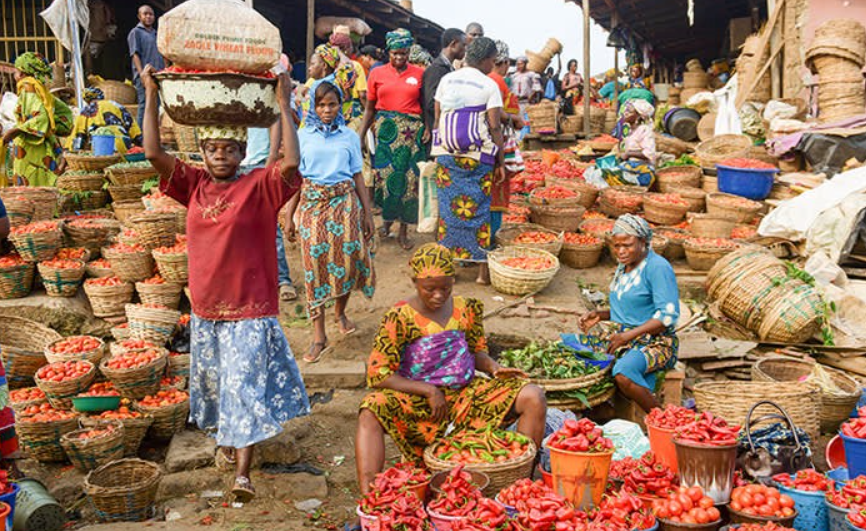
The Federal Government has stated that reducing post-harvest losses of farm produce by just 10 per cent could significantly increase food availability across Nigeria.
The government also highlighted the high level of agricultural produce wastage in the country, noting that farmers lose up to 70 per cent of their harvest due to inadequate storage facilities and poor post-harvest management.
The Minister of State for Agriculture and Food Security, Senator Abdullahi Aliyu, made the disclosure during the 2026 Post-Harvest Connect and Root, Tuber, and Banana Conference held in Abuja.
According to the minister, addressing post-harvest challenges could play a crucial role in improving food availability and affordability nationwide.
Aliyu said the level of wastage experienced by farmers across the agricultural value chain remains a major concern for the country’s food security.
“Many of our farmers end up with wastage, some up to 30 per cent to 40 per cent of their produce, and some in the fruit and vegetable segments lose up to 60 per cent to 70 per cent,” he said.
Despite Nigeria’s leading global position in the production of root and tuber crops, including more than 60 million tonnes of cassava and yam annually, the minister noted that a large share of these crops never reach consumers due to inadequate storage infrastructure.
“If we work out a programme to reduce post-harvest loss by even 10 per cent, more food will be available, and this will impact affordability. The more you have, the less the price,” Aliyu added.
The remarks come amid persistent food price pressures across the country. In March 2026, Nigeria’s headline inflation rose to 15.38 per cent, up from 15.06 per cent recorded in February, largely driven by rising food costs.
Urban areas recorded a month-on-month inflation rate of 3.16 per cent, while rural areas experienced sharper increases of 6.73 per cent.
Analysts say the rising cost of food has been worsened by exchange rate volatility, supply constraints, and structural weaknesses in the agricultural value chain.
Although Nigeria’s food security discussions often focus on production levels, such as tonnes harvested, hectares cultivated, and output growth, experts note that these indicators do not fully address the structural issues affecting the sector.
A significant portion of locally produced food fails to reach markets in good condition due to weak infrastructure in storage, preservation, and transportation.
Stakeholders at the conference emphasised that investing in improved post-harvest systems could help reduce waste, strengthen food supply chains, and ultimately lower prices for consumers.