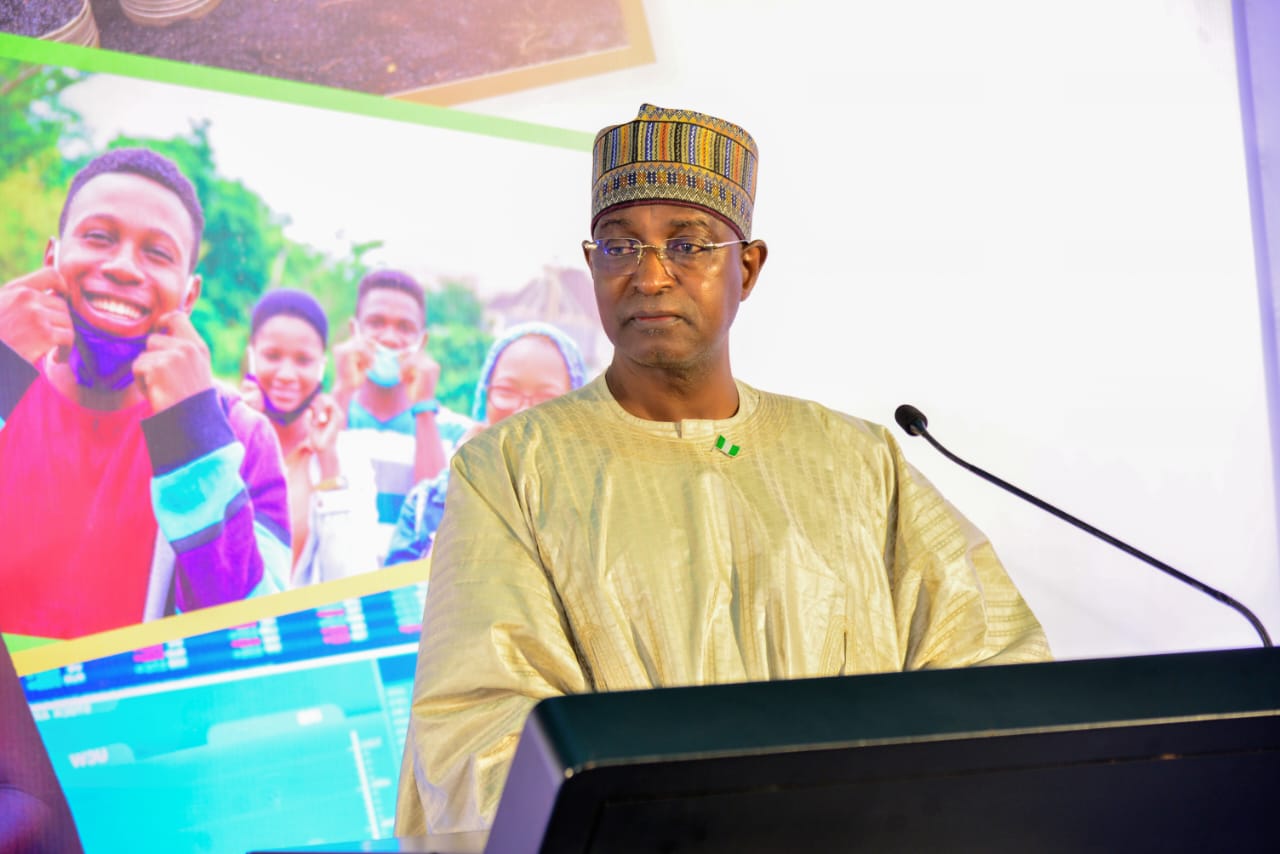
The Federal Government has inaugurated a 40 million-dose animal vaccine storage facility in Jimeta, Yola North Local Government Area of Adamawa State, as part of efforts to strengthen animal health services and boost livestock development across Nigeria.
The facility was commissioned on Thursday by the Minister of Livestock Development, Idi Maiha, during a three-day working visit to the state.
Maiha described the solar-powered facility as a strategic investment that will improve vaccine storage, distribution and disease control efforts within the livestock sector, particularly in the North-East region.
According to the minister, the state-of-the-art cold storage facility is designed to serve as both a national and regional hub for the storage and distribution of veterinary vaccines.
He said the facility can safely store approximately 40 million doses of vaccines under a reliable cold-chain system, helping to ensure their potency and effectiveness.
“The facility has the capacity to store approximately 40 million doses of veterinary vaccines under a reliable cold-chain system,” Maiha said.
The minister said the project forms part of the Federal Government’s livestock transformation agenda being implemented through the Livestock Productivity, Resilience and Support Project (L-PRES), with support from the World Bank.
He added that similar facilities have already been established in Abuja, Sokoto, Edo, Lagos and Anambra states, creating a nationwide network for more efficient vaccine storage and distribution.
Maiha also addressed concerns surrounding the Federal Government’s pilot ranching initiative, which is being implemented in five states and the Federal Capital Territory.
According to him, the programme is not designed to acquire land from individuals or communities.
“The Ministry, under President Bola Tinubu, is not going to grab land from anybody. We don’t want land. What we want is cooperation,” he said.
He explained that participating state governments would identify suitable land after carrying out stakeholder consultations and engaging with host communities.
Earlier, the National Project Coordinator of L-PRES, Sanusi Abubakar, described the project as a major milestone in strengthening Nigeria’s livestock vaccine ecosystem.
He said the solar-powered cold room would eliminate the risk of vaccine spoilage caused by power outages by providing uninterrupted off-grid storage.
“This structure is designed to hold conservatively 40 million doses of animal vaccines stored under a cold-chain system that is completely off-grid,” Abubakar said.
He added that the facility would operate through a public-private partnership arrangement, with the Federal and State Governments jointly responsible for 50% of its operations while private-sector partners manage the remaining share.
Representing Governor Ahmadu Fintiri at the event, the Commissioner for Livestock and Aquaculture Development, Usman Lamurde, commended the Federal Government for its investments in Adamawa State’s livestock sector.
He said livestock production remains a critical part of the state’s economy and contributes significantly to its internally generated revenue.
“Livestock production is contributing almost 40% of the state’s annual total internally generated revenue,” Lamurde said.
The vaccine storage facility is one of six major livestock development projects being commissioned during the minister’s visit to Adamawa State.
Other projects include an Integrated Waste Management Plant, a Cattle Resting Point and the rehabilitation of the Gongoshi Grazing Reserve, including the construction of new boreholes.
The projects also include a Strategic Artificial Insemination Excellence Centre at Adamawa State University in Mubi, as well as a Water Harvesting Structure and Weather Station.
The inauguration comes amid ongoing efforts by the Federal Government to modernise and digitise Nigeria’s livestock industry.
Recently, the government validated the National Livestock Information Management System, a platform designed to centralise livestock data, improve coordination within the sector and support evidence-based policymaking.
The platform is expected to integrate data from state governments, livestock associations, field officers, development partners and relevant ministries to strengthen planning and improve productivity across the livestock value chain.
The latest investment also aligns with the government’s broader push to unlock opportunities in Nigeria’s livestock sector, including reforms aimed at expanding livestock exports and improving the sector’s contribution to economic growth.
The Federal Government had earlier announced plans to reform Nigeria’s livestock export framework, with the market estimated at $3.2 billion.