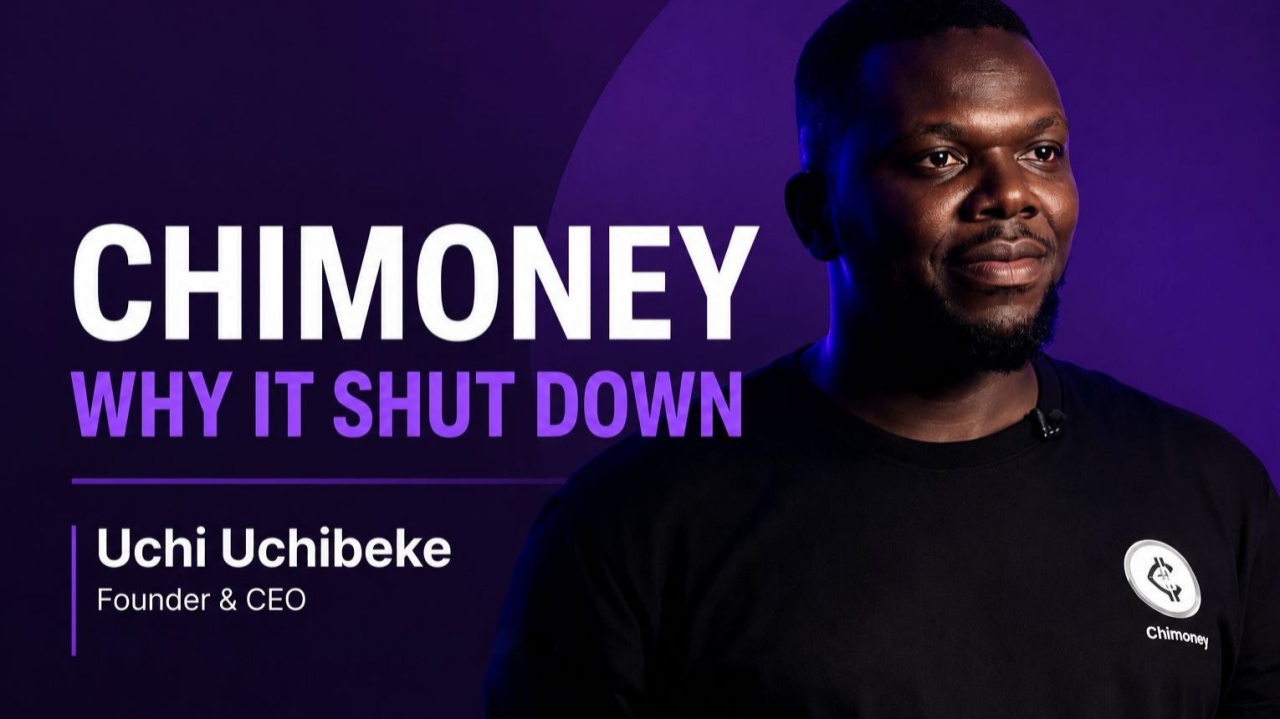
The acquisition of payments infrastructure company Chimoney has officially closed, with all investors and team members receiving proceeds from the transaction as Nigerian entrepreneur Uchi Nick Uchibeke shifts his attention towards one of artificial intelligence’s emerging security challenges.
The transaction involved payments to 31 individuals and firms, bringing the current chapter of Chimoney to an end following its acquisition by CapitalSage.
Uchibeke is now turning his attention towards infrastructure designed to control what artificial intelligence agents are authorised to do when interacting with applications and financial systems.
The transition reflects a wider shift in the technology industry as developers move beyond conversational AI towards autonomous software capable of completing tasks on behalf of users.
Chimoney Built Payment Infrastructure
Chimoney developed infrastructure for moving money and digital value across borders.
Its technology was designed around programmable payments and the ability for businesses and developers to distribute value through digital channels.
The company’s acquisition provides another example of an exit within Nigeria’s technology ecosystem at a time when investors are increasingly examining whether African startups can generate returns through acquisitions and other liquidity events.
For founders and venture investors, startup exits matter because they allow capital tied up in private companies to be returned and potentially recycled into new businesses.
The Chimoney transaction saw proceeds distributed among investors and team members following completion of the deal.
Founder Targets Next AI Security Problem
Uchibeke’s next focus is considerably different from conventional payments.
He is targeting the security and authorisation layer surrounding AI agents.
AI agents are software systems designed not merely to generate text or answer questions but to perform tasks.
Depending on the application, an agent could access databases, interact with business software, initiate transactions or perform other actions.
That creates a new security problem.
If an AI agent has access to sensitive systems, companies need mechanisms to determine precisely what the software is permitted to do.
From Human Permissions to Machine Permissions
Traditional cybersecurity largely assumes that people or conventional software applications request access to systems.
AI agents complicate that model because they can make decisions and initiate actions with varying degrees of autonomy.
Businesses adopting agentic AI therefore need systems capable of answering questions such as whether an agent can access customer records, approve a transaction, transfer money or communicate with external applications.
An agent may legitimately need access to a database while still being prohibited from deleting information or exporting it.
That makes authorisation potentially one of the most important infrastructure layers in the next phase of enterprise AI.
Nigerian Founders Move Deeper Into Infrastructure
The transition is also notable within Nigeria’s startup ecosystem.
Much of the country’s most visible technology growth has historically centred on fintech, payments, digital banking and consumer services.
AI infrastructure creates a different opportunity.
Rather than building applications used only by Nigerian consumers, developers can potentially build security and developer tools for a global market.
Uchibeke’s move from payment infrastructure into AI-agent security illustrates that shift.
Acquisition Marks Beginning of New Chapter
For Chimoney’s investors and employees, the completion of the acquisition closes one investment cycle.
For its founder, it opens another.
Artificial intelligence agents remain an emerging technology, and standards around their security and permissions are still developing.
But businesses are increasingly experimenting with systems that can carry out tasks autonomously.
As that adoption grows, controlling what those agents can and cannot do could become as important as securing human user accounts.
The next technology-security race may therefore not simply be about protecting computers from people.
It could increasingly be about protecting businesses from software agents with too much authority.