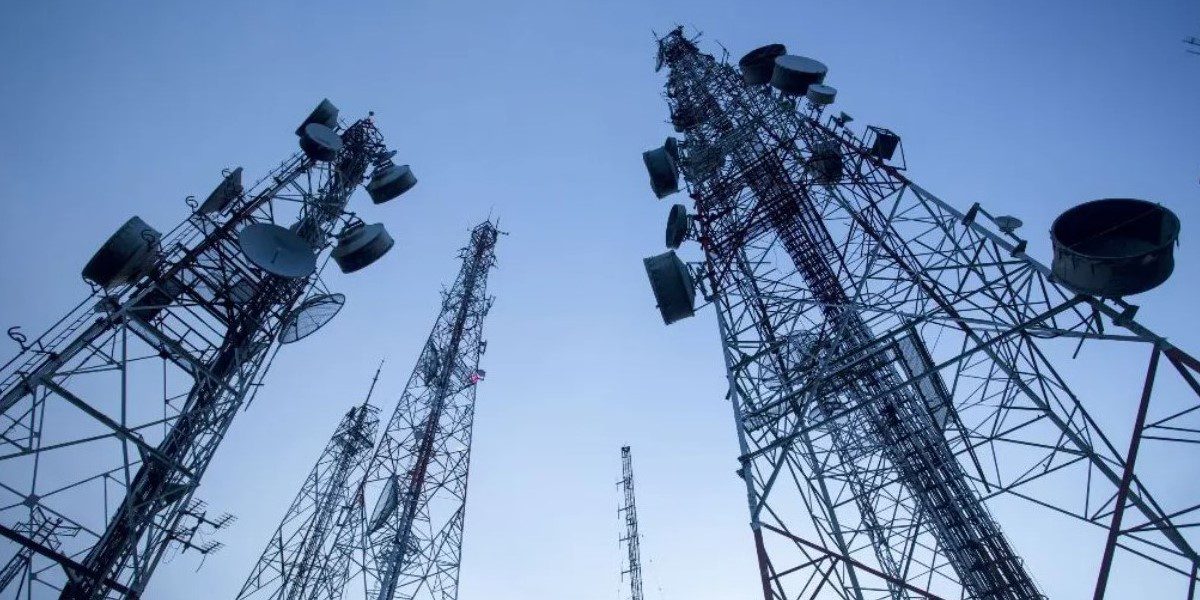
The Federal Government is turning to a blended financing model to expand telecommunications infrastructure into rural and underserved communities where traditional commercial investment has struggled to deliver reliable connectivity.
The proposed structure would combine resources from the Universal Service Provision Fund, Rural Electrification Agency and state governments to finance community-owned telecom towers and networks.
The government has set a six-month target for securing funding for the infrastructure, according to BusinessDay.
The initiative attempts to solve one of the most difficult problems facing Nigeria’s digital economy: how to build network infrastructure in communities where the number of paying customers may initially be too small to justify conventional private investment.
Rural Connectivity Faces Commercial Challenge
Mobile operators generally invest where expected subscriber revenues can justify the cost of building and maintaining infrastructure.
That model works well in densely populated cities.
It becomes more difficult in rural areas where communities may be spread across large distances and residents have lower average purchasing power.
Telecom towers also require electricity, security, fibre or microwave backhaul and regular maintenance.
Those expenses can make rural sites commercially unattractive.
The blended model attempts to reduce that burden by sharing costs across public institutions and governments.
Electricity and Telecom Funding Come Together
The participation of the Rural Electrification Agency is particularly significant.
Connectivity and electricity are closely related infrastructure challenges.
A community without dependable power can require telecom operators to run towers using alternative energy systems, increasing deployment and operating expenses.
Combining telecommunications and electricity resources could therefore allow infrastructure projects to address both constraints together.
State governments are also expected to play a role, potentially bringing local knowledge and resources to the programme.
Community Ownership Changes Model
The initiative is expected to explore community-owned infrastructure alongside shared and neutral-host networks.
Neutral-host infrastructure allows multiple telecommunications operators to use the same towers or network assets instead of each company building duplicate infrastructure.
That approach can be particularly valuable in low-revenue areas.
If three operators each need a separate tower, the economics may not work.
If all three can share one facility, the cost per operator can fall substantially.
Project BRIDGE Adds Fibre Backbone
The rural network strategy will also interact with the Federal Government’s broader fibre programme.
Deployment of Project BRIDGE is expected to begin in phases between 2026 and 2030, expanding the national fibre backbone.
Fibre is critical because towers need reliable connections to the wider internet.
Building access networks without sufficient backhaul can result in coverage appearing on a map while users still experience slow or unreliable service.
Nigeria Faces Coverage and Usage Gaps
Infrastructure expansion alone will not solve Nigeria’s digital divide.
NCC figures presented at the recent Digital Connectivity Investment Forum showed mobile broadband coverage at roughly 90 per cent, while broadband penetration stood at 57.4 per cent and smartphone ownership at around 27 per cent.
That creates two different problems.
The first is the coverage gap — people who cannot access adequate networks.
The second is the usage gap — people who technically have network coverage but cannot or do not use mobile broadband.
Device affordability, digital skills and trust remain significant constraints.
Connectivity Becomes Economic Infrastructure
For rural businesses, improved connectivity can expand access to digital payments, e-commerce, agricultural information, online education and government services.
It can also make it easier for entrepreneurs outside major cities to participate in Nigeria’s digital economy.
The government’s blended-finance strategy therefore treats connectivity increasingly as economic infrastructure rather than a service that should be deployed only where telecom operators can generate immediate commercial returns.
The test will be implementation.
Community ownership, shared infrastructure and public funding can reduce deployment costs, but networks still need sustainable maintenance, security and operating models after construction.
If those challenges can be addressed, the programme could provide Nigeria with another model for closing its remaining connectivity gaps — one in which government funding helps unlock areas where the conventional commercial telecom model has reached its limits.