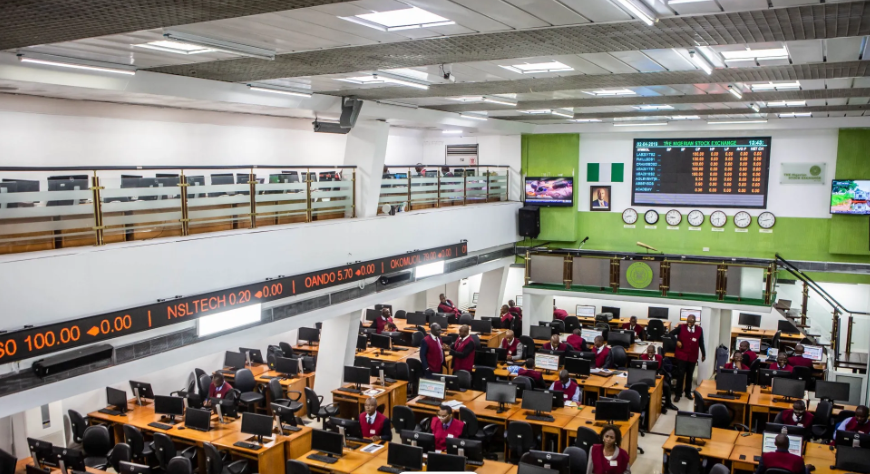
The Nigerian Exchange Limited (NGX) recorded another decline in its equity market on Thursday as market capitalisation dropped by approximately ₦30bn, reflecting continued cautious sentiment among investors.
The development highlights the challenges facing the Nigerian stock market as investors assess corporate earnings, economic conditions, interest rates and the potential returns available from alternative investment opportunities.
According to market figures reported by The Punch on Friday, November 20, the NGX All-Share Index declined by 0.02 per cent to close at 248,286.56 points.
Market capitalisation also decreased to approximately ₦161.21tn, representing a loss of about ₦30bn during the trading session.
The performance reflected a market in which declining stocks outnumbered those that recorded price increases.
A total of 26 equities closed in the red, compared with 19 gainers. The difference indicates that selling pressure remained relatively stronger than buying interest during the session.
The All-Share Index is one of the major indicators used to measure the performance of equities listed on the Nigerian Exchange. It tracks changes in the prices of listed shares and provides investors with an overview of the direction of the stock market.
When the index declines, it generally suggests that the combined performance of listed equities has weakened. However, a small daily decline does not necessarily mean that all sectors or companies are performing poorly.
The Nigerian capital market plays an important role in the country’s financial system by providing companies with opportunities to raise funds from investors.
Through the stock market, businesses can obtain capital for expansion, investment in infrastructure, operational improvements and other corporate activities. Investors, on the other hand, purchase shares to participate in the ownership and potential profits of listed companies.
However, market performance is influenced by several factors, including inflation, interest rates, exchange-rate movements, government policies and investor confidence.
The current bearish sentiment suggests that some investors may be adopting a cautious approach rather than aggressively purchasing shares.
One factor that could influence investment decisions is the availability of alternative financial instruments.
Government securities, including Treasury bills and bonds, attract investors seeking returns from fixed-income investments. When yields on these instruments are attractive, some investors may prefer them to equities, particularly during periods of uncertainty.
Corporate earnings also remain important in determining stock market performance. Investors generally pay attention to companies’ revenue, profitability, dividend announcements and future business prospects before deciding whether to purchase or sell shares.
Companies with strong financial results and consistent dividend payments may continue to attract interest even when the broader market experiences declines.
For retail investors, market fluctuations highlight the importance of understanding investment risks and avoiding decisions based solely on short-term movements.
Institutional investors, including pension fund managers and asset management companies, also monitor market conditions when adjusting their portfolios.
Although the decline recorded on Thursday was relatively small, continued losses could affect overall investor confidence if the trend persists.
The performance of the NGX in the coming trading sessions will therefore remain important as market participants assess economic developments and corporate announcements.
Investors will also monitor monetary policy decisions and developments in the wider financial system for indications of how market conditions could change.
The Nigerian Exchange remains an important platform for capital formation and wealth creation. However, sustaining investor participation requires confidence in listed companies, regulatory transparency and a stable economic environment.
The latest decline demonstrates the importance of monitoring both individual company performance and broader market indicators when assessing investment opportunities.