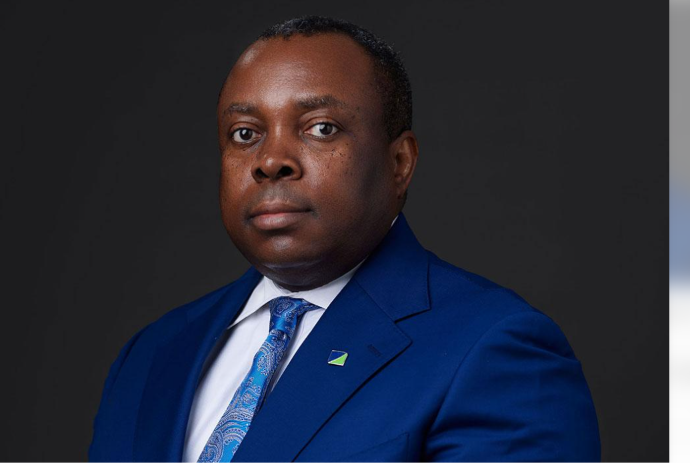
Fidelity Bank Plc has appointed Stanley Chiedoziem Amuchie as its substantive Managing Director and Chief Executive Officer, following approval from the Central Bank of Nigeria.
The appointment is scheduled to take effect on January 1, 2027, when he will succeed the bank’s outgoing managing director, Nneka Onyeali-Ikpe, whose tenure is expected to end on December 31, 2026.
The development marks an important leadership transition for the financial institution as it continues to pursue business expansion, strengthen its operations and improve its competitive position within Nigeria’s banking industry.
According to a statement reported by The Punch on Friday, November 20, Fidelity Bank confirmed that Amuchie’s appointment received the necessary approval from the apex bank.
Amuchie currently serves as the bank’s Executive Director, Operations and Information Technology, a position he assumed in January 2022.
His appointment to the top executive position reflects the board’s confidence in his experience and understanding of the bank’s operations.
The Chairman of Fidelity Bank’s Board of Directors, Amaka Onwughalu, expressed confidence in his ability to lead the institution into its next phase of development.
She also acknowledged the contributions of the outgoing managing director, Onyeali-Ikpe, whose tenure has been associated with strategic expansion and efforts to strengthen the bank’s market position.
Amuchie brings more than 30 years of experience in the financial services industry.
Before joining Fidelity Bank, he worked at Zenith Bank Plc, where he held several senior management positions, including Group Chief Financial Officer.
His professional experience covers financial management, strategic planning, treasury operations, technology-driven transformation and business development.
He has also been involved in important corporate transactions, including Fidelity Bank’s acquisition of Union Bank UK, now known as FidBank UK, and the bank’s $400m Eurobond refinancing.
These experiences are expected to be relevant as Fidelity Bank continues to strengthen its financial position and explore opportunities for expansion in domestic and international markets.
The incoming chief executive also has an academic and professional background in management and financial services.
He holds a First Class degree in Industrial Chemistry and a master’s degree in Corporate Governance.
He is a Fellow of the Institute of Chartered Accountants of Nigeria and an Honorary Senior Member of the Chartered Institute of Bankers of Nigeria. He is also pursuing a PhD in Management of Technology and Innovation.
The appointment comes at a significant period for Nigeria’s banking industry, which has been undergoing changes involving capital requirements, regulatory compliance, digital banking and competition among financial institutions.
Banks are increasingly investing in technology to improve customer experience, strengthen operational efficiency and expand access to financial services.
Fidelity Bank’s next leadership phase will therefore involve maintaining customer confidence while pursuing sustainable growth and responding to changes in the financial services sector.
One of the major responsibilities facing the incoming managing director will be ensuring that the bank maintains strong corporate governance and effective risk management.
The bank will also need to continue improving its digital banking services and supporting businesses and individuals through financial products that meet changing customer needs.
For shareholders, leadership stability remains an important consideration because management decisions can influence profitability, operational performance and long-term corporate strategy.
Customers will equally be interested in how the leadership transition affects the quality of services, accessibility and the bank’s commitment to innovation.
Amuchie’s appointment also provides an opportunity for continuity, given his existing executive position and familiarity with the bank’s internal operations.
However, his performance will ultimately be assessed through the institution’s financial results, customer satisfaction, operational efficiency and ability to create value for shareholders.
As the January 2027 commencement date approaches, attention will remain on how Fidelity Bank manages the transition and the priorities the incoming chief executive establishes for the institution.