ADVERTISEMENT
  • Africa
  • World
  • Our Shows
    • Entrepreneurship
    • Destination Business
    • 101business TV Show
Business 360 News
  • Home
  • Africa
    • East Africa
    • West Africa
    • South Africa
  • News
    • Feature
  • Economy
    • Maritime
    • Agriculture
      • Agribusiness
    • Energy
      • Electricty
      • Oil
      • Petrol
      • Gas
  • Finance
    • Insurance
    • Tax
    • Real Estate
  • Capital Market
  • Tech
    • ICT
    • Solar Energy
    • Electric Vehicles
    • Blockchain
    • IoT
    • AI
    • EV
  • SMEs
    • Success Stories
    • Start-Ups
    • Entrepreneurship
  • Global Economy
    • UK
    • US
    • Russia
    • CHINA
    • Japan
  • Business 360 Weekly
No Result
View All Result
  • Home
  • Africa
    • East Africa
    • West Africa
    • South Africa
  • News
    • Feature
  • Economy
    • Maritime
    • Agriculture
      • Agribusiness
    • Energy
      • Electricty
      • Oil
      • Petrol
      • Gas
  • Finance
    • Insurance
    • Tax
    • Real Estate
  • Capital Market
  • Tech
    • ICT
    • Solar Energy
    • Electric Vehicles
    • Blockchain
    • IoT
    • AI
    • EV
  • SMEs
    • Success Stories
    • Start-Ups
    • Entrepreneurship
  • Global Economy
    • UK
    • US
    • Russia
    • CHINA
    • Japan
  • Business 360 Weekly
No Result
View All Result
Business 360 News
No Result
View All Result
Home Finance Banking

AfDB: Nigerian Banks Lend Only 9.4% of GDP to Private Sector

Victoria Emeto by Victoria Emeto
June 3, 2026
in Banking, Finance
0
AfDB Approves $5.65M Grant for P-REC Mini-Grid Projects Across 14 African Countries

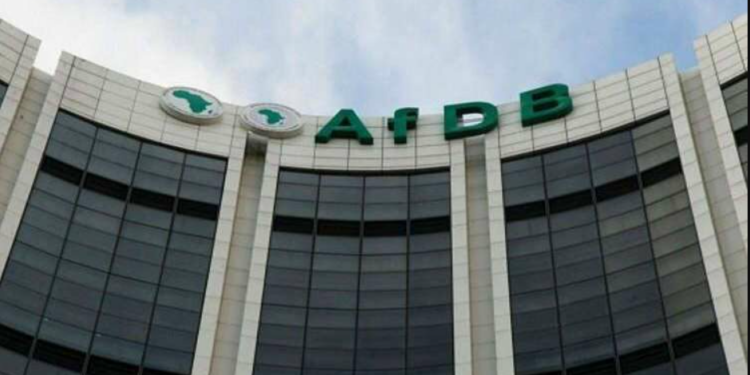
The African Development Bank (AfDB) has revealed that banks in Nigeria lend the equivalent of only 9.4 per cent of the country’s Gross Domestic Product (GDP) to the private sector.

The disclosure was made in the AfDB’s African Economic Outlook 2026 report, which highlighted Nigeria as one of the weakest performers among major African economies in providing credit to businesses.

According to the report, Nigeria’s private sector credit-to-GDP ratio remains significantly below both regional peers and emerging market economies.

“Major African economies such as Kenya (31.6 per cent), Egypt (28.3 per cent), Côte d’Ivoire (21.4 per cent), and Nigeria (9.4 per cent) remain well below comparable emerging lower-middle-income market economies such as Vietnam (121.6 per cent), Malaysia (121.5 per cent), and Chile (111.8 per cent),” the report stated.

The AfDB noted that Africa’s domestic credit to the private sector averaged 34.6 per cent of GDP between 2020 and 2024, making it the lowest among all global regions.

The figure also represents a decline from the previous decade, reflecting persistent weaknesses in financial intermediation across the continent.

According to the bank, most lending by African financial institutions is concentrated in short-term and low-risk assets rather than long-term investments that can drive economic growth and job creation.

“Low intermediation implies that Africa’s financial institutions are unable to optimally support the development of the private sector and contribute meaningfully to economic growth and development,” the report said.

The AfDB attributed the weak lending environment to poor financial intermediation and low domestic savings mobilisation.

It noted that many African countries continue to record low deposit-to-GDP ratios, with the continental median remaining below 32 per cent.

The report further revealed that Africa’s gross domestic savings averaged 16.6 per cent of GDP between 2021 and 2024, compared to the global average of 27.3 per cent.

According to the AfDB, weak savings mobilisation limits banks’ ability to expand their balance sheets, extend credit, and access stable, low-cost funding.

The report also identified regulatory challenges as a major obstacle to private sector lending.

It stated that poorly designed regulations, weak enforcement mechanisms, slow judicial processes, and difficulties in collateral recovery increase lending risks and discourage financial institutions from supporting businesses.

“Countries with strong regulatory frameworks tend to have higher private sector credit as a share of GDP,” the AfDB said.

The development bank also observed that commercial banks across Africa remain heavily invested in government securities.

According to the report, this trend reduces the amount of capital available for lending to businesses and productive sectors of the economy.

In its assessment of Nigeria, the AfDB described the country’s financial system as relatively shallow.

It noted that Nigeria’s stock market capitalisation averaged only 11.8 per cent of GDP between 2020 and 2024, placing it among the lowest levels on the continent.

The report added that Nigeria faces significant challenges in mobilising large-scale financing needed to close its infrastructure gap and maintain critical social spending.

The AfDB linked these challenges to weak domestic revenue mobilisation, a large informal sector, and a narrow economic base.

To address these issues, the bank called for deeper financial market reforms and greater adoption of innovative financing instruments.

These include green bonds, public-private partnerships, blended finance arrangements, and debt-for-development swaps.

The report also urged stronger collaboration with development finance institutions to improve domestic resource mobilisation and channel funding more effectively into productive sectors.

The findings come amid growing concerns that high interest rates and increased government borrowing are limiting access to credit for businesses, particularly small and medium-sized enterprises.

Economist and Chief Executive Officer of the Centre for the Promotion of Private Enterprise, Dr Muda Yusuf, has previously warned that rising Federal Government borrowing from the domestic financial system is crowding out private sector borrowers.

According to Yusuf, banks increasingly prefer low-risk, high-yield government securities to lending to businesses, further constraining private sector growth and investment.


Tags: #AfDB#BankingSector#NigeriaEconomy#PrivateSectorCredit
Previous Post

IMF Warns Against Broad Subsidies, Price Controls as Energy, Food Costs Rise

Next Post

DisCos Collect Nearly N600bn Despite Power Supply Challenges in Q1 2026

Victoria Emeto

Victoria Emeto

Next Post
DisCos Collect Nearly N600bn Despite Power Supply Challenges in Q1 2026

DisCos Collect Nearly N600bn Despite Power Supply Challenges in Q1 2026

Leave a Reply Cancel reply

Your email address will not be published. Required fields are marked *

  • Trending
  • Comments
  • Latest
FMDQ Exchange Admits Flour Mills of Nigeria’s ₦30.00bn Commercial Paper Notes

FMDQ Admits TSL SPV PLC ₦12.00 billion Series 1 Guaranteed Fixed Rate Infrastructure Bond to its Platform

March 11, 2021
NCAC inaugurates Creative Industry Sub-Committees

NCAC inaugurates Creative Industry Sub-Committees

September 20, 2020
#EndSARS: Protesters receive heavy gun fire at Lekki toll gate

#EndSARS: Protesters receive heavy gun fire at Lekki toll gate

October 21, 2020
SMEs in Nigeria must be ready to grow with or without Government …Evans Edozie, C.E.O., Cospharma Nig. Ltd.

SMEs in Nigeria must be ready to grow with or without Government …Evans Edozie, C.E.O., Cospharma Nig. Ltd.

September 21, 2020
‘The existence of a production hub in Nigeria will go a long way for the Fashion Industry’. FUNMI RUFAI LADIPO, President Fashion Designers Association of Nigeria.(FADAN)

‘The existence of a production hub in Nigeria will go a long way for the Fashion Industry’. FUNMI RUFAI LADIPO, President Fashion Designers Association of Nigeria.(FADAN)

25
Goldlink’s restructures board

Goldlink’s restructures board

10
Airtel Africa Plc gets admitted to the NSE Main Board

Airtel Africa Plc gets admitted to the NSE Main Board

6
Stallion Tank Farm resumes operations

Stallion Tank Farm resumes operations

3
Asian Stocks Soar to Records as Global Rally Boosts Risk Assets

Global Markets Rally as AI Stocks Surge and Oil Slips on Middle East De-escalation

June 9, 2026
Oil Prices Steady Amid New EU Sanctions and Market Uncertainty

Oil Prices Dip as Iran–Israel Pause Eases Supply Risk Fears

June 9, 2026
Guinea Insurance Deposits N1.5 Billion with CBN to Meet NIIRA 2025 Capital Rules

Guinea Insurance Deposits N1.5 Billion with CBN to Meet NIIRA 2025 Capital Rules

June 9, 2026
African Insurance Leaders Push for Reforms to Unlock $68 Billion Market Potential

African Insurance Leaders Push for Reforms to Unlock $68 Billion Market Potential

June 9, 2026
Business 360 News

Business 360 News is a Business and Financial News Platform with an SMEs drive. Published by 360 Network Limited, and created with the aim of disseminating unbiased business stories to readers within and outside Nigeria, providing in-depth analysis of our stories from a critical perspective against the backdrop of realities, actualities, objectivity and balance.

Follow Us

Browse by Category

  • Africa
  • Agribusiness
  • Agriculture
  • AI
  • Art
  • Arts
  • Aviation
  • Banking
  • Blockchain
  • Business 360 Weekly
  • Business news
  • Business Travels
  • Capital Market
  • CHINA
  • Corporate
  • Cryptocurrency
  • Destination Business
  • East Africa
  • Economy
  • Education
  • Electric Vehicles
  • Electricty
  • Energy
  • Entertainment
  • Entertainment
  • Entrepreneurship
  • EV
  • Fashion
  • Fashion
  • Feature
  • Finance
  • Gas
  • Global Economy
  • Health
  • Hospitality
  • ICT
  • Insurance
  • IoT
  • Japan
  • Lifestyle
  • Luxury
  • Maritime
  • Meetings
  • Mortgage
  • News
  • NGOs
  • Oil
  • Petrol
  • Political Economy
  • politics
  • Real Estate
  • Real Estate
  • SMEs
  • Society
  • Solar Energy
  • South Africa
  • Sports
  • Start-Ups
  • Stocks
  • Success Stories
  • Tax
  • Tech
  • Tourism
  • Transportation
  • UK
  • Uncategorized
  • US
  • World

Recent News

Asian Stocks Soar to Records as Global Rally Boosts Risk Assets

Global Markets Rally as AI Stocks Surge and Oil Slips on Middle East De-escalation

June 9, 2026
Oil Prices Steady Amid New EU Sanctions and Market Uncertainty

Oil Prices Dip as Iran–Israel Pause Eases Supply Risk Fears

June 9, 2026
  • Africa
  • World
  • Our Shows

© Business 360 News - Business, Finance And SMEs News | Design by Manifest!

No Result
View All Result
  • Home
  • Africa
    • East Africa
    • West Africa
    • South Africa
  • News
    • Feature
  • Economy
    • Maritime
    • Agriculture
      • Agribusiness
    • Energy
      • Electricty
      • Oil
      • Petrol
      • Gas
  • Finance
    • Insurance
    • Tax
    • Real Estate
  • Capital Market
  • Tech
    • ICT
    • Solar Energy
    • Electric Vehicles
    • Blockchain
    • IoT
    • AI
    • EV
  • SMEs
    • Success Stories
    • Start-Ups
    • Entrepreneurship
  • Global Economy
    • UK
    • US
    • Russia
    • CHINA
    • Japan
  • Business 360 Weekly

© Business 360 News - Business, Finance And SMEs News | Design by Manifest!