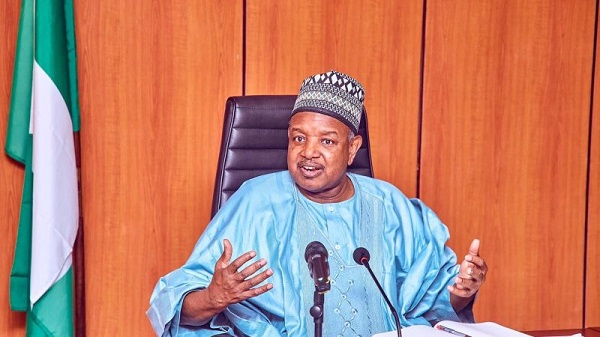
The Minister of Budget and Economic Planning, Abubakar Bagudu, has expressed concern over the growing impact of subsidised imports and global trade distortions on Nigeria’s agricultural sector, warning that they could undermine local food production and slow the country’s drive toward food security.
Bagudu made the remarks during the second biannual meeting of the Agrifood Systems Working Group, organised by the Federal Ministry of Agriculture and Food Security in Abuja. The meeting brought together government officials, private sector stakeholders, development partners, and agricultural experts to discuss strategies for strengthening Nigeria’s agrifood system.
According to a statement released by the ministry on Thursday, the minister stressed that building a resilient and sustainable agricultural sector would require stronger collaboration among all stakeholders. He noted that government agencies, private investors, research institutions, and development organisations must work together to overcome both domestic and international challenges affecting food production.
Bagudu explained that Nigeria’s agricultural sector is facing increasing pressure from global economic developments, including rising fertiliser and energy costs caused by international conflicts. He also identified subsidised imports and unfair trade practices as major threats to local agricultural production, warning that such distortions make it difficult for Nigerian farmers to compete effectively.
He said these challenges could discourage investment in agriculture, reduce farmers’ incomes, and weaken efforts to achieve national food security if they are not addressed through coordinated policies and strategic interventions.
According to the minister, creating a stronger agrifood system requires more than government intervention alone. He urged greater cooperation between the public and private sectors, noting that sustained investment, innovation, and knowledge sharing are essential to improving agricultural productivity and ensuring long-term growth.
Bagudu reaffirmed the Federal Government’s commitment to transforming Nigeria’s agricultural landscape through institutional reforms, science-driven farming practices, and policies designed to attract private sector investment. He said modern agricultural techniques, research, and technology adoption would play a critical role in increasing productivity while making the sector more resilient to economic and environmental shocks.
He also emphasised that agriculture remains central to the economic agenda of President Bola Tinubu’s administration. According to him, the government sees the sector as a key driver of economic diversification, job creation, poverty reduction, and national food security.
The minister noted that strengthening agricultural value chains and improving collaboration among stakeholders would not only increase domestic food production but also reduce Nigeria’s dependence on imported food products. He added that supporting local farmers and agribusinesses is essential for improving rural livelihoods and boosting the country’s overall economic performance.
The statement issued by the Federal Ministry of Agriculture and Food Security highlighted Bagudu’s call for stronger partnerships to address the numerous factors affecting food systems both within and outside Nigeria. It stated that international conflicts continue to push up the prices of agricultural inputs such as fertilisers and fuel, increasing production costs for farmers across the country.
The ministry further quoted the minister as warning that trade distortions created by subsidised imports could weaken local agricultural industries by allowing foreign products to enter the Nigerian market at artificially low prices. Such practices, he said, could discourage local production and threaten the sustainability of Nigeria’s agricultural sector.
Participants at the Agrifood Systems Working Group meeting discussed ways to improve coordination among stakeholders, strengthen policy implementation, and encourage greater investment in agricultural infrastructure, innovation, and climate-smart farming practices.
The meeting also underscored the importance of developing evidence-based policies capable of addressing emerging challenges while positioning Nigeria’s agriculture sector for sustainable growth.
As Nigeria continues its efforts to enhance food production and reduce import dependence, stakeholders believe that stronger collaboration, supportive government policies, increased private sector participation, and investment in agricultural innovation will be essential to achieving lasting food security and economic resilience.
Bagudu reiterated that the Federal Government remains committed to creating an enabling environment that supports farmers, agribusinesses, and investors while ensuring that agriculture continues to serve as a pillar of national development.