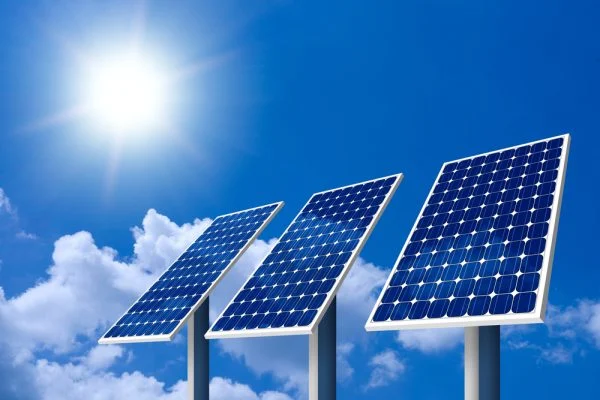
The Federal Government has unveiled plans to develop a new category of renewable energy companies that will eventually compete directly with Nigeria’s electricity distribution companies, commonly known as DisCos, in what could represent a major transformation of the country’s electricity market.
The initiative, being developed through the Rural Electrification Agency (REA), is expected to create Renewable Energy Service Companies, or RESCOs, capable of providing reliable and sustainable electricity to communities through interconnected renewable energy networks.
The Managing Director of the Rural Electrification Agency, Abba Aliyu, disclosed the plan on Thursday at the Oriental News 2026 Conference held in Ikeja, Lagos.
Aliyu, who was represented at the event by the Executive Director, Corporate Services at the REA, Gboyega Ayoade, said the agency was developing the RESCO model as part of its long-term strategy to address Nigeria’s persistent electricity challenges and expand access to dependable power.
According to him, the new approach represents a shift from the traditional focus on individual and isolated mini-grid projects towards the development of larger renewable energy networks capable of serving entire communities.
The REA Managing Director explained that the proposed RESCOs would provide consumers with an alternative to conventional electricity distribution companies by delivering round-the-clock clean energy generated primarily through solar power and supported by battery storage systems.
“We at REA are developing something called the RESCOs, Renewable Energy Service Companies that will rival the DisCos in the next 10 to 15 years,” Aliyu said.
The proposed model is expected to play a significant role in addressing Nigeria’s longstanding electricity supply challenges. Millions of Nigerians continue to experience inadequate or unreliable electricity supply, particularly in rural and underserved communities where access to the national grid remains limited.
The lack of reliable electricity has also contributed to widespread dependence on petrol and diesel generators. For households and businesses, the cost of running generators has become a significant financial burden, while the continued use of fossil-fuel-powered generators contributes to air pollution and greenhouse gas emissions.
The RESCO initiative is designed to provide an alternative by enabling renewable energy companies to develop independent power networks that can serve communities without relying entirely on the national grid.
Under the proposed framework, solar energy would serve as a major source of generation, while battery storage systems would help provide electricity during periods when solar generation is unavailable. This combination could enable communities to receive more consistent electricity throughout the day and night.
The plan also reflects the growing importance of renewable energy in Nigeria’s efforts to expand electricity access. The country has substantial solar energy potential, particularly in areas where extending traditional grid infrastructure may be expensive or technically challenging.
By supporting utility-scale renewable energy networks, the Federal Government hopes to attract greater private-sector investment into the electricity market. Developers with the financial and technical capacity to build and operate larger interconnected mini-grids could play a central role in delivering power to communities that have historically remained underserved.
The emergence of RESCOs could also introduce greater competition into Nigeria’s electricity distribution landscape. If the initiative succeeds, consumers in eligible communities could eventually have an alternative to obtaining electricity exclusively from conventional DisCos.
Competition could potentially encourage improvements in service quality, reliability and customer experience. Renewable energy providers may also be able to offer innovative electricity solutions tailored to the specific needs of communities, businesses and households.
However, the success of the RESCO model will depend on several factors, including the development of appropriate regulatory frameworks, access to financing, technical capacity and the ability to establish sustainable commercial models.
The government will also need to ensure that the relationship between RESCOs and existing electricity distribution companies is clearly defined. As renewable energy networks expand, issues relating to tariffs, licensing, consumer protection, grid integration and service standards are likely to become increasingly important.
The initiative could nevertheless create significant opportunities across Nigeria’s renewable energy value chain. The development of new renewable energy networks is expected to generate demand for solar panels, batteries, electrical equipment, engineering services and technical expertise.
It could also create employment opportunities in areas such as installation, maintenance, energy management and project development. Local communities could benefit from improved electricity access, while businesses could gain the reliable power supply needed to expand their operations.
Reliable electricity is widely regarded as a critical foundation for economic development. Small and medium-sized enterprises, manufacturers, farmers, healthcare facilities and educational institutions all require dependable power to operate efficiently.
For rural communities, improved electricity access could support agricultural processing, cold storage, telecommunications and other economic activities. This could help create new income opportunities and reduce the economic disadvantages associated with poor access to electricity.
The proposed 10-to-15-year timeline indicates that the Federal Government views the RESCO initiative as a long-term transformation of Nigeria’s power sector rather than a short-term intervention.
The success of the strategy will therefore depend on sustained government support, consistent policies and effective collaboration between public institutions and private-sector investors.
The REA’s approach also signals a broader shift in the country’s renewable energy strategy. Rather than focusing exclusively on small, isolated mini-grid projects, the agency is looking to support developers capable of delivering larger networks that can provide electricity at a scale comparable to conventional distribution systems.
If successfully implemented, the RESCO model could significantly reshape Nigeria’s electricity market over the next decade. The emergence of strong renewable energy companies could provide communities with additional options for electricity supply while reducing dependence on the national grid and fossil-fuel generators.
For now, stakeholders in the power sector will be watching closely as the REA develops the framework for the proposed companies. The ability to attract credible investors and ensure that renewable energy networks deliver affordable and reliable electricity will be critical to the success of the initiative.
The proposed RESCOs could ultimately represent a new chapter in Nigeria’s efforts to address its electricity deficit. By combining solar generation, battery storage, private-sector investment and community-focused distribution networks, the Federal Government hopes to build a more resilient electricity system capable of meeting the needs of a growing population and supporting long-term economic development.