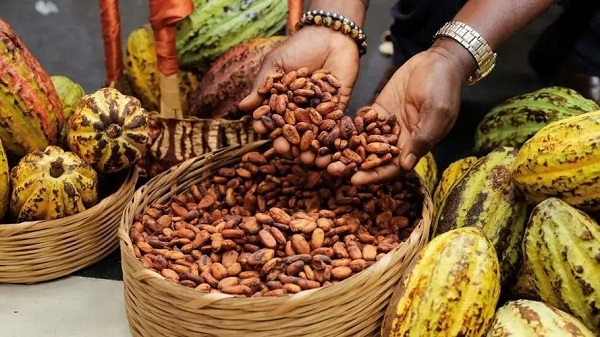
Ghanaian cocoa farmers are opposing parts of a newly passed law that restricts how they can use their farmland, urging President John Dramani Mahama to withhold his assent until farmers have been properly consulted.
The Ghana Cocoa Board Bill, 2026, was approved by Ghana’s Parliament in late July and gives cocoa farms protected status.
Under the bill, farmers and other land users would be prohibited from converting cocoa farms to other uses without approval from the cocoa market regulator, the Ghana Cocoa Board (COCOBOD), except for rehabilitation activities sanctioned by the board.
Violators could face fines and prison sentences of up to 20 years.
The legislation is intended to curb the conversion of cocoa-growing land for mining and other crops, a trend that has contributed to Ghana’s declining cocoa production.
Parts of cocoa farms across the country have reportedly been cleared for activities including rubber plantations and mining.
Ghana and neighbouring Côte d’Ivoire together account for about half of global cocoa production, making the protection of cocoa farmland strategically important to the region’s agricultural economy.
However, the Ghana Cooperative Cocoa Farmers and Marketing Association Limited, an umbrella organisation for cocoa farmer cooperatives, said it supports measures to protect cocoa farms but wants several provisions of the bill reviewed and better explained to farmers before it becomes law.
The association’s administrator, Moses Djan Asiedu, said farmers were particularly concerned about cocoa farms that had become commercially unproductive.
He questioned whether farmers who replace cocoa trees with other crops on severely damaged or unproductive land could face prosecution under the proposed law.
“We agree the tree must be protected because that is the source of our livelihood, but we have critical situations where a farmer may have to cut down a diseased farm and plant another crop that will bring him or her income,” Asiedu said.
Farmers’ concerns echo objections raised by lawmakers from Ghana’s minority in Parliament, who have also criticised aspects of the legislation.
COCOBOD has rejected the criticism, however.
Jerome Sam, head of public relations at COCOBOD, told local media that the objections raised by minority lawmakers were politically motivated and that the legislation was designed to protect and support cocoa farmers.
The bill has not yet been signed into law by Mahama, and the president has not provided a timeline for when he may decide whether to assent to it.
The disagreement highlights the challenge facing Ghana as it seeks to protect its declining cocoa production while balancing farmers’ rights to manage their land and maintain their livelihoods.