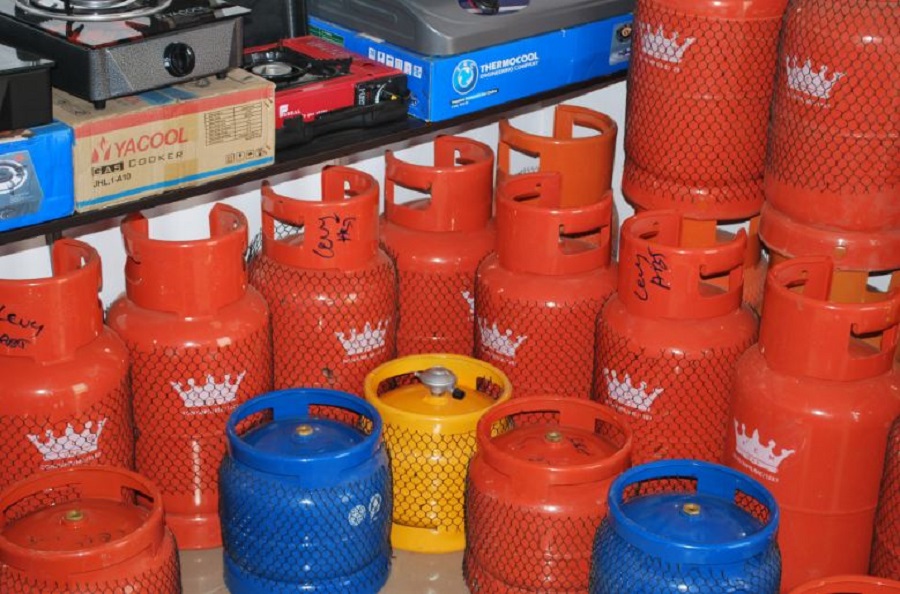
Households across the Federal Capital Territory (FCT) are enjoying some relief as the price of Liquefied Petroleum Gas (LPG), popularly known as cooking gas, has declined after months of persistent increases.
A market survey by Nairametrics found that cooking gas now sells between N1,498 and N1,650 per kilogram across different parts of Abuja, depending on the location and retail outlet. This marks a significant drop from the recent peak of about N2,000 per kilogram recorded in several parts of Nigeria.
At the current rates, refilling a 5kg cylinder costs between N7,490 and N8,250, while a 12.5kg cylinder costs between N18,725 and N20,625. These prices are lower than the previous highs of around N10,000 and N25,000, respectively.
Despite the decline, some roadside vendors continue to sell cooking gas at prices as high as N1,850 per kilogram.
Energy experts have welcomed the price reduction but warned that the improvement may not last unless Nigeria addresses long-standing challenges in its LPG market.
Energy economist Dr. Dayo Abegunde said the lower prices indicate improved supply conditions. However, he noted that Nigeria remains vulnerable to international market disruptions because a large share of its cooking gas is still imported.
He stressed that lasting price stability will require increased domestic processing, expanded storage facilities, and more efficient distribution networks.
“The recent decline is encouraging for consumers, but Nigeria must deepen domestic production and strengthen its supply chain to avoid recurring price spikes whenever there are disruptions in the global market,” he said.
Oil and gas analyst Edward Bulus also called for improved domestic refining and increased retention of locally produced LPG within the Nigerian market.
According to him, while government efforts to curb product hoarding are important, expanding infrastructure and improving market efficiency will have a greater impact on making cooking gas more affordable.
LPG marketers attributed the recent price drop to increased product availability at coastal depots and a gradual decline in wholesale prices.
An Abuja-based LPG marketer, Bassey Etanem, said the improved supply has started reaching retailers, leading to lower prices in many locations. He added that prices could remain stable if supply continues to improve and exchange rate fluctuations remain limited.
Retail operators in Abuja also said increased competition among filling plants has helped reduce prices.
One LPG dealer in the Kubwa area explained that greater product availability has encouraged retailers to compete for customers, naturally leading to lower prices.
However, operators warned that transportation costs remain high, especially for marketers supplying inland states. They called for greater investment in storage facilities and transport infrastructure to sustain lower prices.
Although prices have fallen, many residents believe cooking gas is still expensive compared to previous years.
Several consumers said they hope the latest reduction marks the beginning of a sustained downward trend after many households switched to charcoal and firewood when LPG prices approached N2,000 per kilogram.
Grace Bade, a trader, said rising living costs continue to strain household budgets.
She urged the Federal Government to fulfill its Renewed Hope Agenda by making cooking gas more affordable, suggesting that a price of N500 per kilogram would significantly ease the burden on Nigerians.
Consumer advocacy groups also urged regulators to closely monitor the market to prevent artificial scarcity and ensure reductions in wholesale prices are reflected at retail outlets.
The recent decline follows measures introduced by the Federal Government to tackle supply constraints and discourage market manipulation.
Minister of State for Petroleum Resources (Gas), Ekperikpe Ekpo, directed the Nigerian Midstream and Downstream Petroleum Regulatory Authority (NMDPRA), other regulators, and security agencies to intensify surveillance of the LPG market.
The minister ordered investigations into product hoarding and diversion while directing authorities to sanction operators found manipulating prices.
Ekpo also reaffirmed the government’s commitment to increasing domestic LPG production, reducing dependence on imports, and ensuring that locally produced gas is prioritized for domestic use.
In addition, he disclosed plans for a local LPG blending initiative involving Nigeria LNG Limited (NLNG), indigenous producers, and the Port Harcourt LPG plant operator. The initiative aims to reduce logistics costs, improve supply reliability, and support more stable prices.
These directives followed an emergency stakeholders’ meeting held on June 22 to address the persistent increase in cooking gas prices.
The NMDPRA linked the earlier surge in LPG prices to both global and domestic supply challenges.
According to the regulator, disruptions caused by the Israel-Iran conflict, inadequate domestication of locally produced LPG, low import volumes, poor distribution infrastructure, logistics bottlenecks, and supply chain constraints all contributed to the sharp increase in retail prices.
Although prices have started to moderate in parts of the FCT, industry stakeholders maintain that long-term affordability will depend on stronger domestic production, improved distribution, and sustained investment in infrastructure.
The development comes as energy prices continue to influence inflation, transportation costs, food distribution, and the operating expenses of small businesses. Nigeria’s headline inflation rate rose to 15.93% in May 2026, up from 15.69% in April.