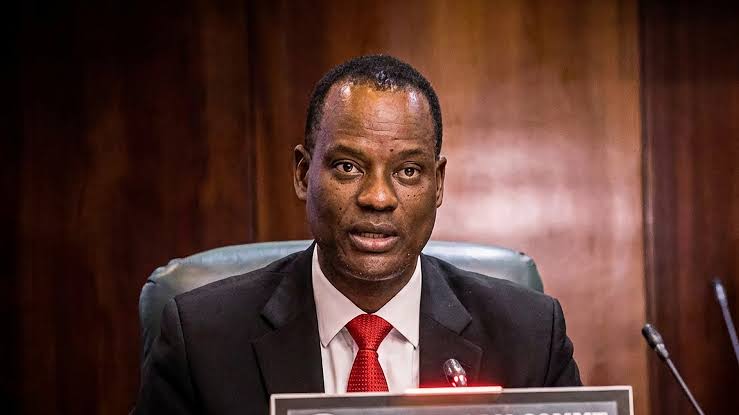
The Federal Government is considering legislation to protect Nigeria’s economic reforms from reversal by successive administrations, in a move aimed at promoting policy consistency and providing greater certainty for investors and businesses.
The Minister of Finance and Coordinating Minister of the Economy, Taiwo Oyedele, disclosed the proposal on Monday at the 32nd Nigerian Economic Summit in Abuja, themed “Growth that Works: Delivering Jobs, Productivity and Shared Prosperity.”
Oyedele said the government was seeking a national consensus on an economic policy framework that could be institutionalised through legislation and provide a more durable basis for future policy decisions.
The proposed framework could cover major areas of economic management, including taxation, tariffs, subsidies, investment and industrial development.
“We now need to lock it in, in institutions, in law, as well as policy framework, so that it can be enduring,” the minister said during a panel session.
The proposal reflects the government’s concern that reforms introduced by one administration could be abandoned by a successor for short-term political reasons, potentially creating uncertainty for businesses and investors.
Government seeks policy continuity
Economic reforms often require time to deliver their full effects, particularly where they involve changes to prices, public spending, taxation or the structure of markets.
Frequent reversals can make it more difficult for businesses to plan investments, assess risks and make long-term commitments.
Oyedele said the government wanted to develop a framework that would establish a more consistent direction for economic policy beyond the tenure of the current administration.
He specifically referred to the removal of the petrol subsidy as an example of a reform whose reversal, in the government’s view, could undermine its wider economic objectives.
The minister argued that policy decisions should be guided by a durable framework rather than being repeatedly changed in response to short-term political pressures.
Legal protection raises implementation questions
If pursued, the proposal would raise important questions about the scope of the legislation, the principles it would establish and how it would interact with the authority of future governments and legislatures.
Legislation could provide greater continuity, but its practical effect would depend on the wording of the law, the institutions responsible for implementation and the procedures available for amendment.
The government would also need to clarify whether the proposed framework would establish broad economic principles or prescribe specific policies in areas such as subsidies, taxation and tariffs.
The supplied report did not provide a draft bill, proposed legislative timetable or details of the consultation process.
Oyedele’s remarks therefore indicate that the government is considering a legislative approach; they do not establish that a bill has been formally introduced or enacted.
Summit focuses on growth and shared prosperity
The Nigerian Economic Summit provides a platform for government officials, business leaders and other stakeholders to discuss policy options for economic growth and development.
The latest proposal places policy stability at the centre of that debate, with the government seeking ways to sustain reforms while improving productivity, employment and living standards.
Ultimately, the effectiveness of any framework will depend on whether it delivers predictable economic management while retaining sufficient flexibility to respond to changing economic conditions.