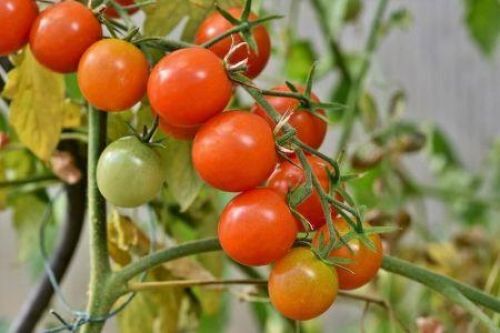
The Federal Government of Nigeria has declared a national effort to tackle the destructive infestations of Tuta absoluta and the African Sugarcane Borer, which have severely affected Nigeria’s tomato and sugarcane production, threatening farmer livelihoods and food supply stability.
Speaking at the flag-off of an emergency intervention programme at the Federal Crop Production Technology Transfer Station in Dan Hassan, Kano, the Minister of State for Agriculture, Sen. Dr. Aliyu Sabi Abdullahi, said the initiative aims to equip farmers and extension workers with the knowledge, inputs, and tools needed to curb the pest outbreaks.
The programme will sensitise farmers, distribute approved pest control products, and provide technical guidance on Integrated Pest Management (IPM) strategies. It also includes an emergency response mechanism to contain ongoing outbreaks, particularly in heavily affected regions.
Abdullahi emphasised that the intervention reflects the government’s commitment to strengthening food security, protecting farmer income, and building agricultural resilience. Kano State, a critical hub for tomato and sugarcane cultivation, remains a priority under the initiative.
“Tomato is not only a widely grown and consumed vegetable but also a major source of income for smallholder farmers. Nigeria is one of Africa’s top tomato producers, and the crop supports millions of jobs across production, processing, transport and marketing,” he said, noting that post-harvest losses and pest infestations have continued to undermine productivity.
He also highlighted the impact of the African Sugarcane Borer on sugarcane production, which contributes to ethanol and bio-energy by-products, local processing jobs, and reduced imports.
The minister described the pests as a national agricultural emergency, warning that timely government intervention, farmer sensitisation, and federal-state collaboration are critical to averting further losses.
Abdullahi lauded President Bola Tinubu’s support to the National Horticultural Research Institute in April 2025, which released two improved tomato varieties—HORTITOM4 and HORTITOM5—adapted for Nigerian conditions.
He announced the upgrading of the pest control division into a full-fledged Federal Department of Plant Health and Pest Control Services, tasked with safeguarding strategic crops, promoting sustainable and climate-smart agriculture, and supporting farmers against devastating outbreaks.
The minister urged stakeholders to apply the free agricultural inputs wisely, follow expert guidance, and avoid reckless pesticide use that could harm human health and the environment.
Kano State Governor Abba Kabir Yusuf, represented by the Commissioner of Agriculture, Dr. Danjuma Mahoud, commended the federal government for aligning state agricultural initiatives with national goals for economic diversification, food sovereignty, and agro-industrial development.
The ministry added that extension workers and stakeholders would be trained on early pest detection, safe control measures, agronomic best practices, and field hygiene. Farmers will receive technical guidance, approved pest control inputs, practical manuals, and personal protective equipment to minimise crop losses and prevent further spread to neighbouring states.