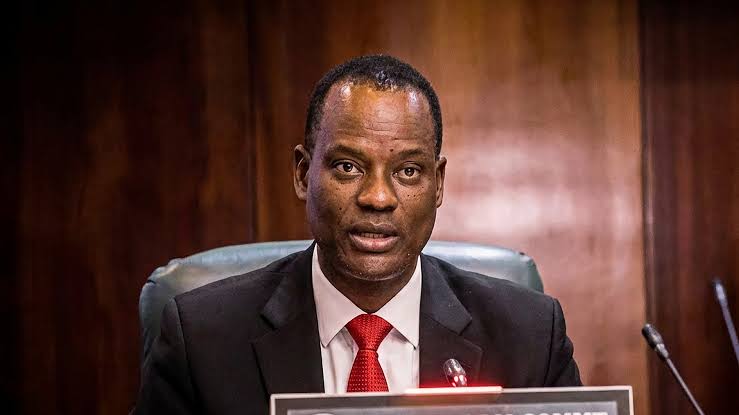
Finance Minister Taiwo Oyedele says government plans to revise its fiscal projections as debt-servicing pressures ease.
The Federal Government expects Nigeria’s fiscal deficit for 2026 to fall below its budget target of 4.2 per cent of Gross Domestic Product (GDP), citing improved revenue performance and easing borrowing costs.
The Minister of Finance and Coordinating Minister of the Economy, Taiwo Oyedele, disclosed the projection in an interview with Bloomberg in London, according to a report published on Thursday.
Oyedele said the government intended to review its fiscal projections and announce a revised deficit target, expressing confidence that the shortfall would be narrower than originally anticipated.
“We think it will be narrower than the 4.2 per cent,” he said, adding that the government’s priority was to reduce the cost of debt relative to revenue.
Revenue performance supports revised outlook
A fiscal deficit occurs when government expenditure exceeds its revenue, requiring borrowing or other financing arrangements to cover the difference.
Nigeria’s 2026 budget was framed around a deficit target of 4.2 per cent of GDP. A lower outcome would indicate that the government had reduced the gap between revenue and expenditure relative to the original projection.
According to Oyedele, improved revenue and lower borrowing costs were contributing to the more favourable outlook.
However, the minister did not provide a revised numerical target in the reported interview. The final outcome will depend on actual revenue collections, expenditure commitments, borrowing requirements and the pace of budget implementation.
Debt servicing remains a key concern
Nigeria’s fiscal position has been under pressure from the cost of servicing public debt, which competes with spending on infrastructure, healthcare, education and other public services.
Reducing debt-servicing costs relative to government revenue could create additional fiscal space, provided the improvement is sustained and does not come at the expense of essential spending or the delivery of budgeted projects.
The relationship between debt servicing and revenue is particularly important because a government can record higher nominal revenue while still facing substantial pressure if its financing costs rise at a similar or faster rate.
The government’s proposed review will therefore be closely watched by investors and economic analysts seeking clearer indications of its financing requirements and fiscal trajectory.
Market implications and implementation risks
A narrower deficit could reduce borrowing needs if the improvement is driven by stronger revenue collection and effective expenditure management.
It could also influence the government’s domestic financing requirements and the supply of securities available to investors.
Nevertheless, a projection is not the same as a final fiscal result. Revenue shortfalls, higher-than-expected expenditure or changes in financing costs could alter the outcome before the end of the year.
The proposed revision will become more meaningful when the government publishes the updated assumptions, revised target and supporting fiscal data.