President backs local engineering capacity as Lee Engineering develops compressor stations for the Escravos–Lagos gas pipeline.
President Bola Tinubu has called on international oil companies operating in Nigeria to award more contracts to capable indigenous engineering and manufacturing firms, as the Federal Government seeks to increase local participation in major energy projects.
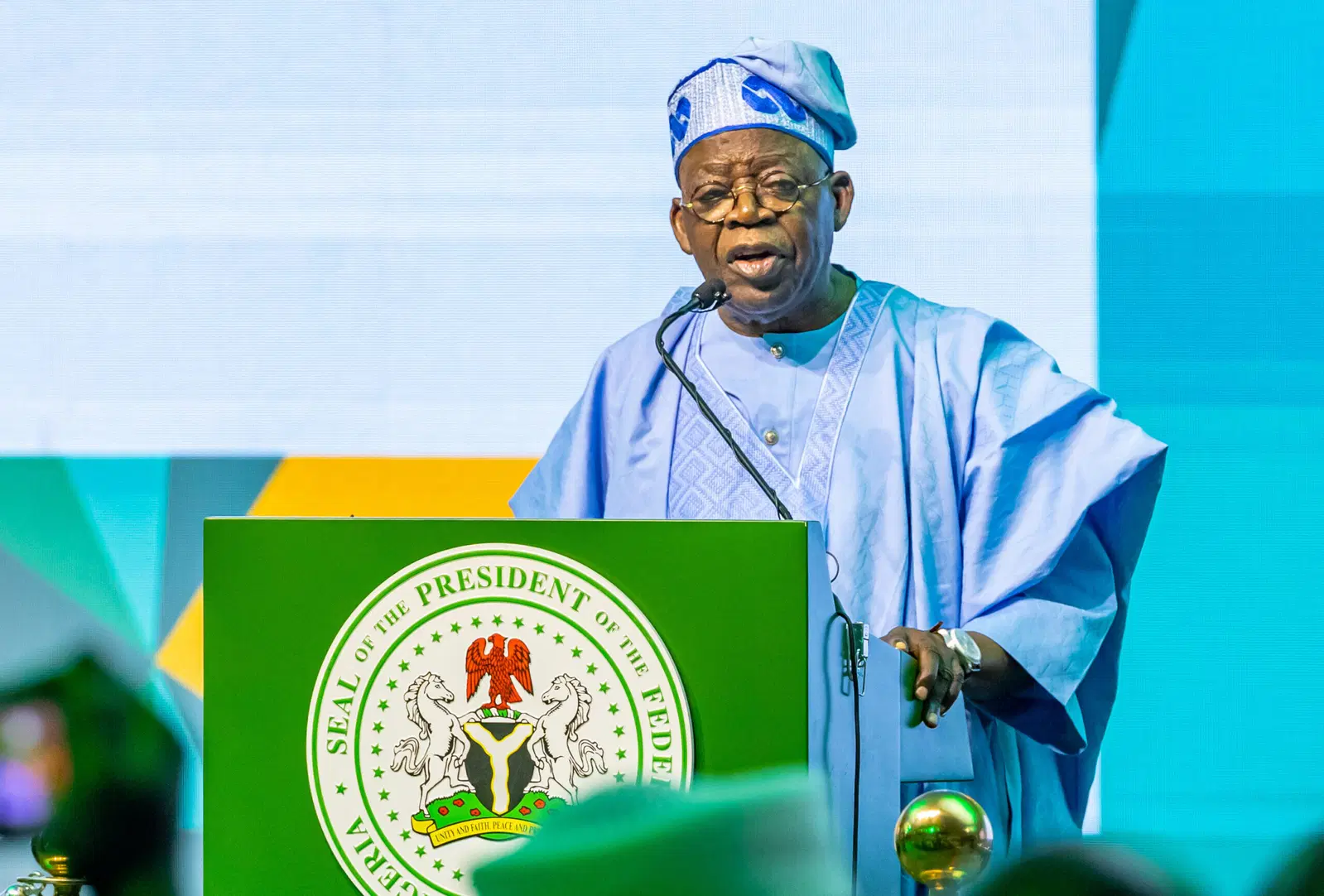
Tinubu made the call on Thursday while receiving the Founder and Chairman of Lee Engineering Group, Leemon Ikpea, at the State House in Abuja.
Details of the meeting were disclosed by the President’s Special Adviser on Information and Strategy, Bayo Onanuga, in a statement highlighting the company’s work on compressor stations designed to improve gas delivery through the Escravos–Lagos Pipeline System.
The President said the government’s “Nigeria First” approach should translate into more contracts for qualified Nigerian businesses, greater use of locally manufactured equipment and additional skilled employment opportunities.
Lee Engineering works on gas infrastructure
Lee Engineering is undertaking engineering, procurement and construction work on two midline compressor stations in Edo State.
According to the presidential statement, the facilities are required to increase operating pressure along the Escravos–Lagos Pipeline System and help the pipeline deliver gas at its expanded design capacity of 2.3 billion standard cubic feet per day.
The pipeline’s design capacity was increased from 1.1 billion standard cubic feet per day under the ELPS II expansion.
Compressor stations help maintain the pressure required to move natural gas through pipelines over long distances. Their performance can influence the volume of gas delivered to power plants, industrial users and other customers connected to the network.
The project therefore forms part of the wider infrastructure needed to improve gas transportation and support the use of natural gas in Nigeria’s energy system.
President pushes local industrial participation
Tinubu encouraged international oil companies to establish stronger partnerships with Nigerian engineering firms that have demonstrated the ability to deliver complex projects.
The administration’s position is that greater participation by local contractors could retain more project spending within Nigeria, support the development of domestic technical expertise and create skilled jobs.
Local participation can also provide opportunities for Nigerian manufacturers to supply equipment and components, although the extent of these benefits depends on technical standards, procurement requirements and the availability of competitive domestic suppliers.
For indigenous companies, securing major contracts can help develop capacity, build track records and improve access to larger energy projects.
Gas infrastructure and economic growth
The compressor-station project is linked to the broader challenge of ensuring that Nigeria can transport available gas reliably to domestic consumers.
Gas supply is important to electricity generation, manufacturing and several industrial processes. Infrastructure constraints can limit the ability of producers to deliver gas even when resources are available.
The expanded pipeline capacity could help improve the movement of gas if the compressor stations and related facilities are completed and operated effectively.
However, infrastructure capacity alone does not guarantee increased delivery. Actual throughput also depends on gas availability, operating conditions, maintenance, commercial arrangements and demand from customers.
The President’s remarks place indigenous contracting and infrastructure delivery within the government’s wider industrial policy agenda.