ADVERTISEMENT
  • Africa
  • World
  • Our Shows
    • Entrepreneurship
    • Destination Business
    • 101business TV Show
Business 360 News
  • Home
  • Africa
    • East Africa
    • West Africa
    • South Africa
  • News
    • Feature
  • Economy
    • Maritime
    • Agriculture
      • Agribusiness
    • Energy
      • Electricty
      • Oil
      • Petrol
      • Gas
  • Finance
    • Insurance
    • Tax
    • Real Estate
  • Capital Market
  • Tech
    • ICT
    • Solar Energy
    • Electric Vehicles
    • Blockchain
    • IoT
    • AI
    • EV
  • SMEs
    • Success Stories
    • Start-Ups
    • Entrepreneurship
  • Global Economy
    • UK
    • US
    • Russia
    • CHINA
    • Japan
  • Business 360 Weekly
No Result
View All Result
Business 360 News
No Result
View All Result
Home Business news

Food inflation exceeds 20% in 19 Nigerian states despite national slowdown

Oyinkansola Lemo by Oyinkansola Lemo
November 24, 2026
in Business news
0

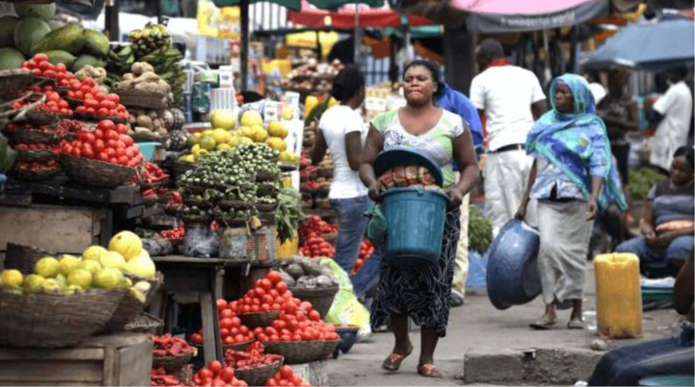
Food inflation remained a major economic concern in Nigeria in October 2026, with 19 states recording annual food inflation rates above 20 per cent despite a moderation in the country’s overall food inflation figure.

The latest development highlights the continuing pressure on household purchasing power and the challenges facing millions of Nigerians as food prices remain elevated across several parts of the country.

Figures from the National Bureau of Statistics (NBS), as reported by BusinessDay, showed that more than half of Nigeria’s 36 states experienced annual food inflation above 20 per cent during the period.

Ondo State recorded the highest annual food inflation rate at 31.74 per cent, followed by Lagos State at 31.43 per cent and Imo State at 29.75 per cent.

Oyo State recorded 28.81 per cent, while Ebonyi State posted 27.96 per cent.

The figures indicate that food inflation remains uneven across the country, with consumers in some states experiencing significantly higher increases than the national average.

At the national level, annual food inflation moderated to 19.13 per cent in October.

Although the reduction represents an improvement compared with previous inflation readings, it does not mean that food prices have returned to earlier levels.

Inflation measures the rate at which prices increase over time. Therefore, a decline in the inflation rate generally means prices are increasing more slowly rather than falling.

This distinction remains important for Nigerian households, many of which continue to spend a significant portion of their income on food.

The pressure is particularly challenging for low-income families, whose earnings may not increase at the same pace as the cost of essential commodities.

Food inflation also affects businesses across the agricultural value chain, including farmers, food processors, transport operators, wholesalers and retailers.

When the cost of producing and transporting food increases, businesses may transfer part of the additional expenses to consumers.

Several factors influence food prices in Nigeria, including transportation costs, agricultural production expenses, insecurity in farming communities, storage challenges and seasonal supply variations.

The country’s dependence on road transportation also means that higher fuel and logistics costs can affect the final prices of agricultural products.

In addition, inadequate storage facilities contribute to post-harvest losses, particularly for perishable commodities such as tomatoes, vegetables and fruits.

These challenges can reduce the quantity of food reaching urban markets and create additional pressure on prices.

For farmers, higher production costs can affect profitability and limit their ability to expand cultivation.

The cost of fertilisers, improved seeds, machinery, pesticides and other agricultural inputs remains an important consideration when determining the prices of harvested products.

The latest figures also raise questions about the effectiveness of measures aimed at improving agricultural productivity and food distribution.

Government policies targeting local food production, rural infrastructure, agricultural financing and improved storage facilities could help address some of the structural challenges affecting the sector.

Improving security in farming communities is also important because farmers require safe access to their land to maintain production levels.

Nigeria’s food inflation challenge is not only an economic issue but also a development concern because access to affordable food directly affects household welfare.

When food prices rise faster than income, families may reduce consumption, change their diets or spend less on other essential needs such as education, healthcare and transportation.

For businesses, elevated food prices can influence wage demands, operating expenses and consumer spending patterns.

The October figures therefore demonstrate that although national food inflation has moderated, the cost-of-living challenge remains significant in several states.

Sustained improvements in agricultural production, transportation, storage and distribution will be important in ensuring that lower inflation eventually translates into more affordable food for Nigerian consumers.


Tags: #Agriculture#CostOfLiving#foodinflation#NigeriaEconomy
Previous Post

NGX loses N767 billion as Nigerian equities extend losing streak

Next Post

Nigeria targets $280 million from 40 oil and gas blocks in 2026 licensing round

Oyinkansola Lemo

Oyinkansola Lemo

Next Post

Nigeria targets $280 million from 40 oil and gas blocks in 2026 licensing round

Leave a Reply Cancel reply

Your email address will not be published. Required fields are marked *

  • Trending
  • Comments
  • Latest

FMDQ Admits TSL SPV PLC ₦12.00 billion Series 1 Guaranteed Fixed Rate Infrastructure Bond to its Platform

March 11, 2021

NIBSS Downtime Causes Delays in Electronic Transactions, Fintechs Alert Customers

June 7, 2024

Nigeria’s Pension Assets Hit N28 Trillion in January 2026 Amid Steady Growth

March 6, 2026

NERC Mandates Private Transmission Substations to Obtain Permits Within 45 Days

March 11, 2026

‘The existence of a production hub in Nigeria will go a long way for the Fashion Industry’. FUNMI RUFAI LADIPO, President Fashion Designers Association of Nigeria.(FADAN)

25

Goldlink’s restructures board

10

Airtel Africa Plc gets admitted to the NSE Main Board

6

Stallion Tank Farm resumes operations

3

Foreign investors’ exit puts pressure on Nigeria’s fixed-income market

November 24, 2026

Nigeria targets $280 million from 40 oil and gas blocks in 2026 licensing round

November 24, 2026

Food inflation exceeds 20% in 19 Nigerian states despite national slowdown

November 24, 2026

NGX loses N767 billion as Nigerian equities extend losing streak

November 24, 2026
Business 360 News

Business 360 News is a Business and Financial News Platform with an SMEs drive. Published by 360 Network Limited, and created with the aim of disseminating unbiased business stories to readers within and outside Nigeria, providing in-depth analysis of our stories from a critical perspective against the backdrop of realities, actualities, objectivity and balance.

Follow Us

Browse by Category

  • Africa
  • Agribusiness
  • Agriculture
  • AI
  • Art
  • Arts
  • Aviation
  • Banking
  • Blockchain
  • Business 360 Weekly
  • Business news
  • Business Travels
  • Capital Market
  • CHINA
  • Corporate
  • Cryptocurrency
  • Destination Business
  • East Africa
  • Economy
  • Education
  • Electric Vehicles
  • Electricty
  • Energy
  • Entertainment
  • Entertainment
  • Entrepreneurship
  • EV
  • Fashion
  • Fashion
  • Feature
  • Finance
  • Gas
  • Global Economy
  • Health
  • Hospitality
  • ICT
  • Insurance
  • IoT
  • Japan
  • Lifestyle
  • Luxury
  • Maritime
  • Meetings
  • Mortgage
  • News
  • NGOs
  • Oil
  • Petrol
  • Political Economy
  • politics
  • Real Estate
  • Real Estate
  • SMEs
  • Society
  • Solar Energy
  • South Africa
  • Sports
  • Start-Ups
  • Stocks
  • Success Stories
  • Tax
  • Tech
  • Tourism
  • Transportation
  • UK
  • Uncategorized
  • US
  • West Africa
  • World

Recent News

Foreign investors’ exit puts pressure on Nigeria’s fixed-income market

November 24, 2026

Nigeria targets $280 million from 40 oil and gas blocks in 2026 licensing round

November 24, 2026
  • Africa
  • World
  • Our Shows

© Business 360 News - Business, Finance And SMEs News | Design by Manifest!

No Result
View All Result
  • Home
  • Africa
    • East Africa
    • West Africa
    • South Africa
  • News
    • Feature
  • Economy
    • Maritime
    • Agriculture
      • Agribusiness
    • Energy
      • Electricty
      • Oil
      • Petrol
      • Gas
  • Finance
    • Insurance
    • Tax
    • Real Estate
  • Capital Market
  • Tech
    • ICT
    • Solar Energy
    • Electric Vehicles
    • Blockchain
    • IoT
    • AI
    • EV
  • SMEs
    • Success Stories
    • Start-Ups
    • Entrepreneurship
  • Global Economy
    • UK
    • US
    • Russia
    • CHINA
    • Japan
  • Business 360 Weekly

© Business 360 News - Business, Finance And SMEs News | Design by Manifest!