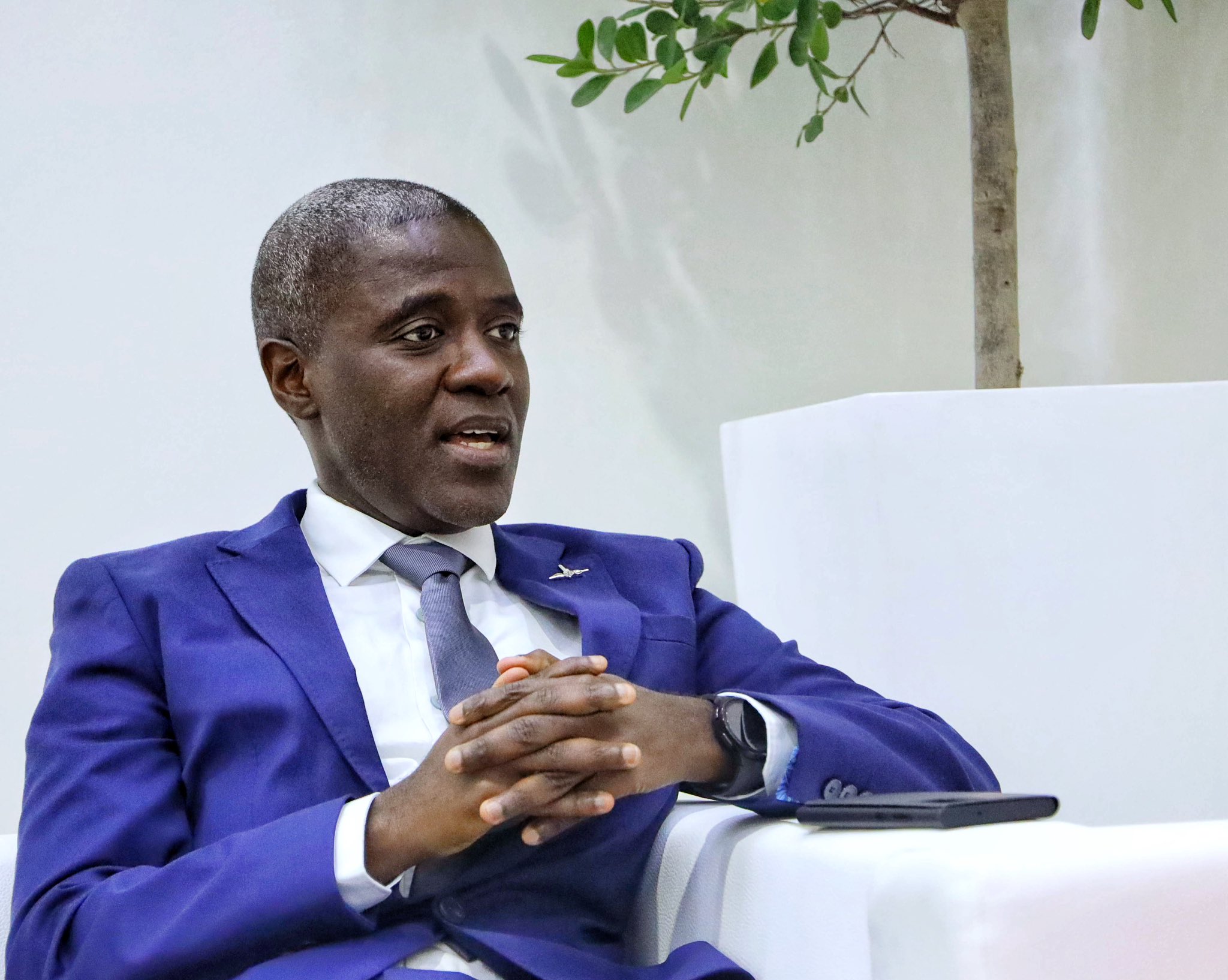
The Nigerian Communications Commission has announced that telecom operators have committed to upgrading 12,000 network sites across the country in 2026 as part of efforts to improve service quality and expand coverage.
Executive Vice Chairman of the commission, Aminu Maida, disclosed this during a media chat held in Lagos on Thursday.
He urged subscribers to remain patient, noting that the ongoing infrastructure investments will gradually translate into better user experience.
According to Maida, telecom operators upgraded just over 3,000 sites in 2025 to improve coverage and capacity. However, with the new commitment to upgrade 12,000 sites in 2026, the industry is significantly scaling up network expansion.
“So far, 2,800 of those have been done, including about 63 new sites,” Maida said.
He explained that the upgrades involve deploying additional spectrum on existing 4G sites as well as converting older 2G and 3G infrastructure to modern 4G and 5G networks.
Maida noted that the pace of deployment already indicates that the industry is ahead of last year’s performance.
“We are already way ahead of what we did last year,” he said.
The NCC boss also revealed that telecom operators have continued to sustain strong investment commitments in the sector.
According to him, one telecom company has already committed more than $1 billion in capital expenditure this year to support network expansion and improve service delivery.
“We reported last year that we were over a billion. This year, one of them has already committed over a billion,” Maida stated.
On spectrum management, Maida said the commission has executed several spectrum trades to help operators increase network capacity.
He described spectrum as the “highway” through which telecom traffic flows, adding that wider spectrum resources translate into better network performance.
Through its secondary market framework, the NCC made available 100MHz of previously underutilised spectrum that had been held by operators such as NATCOM Development and Investment Limited and T2 Mobile.
The spectrum was redistributed among the top three mobile network operators to support network expansion.
Maida added that the commission also released a significant portion of its own 50MHz spectrum holdings to support the industry.
“This was what enabled some of the site upgrades that I was referring to, so that the operators can have wider highways and better quality highways,” he said.
He noted that lower-band spectrum is particularly important for extending coverage to rural communities due to its wider reach.
On consumer protection, Maida said the commission’s directive requiring telecom operators to compensate subscribers affected by poor service will take effect immediately.
“The philosophy here was that it lets the people who are suffering get something back,” he said.
The NCC had earlier approved a 50 per cent tariff adjustment for telecom operators in 2025, a move aimed at improving the sector’s financial sustainability and encouraging fresh investments.
Following the adjustment, the commission said operators invested more than $1 billion in telecom infrastructure to boost network capacity.
Maida explained that the revised pricing framework has helped reverse years of under-investment that previously slowed network expansion and weakened service quality.
He noted that before the tariff adjustment, the telecom value chain was uneven, as tower companies could adjust prices for inflation and foreign exchange fluctuations while mobile network operators remained locked into fixed tariffs.
Industry stakeholders say the ongoing investments and infrastructure upgrades are expected to significantly improve network reliability, expand coverage and enhance the overall digital experience for millions of Nigerian telecom subscribers.