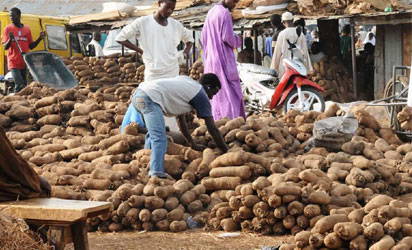
Yam prices continue to fluctuate across Lagos markets, as traders link recent increases to transportation costs, seasonal supply patterns, and sourcing challenges.
A survey by the News Agency of Nigeria shows that both traders and consumers are increasingly factoring in transport fares and convenience when purchasing the staple food.
Yam remains one of Nigeria’s most widely consumed foods, commonly eaten boiled, fried, roasted, or pounded, making it a daily feature in many households and food businesses.
In Lagos, the commodity is sold in neighbourhood outlets and major wholesale hubs such as Oyingbo Market and Mile 12 Market, where bulk buyers often find relatively lower prices. However, the cost of transportation and ease of access continue to influence where consumers choose to shop.
Traders told NAN that yam prices have risen significantly compared to 2025, with tubers that previously sold between ₦1,200 and ₦2,000 now going for between ₦2,500 and ₦3,500, depending on size and origin. Larger and higher-quality tubers attract premium prices, while smaller ones remain more affordable.
A trader at Oyingbo Market, Ibrahim Hassan, said fresh harvests are still limited as farmers have only recently begun planting. He warned that prices could rise further by August when supply tightens.
Similarly, Jumoke Fakunle noted that tuber size plays a major role in pricing, adding that wholesale markets generally offer better rates than neighbourhood outlets.
At Mile 12 Market, Abiodun Ariyo said current prices reflect a sharp increase from the same period last year, when yams were significantly cheaper.
Another trader, Kehinde Adebayo, attributed relatively lower prices in wholesale hubs to direct access to northern suppliers and bulk purchasing. She explained that retailers in smaller markets often add transportation and logistics costs before reselling.
On the consumer side, opinions remain divided. Amaka Njoku said she prefers buying from nearby markets for convenience, noting that transport costs can offset any savings from wholesale purchases.
However, Titilope Adekeye said she opts for larger markets where prices are typically lower, while Funmilayo Ajayi noted that she still saves money buying from Oyingbo despite transport expenses.
The varying prices highlight how transportation, market location, and seasonal supply continue to shape food purchasing decisions among Lagos residents.