The Federal Government has urged banks, payment operators and other financial institutions to unlock Nigeria’s estimated $14.8bn annual gender financing opportunity by redesigning financial products to better serve women.
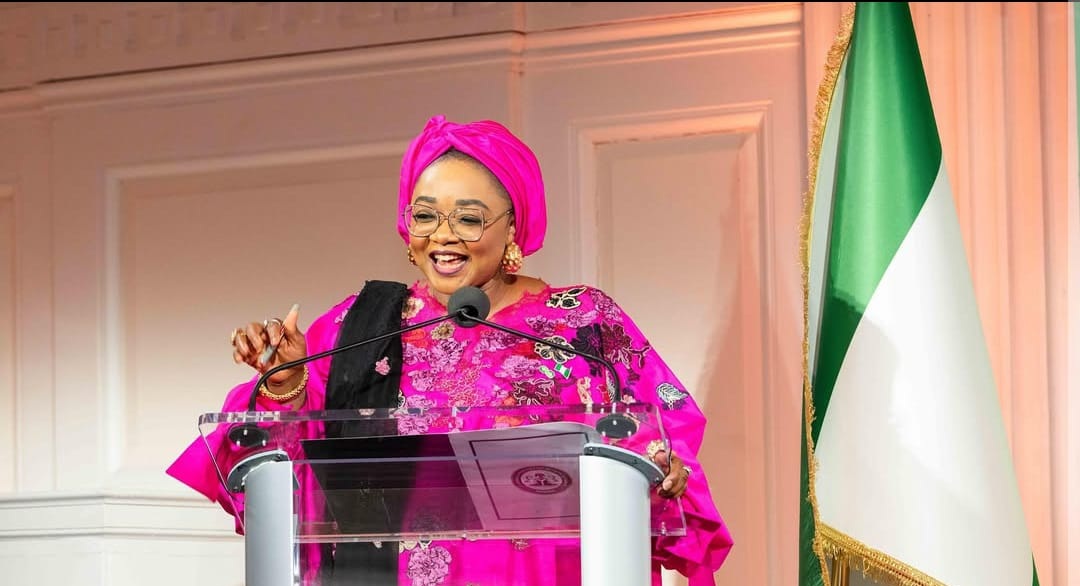
The Minister of Women Affairs and Social Development, Hajiya Imaan Sulaiman-Ibrahim, made the call on Wednesday at the Second National Gender Inclusion Conference, SheIsIncluded 2026, in Abuja.
The conference, themed “Designing for Delivery: Financing, Systems and Scale for Women’s Economic Transformation,” focused on financing and scaling initiatives aimed at improving women’s economic participation.
Sulaiman-Ibrahim said the challenge of achieving economic transformation for Nigerian women was not a lack of ambition but the design of systems that often failed to reflect the realities of women.
“Financial systems were built to recognise collateral, while women hold less of it,” she said, explaining one of the barriers limiting women’s access to finance.
She cited the World Bank-supported Nigeria for Women Project (NFWP) Scale-Up, which organises women into Women Affinity Groups that save together, lend to one another and grow their businesses.
According to the minister, the programme has expanded its architecture to reach 4.5 million women through 300,000 groups nationwide.
She said the first phase had mobilised more than 560,000 women into over 26,000 groups, with participants saving more than N4.9bn of their own resources and accessing approximately N15.6bn in livelihood grants.
The minister urged banks and other financial institutions to help close Nigeria’s gender financing gap by developing products that reflect the circumstances of women entrepreneurs.
She said the Ministry of Women Affairs and Social Development was prepared to open its programme pipelines to financial institutions willing to test suitable products at scale.
“To our banks, guarantors and payment operators, I would respectfully invite you to design for the woman who exists rather than the borrower our models were built for,” she said.
Sulaiman-Ibrahim cited an International Finance Corporation estimate that closing Nigeria’s gender financing gap could unlock about $14.8bn annually.
“That is not a social return. It is a commercial one, and it remains unclaimed,” she said.
She proposed alternative-data credit scoring, guarantee-backed lending that recognises group liability and low-cost interoperable payment systems that work on devices women already own.
The minister also called on state governments to co-finance national programmes and adapt them to local realities, while urging development partners to maintain a coordinated picture of initiatives across the country.
“In a period of contracting global development financing, coordination is how we protect coverage,” she said.
Vice President Kashim Shettima, represented by the Special Adviser to the President on General Duties, Dr Aliyu Modibbo Umar, said every serious commitment to women’s economic empowerment should have an owner, a measurable target and a deadline.
He said such commitments should be visible, tracked and reviewed, with successful initiatives recognised through the proposed National Gender and Financial Inclusion Awards.
Shettima noted that achieving scale would require financing from financial institutions, fintech companies, investors and development partners.
While government could establish the necessary rules, he said the private sector would provide much of the capital, technology and operational discipline required to expand women-focused economic initiatives.
Also speaking, the Technical Adviser to the President on Economic and Financial Inclusion, Dr Nurudeen Abubakar Zauro, said the economy could not reach its full potential when productive capital was unable to reach productive citizens.
He said credible estimates suggested that national output could be as much as 23% higher if women participated more equally in economic activities.
At a panel session on regulatory reforms for women’s financial inclusion, the Director-General of the Securities and Exchange Commission, Dr Emomotimi Agama, represented by Ojone Kabir, said women’s participation in Nigeria’s capital market remained low.
Kabir said women accounted for between 12% and 15% of participation in corporate institutions, while their representation in executive offices remained below 7%.
She added that women accessing capital to raise funds accounted for less than 5%.
According to her, entry requirements into the capital market are being reviewed to favour women and small and medium-sized enterprises.
She encouraged women entrepreneurs to explore crowdfunding platforms within the capital market, citing the networking and visibility opportunities available through the sector.
The Nigeria for Women Project was originally approved on June 27, 2018, through a $100m International Development Association credit from the World Bank.
The project was designed to improve women’s livelihoods by supporting their participation in sustainable economic activities and businesses, with the broader goal of increasing household incomes and contributing to community development.
The Federal Government appealed to the World Bank in 2024 to extend the deadline for implementation of the $100m project.
The latest push for greater gender financing comes as the government seeks to expand women’s access to productive capital and strengthen financial inclusion through partnerships between the public sector, financial institutions and private investors.