Nigeria’s seaborne petroleum product exports have increased seven-fold since 2023, driven largely by rising output from the Dangote Petroleum Refinery, according to the US Energy Information Administration (EIA).
Data from Vortexa cited by the EIA showed that Nigeria’s seaborne petroleum product shipments averaged 561,000 barrels per day (bpd) in the second quarter of 2026, compared with an annual average of 79,000 bpd in 2023.
Of the total shipments recorded in the second quarter, approximately 350,000 bpd were exported, compared with an annual average of 46,000 bpd in 2023.
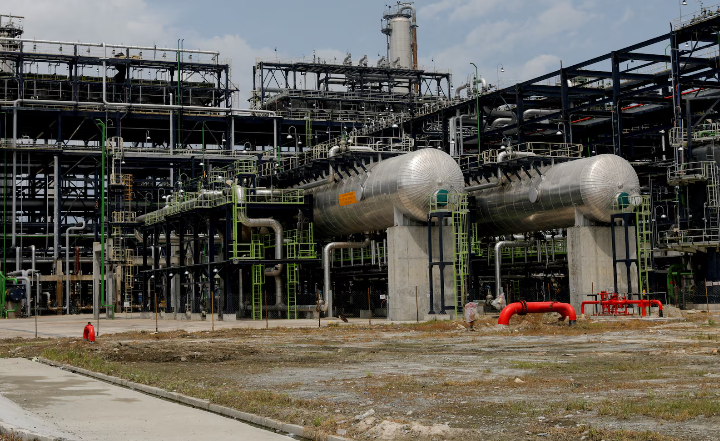
The Dangote Petroleum Refinery, located in the Lekki Free Zone near Lagos, began operations in 2024 and is currently Nigeria’s largest refinery.
The EIA said increased domestic petroleum product supplies from the refinery have reduced Nigeria’s dependence on imports, increased exports and improved the country’s self-sufficiency in refined petroleum products.
Product shipments expanded following the start of operations at the Dangote refinery and increased further after the completion of maintenance and expansion work in February 2026.
The expansion coincided with supply constraints linked to disruptions around the Strait of Hormuz, further supporting demand for Nigerian refined products.
The maintenance and expansion increased the refinery’s crude oil distillation capacity from 650,000 bpd to 700,000 bpd.
Domestic seaborne shipments within Nigeria also increased significantly, reaching 211,000 bpd in the second quarter of 2026, compared with 81,000 bpd in 2025 and 33,000 bpd in 2023.
Nigeria’s petroleum product exports to Europe recorded strong growth during the period. Shipments to the region rose to 130,000 bpd in Q2 2026 from 40,000 bpd in 2025 and just 15,000 bpd in 2023.
Exports to other African markets also increased, reaching nearly 120,000 bpd in the second quarter, up from 89,000 bpd a year earlier.
The surge in exports marks a significant shift in Nigeria’s petroleum trade balance, as the country moves from heavy reliance on imported refined products towards greater domestic refining and regional exports.
Nigeria imported nearly 400,000 bpd of petroleum products in 2023. By the second quarter of 2026, however, seaborne imports had fallen to less than 130,000 bpd.
The figures highlight the growing impact of the Dangote refinery on Nigeria’s downstream petroleum sector, with increased refining capacity supporting domestic supply while creating additional volumes available for export to markets across Europe and Africa.