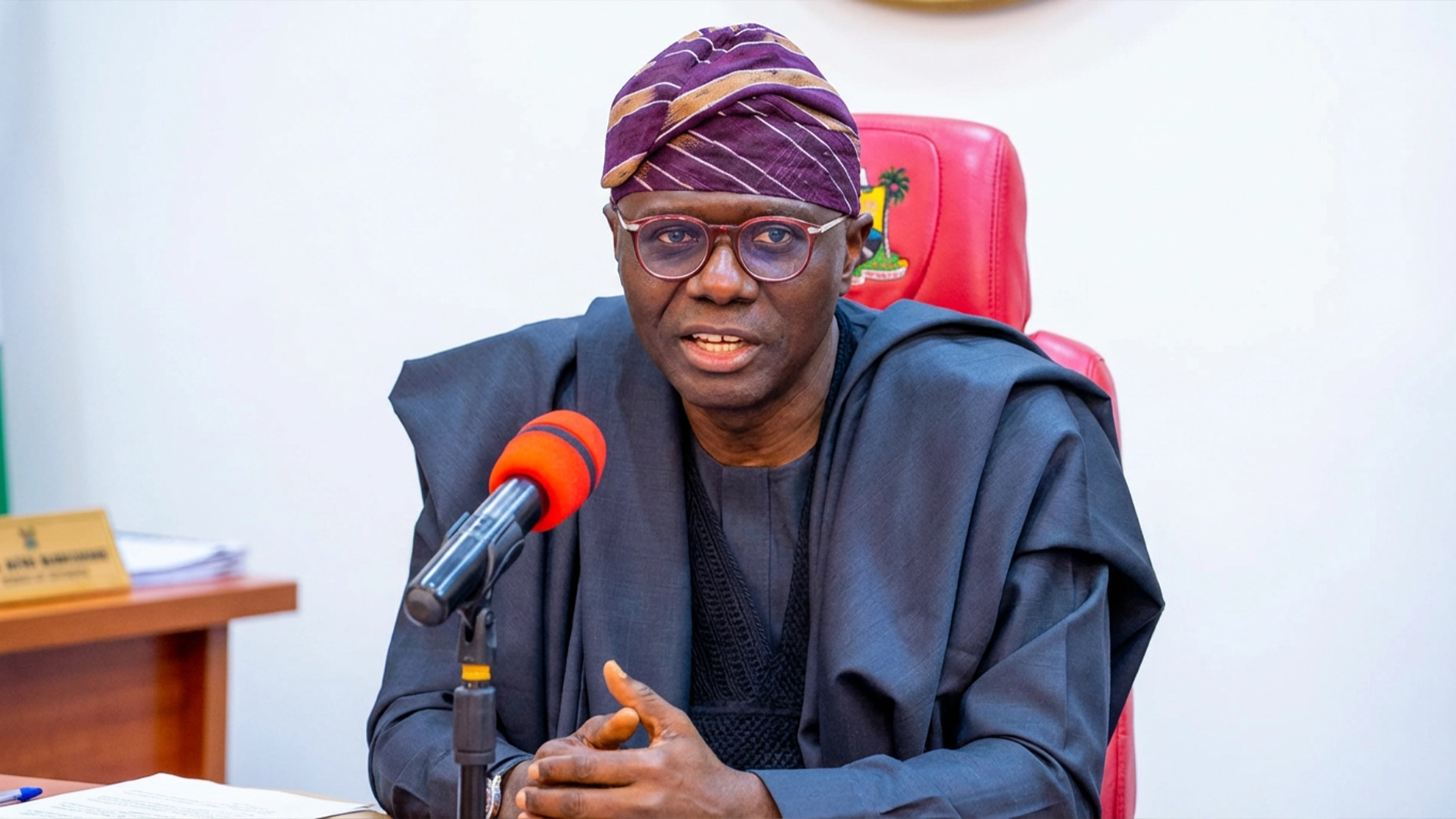
Lagos State Governor, Babajide Sanwo-Olu, has approved the implementation of revised allowances for academic and non-academic workers in state-owned universities, in a significant move aimed at resolving the industrial dispute that has disrupted academic and administrative activities across the institutions.
The approval covers agreements involving the Academic Staff Union of Universities (ASUU), Senior Staff Association of Nigerian Universities (SSANU), Non-Academic Staff Union of Educational and Associated Institutions (NASU), and National Association of Academic Technologists (NAAT).
The development was communicated through a letter dated October 7, 2026, signed by the Commissioner for Tertiary Education, Tolani Sule, following negotiations between the state government and representatives of the affected unions.
According to the letter, the governor approved a 40 per cent Consolidated Academic Allowance and a 10 per cent Earned Academic Allowance for academic staff.
The government also approved monthly allowances of ₦70,000 for Readers and ₦145,000 for Professors, alongside a 35 per cent revised allowance for non-academic workers.
The revised payments are to take effect from January 1, 2026, with outstanding arrears scheduled for payment in two instalments alongside October and November salaries.
The government further stated that the negotiated allowances would be tax-free and directed relevant agencies to begin implementation in accordance with applicable financial regulations.
Approval Follows Prolonged Labour Dispute
The decision comes after weeks of disagreement between the government and university-based unions over the implementation of previously negotiated welfare agreements.
The dispute affected Lagos State University (LASU), Lagos State University of Education (LASUED), Lagos State University of Science and Technology (LASUSTECH), and Lagos State University College of Medicine (LASUCOM).
Union leaders had accused the government of failing to implement agreements reached during earlier negotiations, particularly those relating to allowances, outstanding arrears and other welfare commitments.
The Joint Action Committee representing the unions had previously issued ultimatums demanding immediate implementation of the agreements.
Following the expiration of the final ultimatum on October 2, the unions declared an indefinite strike.
The industrial action disrupted lectures, administrative activities and other institutional operations.
The situation escalated when non-academic workers reportedly shut the main gates of affected universities, increasing pressure on the government to address the dispute.
Workers Demand Implementation of Agreements
Before the latest approval, union representatives had maintained that their demands were based on agreements already negotiated with the government.
The unions argued that delays in implementation were affecting workers’ purchasing power and undermining confidence in the negotiation process.
Among the issues raised were the payment of outstanding allowances, implementation of agreed welfare packages and the need to address the high cost of living in Lagos.
The unions had also demanded a 15 per cent Lagos Factor allowance, alongside other outstanding commitments relating to salary adjustments and staff transportation.
Although the governor’s latest approval addresses several major demands, it remains unclear whether every outstanding issue has been resolved.
Reports indicate that some union representatives have raised concerns over matters not explicitly covered by the approval, including the treatment of retired professors.
These concerns could form part of further discussions between the government and workers’ representatives.
Government Appeals for Immediate Resumption
Following the approval, the state government appealed to the affected unions to suspend their industrial action and direct members to resume work.
Commissioner Sule conveyed the government’s appreciation for the patience and cooperation demonstrated by workers during negotiations.
He also emphasised the administration’s commitment to maintaining industrial harmony within state-owned tertiary institutions.
The government believes the approved welfare measures will help address workers’ concerns and create a more stable environment for academic activities.
However, union leaders are expected to consult their members before taking a final decision on the strike.
At the time of the latest reports, the unions had not formally announced a collective decision to suspend the industrial action.
Students Await Resolution
The dispute has generated concern among students and parents, particularly because prolonged industrial action could affect academic calendars and delay examinations.
For students preparing for graduation, professional examinations and other academic commitments, uncertainty surrounding university operations can create additional financial and emotional pressures.
The restoration of normal academic activities would therefore be a welcome development for students and other stakeholders.
University administrators will also be expected to review disrupted academic schedules and determine how lost instructional time can be recovered.
Financial Implications for Lagos State
The revised allowances will create additional personnel expenditure for the Lagos State Government.
Although the total financial cost of the approved package was not disclosed in the reports reviewed, the payment of arrears dating back to January 2026 represents a significant commitment.
The government will need to ensure that sufficient funds are available to implement the agreement without disrupting other essential educational programmes.
Consistent payment will also be important to preventing future disputes.
Focus Shifts to Union Decision
The immediate question is whether the affected unions will accept the government’s approval as sufficient grounds to end the strike.
Their decision will determine how quickly normal academic activities resume across the institutions.
Beyond the immediate dispute, the development highlights the importance of timely implementation of labour agreements, sustainable university funding and constructive engagement between government authorities and education workers.
For Lagos State, resolving the dispute would represent an important step towards strengthening confidence in its public tertiary education system.