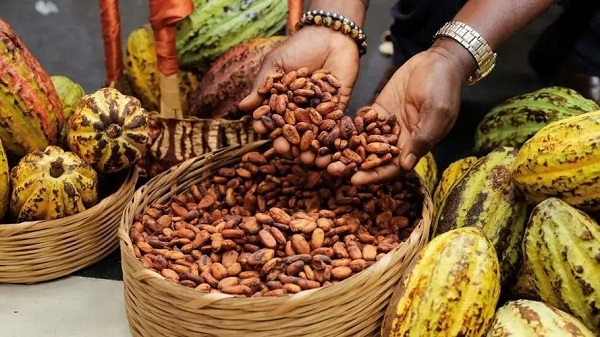
Ghana’s cocoa production is expected to decline by at least 16 per cent in the 2026/2027 season, according to the country’s cocoa regulator, Ghana Cocoa Board (COCOBOD).
The regulator said the projected decline was linked to adverse weather conditions, the natural production cycle of cocoa trees and rising disease pressures affecting farms.
COCOBOD said the outlook reflects the possible impact of El Niño conditions, excessive rainfall recorded in May and June, and the cocoa tree’s natural tendency to alternate between high- and low-yield seasons.
The regulator also pointed to low cherelle loads — the number of young cocoa pods that survive to maturity — particularly in Ghana’s Western and Western North regions, which together contribute more than half of the country’s cocoa output.
COCOBOD said production challenges in the two regions have been worsened by the spread of swollen shoot disease, ageing cocoa plantations and increasing illegal gold mining activities.
Illegal mining, locally known as galamsey, has resulted in the takeover and destruction of some cocoa farms as miners seek access to mineral deposits.
The production forecast follows concerns raised by cocoa farmers in Western and Western North Ghana, who reported significant reductions in cocoa pod numbers during the current season.
To reduce the impact of the expected decline, COCOBOD said it has introduced measures including the rehabilitation of infected farms in the Western North Region, expanded insecticide and fungicide spraying programmes, and the return of nationwide free fertiliser distribution for the 2026/2027 crop year.
The expected decline in Ghana’s cocoa output comes amid broader production concerns across West Africa. Cocoa production forecasts in the region have been revised downward, with Ivory Coast also expected to record a production decline of more than 10 per cent in the next season.